




 Inglés (pdf)
 Articulo en XML
 Referencias del artículo

 Traducción automática
 Enviar articulo por email
 Citado por SciELO
 Similares en
SciELO

 Permalink

1. Introduction
Decentralized wastewater treatment systems require technologies capable of providing reliable pollutant removal while remaining technically and economically manageable under local operating conditions. In regions where wastewater treatment infrastructure is limited and treatment plants frequently face deficiencies in operation, maintenance, and process design, this poses a challenge. In Bolivia, although 86% of the population has access to drinking water, only 60% has access to basic sanitation services [1]. According to the national wastewater treatment inventory, wastewater treatment coverage reached only 30.5%, and 78% of the inventoried WWTPs were reported to operate inadequately, mainly because of deficiencies in operation and maintenance and poor project engineering [1]. Under these conditions, technology selection becomes a critical aspect of decentralized wastewater treatment. Appropriate systems should combine high treatment efficiency with manageable energy demand, operational simplicity, reasonable maintenance requirements, and adequate adaptation to local environmental and loading conditions [2]. With these criteria, selecting an optimal solution is complex since all wastewater treatment technologies have their specific limitations.
The prevalent technologies for domestic wastewater treatment in Latin America include stabilization ponds, UASB reactors, and AS processes (von Sperling, 2016). In Brazil, wastewater treatment plants primarily rely on stabilization ponds and UASB reactors, either individually or in combination with supplementary treatment steps [3]. Approximately 11% of treatment plants employ AS processes, encompassing both conventional methods and their variations. Despite the predominance of ponds and UASB reactors, a considerable proportion, roughly 32%, of wastewater in Brazil undergoes treatment using AS processes [3] and in Mexico, 28.4% of wastewater is treated using the AS process [4].
UASB reactors offer numerous benefits, including compactness, cost-effectiveness, low energy requirements, easy operation, and the generation of economically valuable byproducts like biogas and sludge. However, they also have limitations, such as the need for post-treatment to achieve the water quality required by most current regulations for wastewater discharge [5].
On the other hand, AS reactors, although widely used in domestic wastewater treatment due to their high removal efficiency and operational adaptability, have significant drawbacks. These include high operating and investment costs, arising mainly from their considerable energy requirements, the large quantities of by-products, and the need for extensive mechanization and highly specialized operators [6].
Various treatment process combinations offer potential improvements in treatment outcomes. For instance, several combinations have been proposed as post-treatments for UASBs, including AS, rotating biological contactors, physicochemical processes such as flotation, aeration, coagulation, and electrocoagulation, and natural processes like stabilization ponds and wetlands [7]. Among these, integrating an UASB with an AS system is an attractive option for domestic wastewater treatment, especially in hot climate regions [3].
In a conventional AS unit with aeration and continuous flow, the raw wastewater is transported from a primary clarifier to an aeration tank, where oxygen is injected through air diffusers. In this tank, aerobic bacteria accelerate the biological degradation, forming suspended sludge that is separated in a settling unit. Subsequently, part of this sludge is recirculated to the aeration tank, while the excess is purged to a sludge treatment sector.
The UASB followed by AS process differs from other conventional AS systems in that the UASB replaces the primary settling tank, and excess activated sludge is recirculated to the influent of the reactor [8]. Therefore, separate thickening and digestion of the sludge are not required, as the excess sludge removed from the aerobic reactor is already thickened and digested [9]. Incorporation of anaerobic primary treatment into existing aerobic treatment can reduce aeration demand, reduce sludge production, and increase energy generation [10]. Most of the organic matter is removed in the anaerobic stage, leaving the activated sludge reactor to remove residual organic matter and suspended solids in addition to nitrification [11], [12].
Compared to conventional AS processes, the combination of UASB and AS has shown other benefits of reducing energy consumption from 18-26 to 14-20 kWh/pe.year and promoting a significant decrease in sludge production, reducing sludge yield from 20-40 to 20-32 g of dry solids/pe.day [13]. [11] reported an integrated UASB-AS achieving high COD removal efficiency of 85-93% in the treatment of municipal wastewater.
Comparable efficiencies have been reported at full scale including COD removal efficiencies of 89.5% in Brazil [14], 88-94% in two WWTPs [15], 82% in India [16] and 91% in Brazil [17]. Oliveira and von Sperling reported an average COD removal efficiency of 77% for UASB systems followed by different post-treatment processes, including AS [18].
Full-scale plants operating under fluctuating climatic conditions, such as ambient temperature, experience decreased performance [19], [20]. Aerobic or combined systems can also be affected, with ambient temperatures below 15 °C significantly reducing efficiency [21]. Thus, it is important to thoroughly evaluate full-scale treatment plants in various environments.
This study evaluates the treatment performance, operational conditions, and economic and implementation-related indicators of a full-scale UASB-AS WWTP located in the community of Ucureña, municipality of Cliza, Germán Jordán province, department of Cochabamba, Bolivia. This WWTP has been operating since September 2021 and integrates a UASB reactor and an AS system. The facility represents an uncommon application of a relatively mechanized treatment technology, which is rarely implemented in rural or semi-rural areas with medium to low-income levels. Its full-scale evaluation is also relevant because it operates under semi-arid conditions and moderate-to-low ambient temperatures, which may influence the performance of both anaerobic and aerobic biological treatment processes.
2. Methodology
2.1. Context of the Study
The Ucureña WWTP is located at 17°34'17.99"S 65°53'47.41"W, at an altitude of 2710 m a.s.l. This is a semi-arid area where water is a limited resource, and treated wastewater is a valuable resource for agricultural irrigation. The plant started operations in September 2021 and was designed for a population of 7572 inhabitants. The WWTP configuration consists of a sequence of upflow anaerobic sludge blanket (UASB) followed by an activated sludge (AS) system, representing a relatively uncommon configuration for decentralized wastewater treatment in the Bolivian context.
2.2. WWTP Description
The wastewater treatment process at the Ucureña WWTP consists of three stages: preliminary treatment, UASB reactor, and AS reactor with an incorporated secondary clarifier. Initially, raw wastewater enters the WWTP through a gravity sewer into a pumping station and undergoes preliminary treatment, which includes manual screening, grit removal, and a grease trap. Subsequently, the pretreated wastewater flows to the UASB and AS reactors. The Ucureña WWTP operates with two parallel treatment trains, each comprising one cylindrical UASB reactor with a volume of 130.7 m3 and a water depth of 5.50 m, and an AS reactor with a volume of 98.2 m3 and a water depth of 5.0 m. The AS reactors lack an anoxic zone, resulting in incomplete nitrification. Excess sludge produced in the AS stage is recirculated to the pumping station, where it is mixed with influent wastewater and reintroduced into the treatment process. The surplus anaerobic sludge is disposed of in a sludge drying bed, and is then used in co-composting. On the other hand, the material removed during preliminary treatment is dried in a different drying bed and is finally disposed of in a landfill. The schematic of the treatment train can be seen in Figure 1.
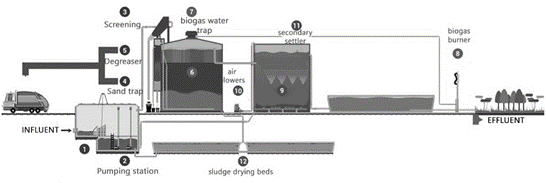
Figure 1: Scheme of Ucureña WWTP. The numbered units correspond to: (1) coarse screening chamber, (2) pumping station, (3) fine screening, (4) grit chamber, (5) grease trap, (6) UASB reactor, (7) biogas water trap, (8) biogas burner, (9) activated sludge reactor, (10) air blowers, (11) secondary settler, and (12) sludge drying beds.
2.3. Monitoring and Sampling
The WWTP in Ucureña was evaluated for 9 months from February to October 2022 to assess the overall performance and that of the individual processes. Monitoring campaigns were conducted monthly, resulting in a total of nine sampling campaigns. Grab samples were collected at four points along the treatment train: influent, pretreatment effluent, UASB effluent, and AS system effluent. For the performance assessment, the following water quality parameters were measured: biochemical oxygen demand (BOD), particulate, soluble, and total chemical oxygen demand (PCOD, SCOD, and TCOD), total suspended solids (TSS), organic nitrogen, ammoniacal nitrogen, nitrates, and phosphorus. Field measurements of pH and dissolved oxygen (DO) were performed using a HANNA multiparameter meter. TCOD, nitrate, and soluble phosphorus were determined spectrophotometrically using HANNA reagent kits based on adapted EPA methods. For SCOD, samples were filtered through 0.45-µm membrane filters prior to analysis using the same COD procedure, while PCOD was calculated as the difference between TCOD and SCOD. TSS, ammoniacal nitrogen, and organic nitrogen were determined following Standard Methods for the Examination of Water and Wastewater. TSS was measured gravimetrically after drying at 103-105 °C (Method 2540 D); ammoniacal nitrogen was determined by distillation followed by titration (4500-NH3), and organic nitrogen by Kjeldahl digestion, distillation, and titration (4500-Norg). BOD analyses were performed by an external analytical laboratory, while the remaining analyses were conducted in an internal laboratory. Analytical measurements were performed using calibrated equipment, standardized procedures, and commercial reagent kits according to the corresponding manufacturer specifications.
The monitoring also included the measurement of the inflow rate to the plant to estimate operational parameters. The collected data were subsequently used to assess treatment, operational, and implementation-related performance indicators.
2.4. Performance Evaluation
The overall performance of the WWTP was evaluated according to three main groups of criteria: (1) treatment performance, based on wastewater quality and pollutant removal; (2) operational performance, considering key design and operational parameters such as hydraulic retention time, organic loading rate, mixed liquor suspended solids (MLSS), food-to-microorganism (F/M) ratio, and sludge settleability; and (3) economic performance, including energy demand, land requirement and treatment costs. These groups of indicators were selected to provide an integrated assessment of the UASB-AS configuration under full-scale decentralized operating conditions.
3. Results and Discussion
3.1. Wastewater Characteristics and Efficiency
The average wastewater analysis results from the monitoring campaigns conducted for 9 months between February and October 2022 are presented in Table 1.
Table 1: Wastewater characteristics of Ucureña WWTP
| Parameter | n | Influent Mean | Influent SD | Pretreat. Mean | Pretreat. SD | UASB Mean | UASB SD | AS Mean | AS SD |
|---|---|---|---|---|---|---|---|---|---|
| pH | 9 | 7.7 | 0.2 | 7.7 | 0.1 | 6.9 | 0.1 | 7.0 | 0.3 |
| Temperature (°C) | 9 | 20.6 | 1.3 | 20.9 | 1.2 | 20.0 | 1.2 | 20.4 | 1.7 |
| DO (mg/l) | 9 | 0.3 | 0.1 | 0.5 | 0.2 | 0.4 | 0.2 | 1.1 | 0.5 |
| BOD5 (mg/l) | 8 | 344 | 84 | 381 | 167 | 170 | 61 | 39 | 13 |
| TCOD (mg/l) | 9 | 743 | 114 | 776 | 227 | 439 | 217 | 92 | 88 |
| SCOD (mg/l) | 9 | 292 | 106 | 280 | 89 | 173 | 118 | 49 | 65 |
| TSS (mg/l) | 9 | 252 | 108 | 233 | 120 | 175 | 99 | 27 | 29 |
| NH3-N (mg/l) | 9 | 130 | 37 | 119 | 36 | 96 | 18 | 43 | 29 |
| NO3 -1 (mg/l) | 9 | 23 | 16 | 18 | 23 | 19 | 23 | 40 | 46 |
| Norg (mg/l) | 9 | 93 | 49 | 114 | 52 | 116 | 69 | 34 | 25 |
| P (mg/l) | 9 | 16 | 5 | 14 | 2 | 15 | 5 | 12 | 3 |
| Alkalinity (mg/l) | 9 | 2637 | 2441 | 2278 | 2017 | 2318 | 2070 | 1511 | 1550 |
The mean influent characteristics correspond to medium to high-concentration wastewater, as indicated by [22]. Compared to typical domestic wastewater, the higher concentrations observed may be associated with lower per capita water allocation for consumption and consequently lower wastewater generation resulting in higher influent concentrations, whereas higher water use tends to produce more diluted domestic wastewater [23].
The recorded mean concentrations at the effluent were BOD5 (39 mg/L), TCOD (92 mg/L), SCOD (49 mg/L), TSS (27 mg/L), and NH3-N (43 mg/L). Except for the ammonia, the effluent concentrations were slightly lower than those of reported for other UASB-AS systems, for which BOD concentrations of 40−100 mg/L, COD 100−200 mg/L, TSS 30−90 mg/L, and ammonia 10−15 mg/L have been reported [24]. The comparatively higher ammonia concentration observed in the Ucureña WWTP may be related to the original design criteria of the activated sludge stage. The system was primarily designed for carbonaceous organic matter removal rather than for complete nitrogen removal, as the final effluent was intended for agricultural reuse. Activated sludge systems designed for nitrification generally require more stringent operational conditions than systems focused only on carbon oxidation. These operational conditions include longer sludge retention times, lower F/M ratios, sufficient dissolved oxygen, and adequate pH and alkalinity levels. In addition, the Ucureña WWTP does not include a dedicated anoxic zone, which limits denitrification even when partial nitrification occurs in the aerobic reactor [25].
The pH values across all sampling points remained relatively consistent, with only slight variations observed. The influent, preliminary treatment effluent, and AS effluent showed pH values around 7.7, indicating near-neutral conditions. The pH of the UASB effluent was slightly lower at 6.9, suggesting a more acidic environment within the UASB reactor. Maintaining a stable reactor pH is important for optimal microbial activity and treatment efficiency because the anaerobic digestion rate is optimal in a neutral range between 6.8 and 7.2. A pH range of 6.5−7.5 is still considered acceptable, although methanogenic activity decreases [26]. Higher pH values cause an increase in free ammonia concentration, inhibiting anaerobic metabolism and resulting in the accumulation of excess volatile acids, a condition undesirable for the proper functioning of anaerobic systems.
Temperature measurements were consistent across all sampling points, ranging from 20.0 to 20.9 °C. However, this small temperature range does not represent daily or seasonal variations because the measurements were taken only at the sampling time. Because temperature was recorded only at the time of grab sampling, these values do not characterize daily or seasonal thermal variability and were not used to establish a direct relationship with treatment performance. Nevertheless, temperature is an operational factor in anaerobic treatment, as lower temperatures can reduce hydrolysis and biological conversion rates [27]. In the study region, ambient temperatures can range from very low to very high, between -9 and 32 ºC, with an average of around 15.5 ºC [28], suggesting potentially important seasonal thermal variability that would require continuous wastewater temperature monitoring for further assessment.
The wastewater characteristics and the reduction of various parameters along the treatment train are shown in the box plots in Figure 2.
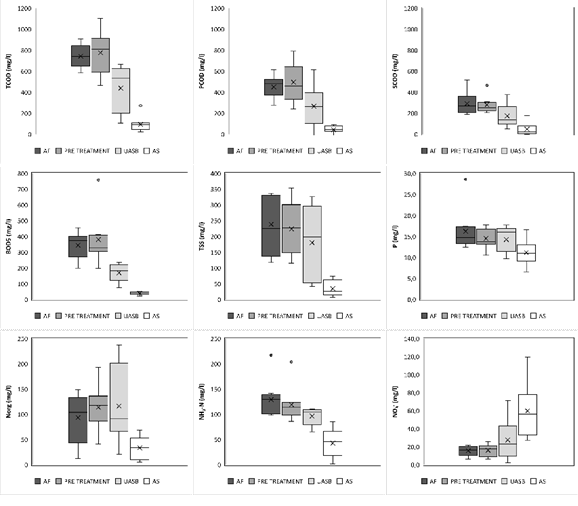
Figure 2 shows a significant reduction (p-value <0.05) in organic matter, measured as PCOD, SCOD, TCOD, and BOD5, in both the UASB and AS stages. Additionally, a considerable decrease in total suspended solids (TSS) is observed, with the most substantial reduction occurring during the AS stage. As expected, this system was ineffective for nutrient removal since it was not designed for this purpose.
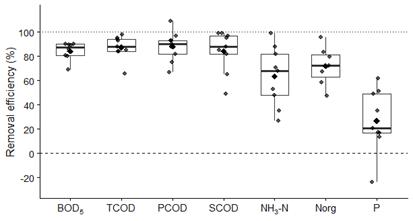
Figure 3 presents the distribution of overall removal efficiencies achieved for the main wastewater quality parameters monitored in the WWTP. Removal of organic matter and suspended solids showed comparatively high and consistent efficiencies, whereas greater variability was observed for ammoniacal nitrogen, organic nitrogen, and especially soluble phosphorus. The wider dispersion of nutrient removal efficiencies indicates a less stable response for these parameters over the monitoring period.
In addition to concentration-based efficiencies, a simplified organic load balance was estimated to evaluate the distribution of organic matter removal across the treatment train and it is presented in Table 2.
Table 2: Simplified organic load balance
| Treatment point | Flow rate (m³/d) | TCOD (mg/L) | TCOD load (kg/d) | Stage load change (kg/d) | Cumulative removal (%) |
|---|---|---|---|---|---|
| Influent | 362.9 | 743 | 269.6 | - | - |
| Pretreatment effluent | 362.9 | 776 | 281.6 | +12.0 | -4.5 |
| UASB effluent | 362.9 | 439 | 159.3 | -122.3 | 40.9 |
| Final effluent | 362.9 | 92 | 33.4 | -125.9 | 87.6 |
Fuente: Elaboración propia a partir del caudal medio de la planta y las concentraciones medias de TCOD por punto de muestreo.
The mean plant inflow rate of 362.9 m³/d was assumed for all treatment points, since intermediate flow rates were not independently measured. Internal sludge recirculation was not included in this simplified liquid-phase balance.
The overall treatment train reduced the mean TCOD load from 269.6 kg/d in the raw influent to 33.4 kg/d in the final effluent, corresponding to an overall reduction of 87.6%. The pretreated wastewater presented a slightly higher mean TCOD load (281.6 kg/d) than the raw influent, reflecting the higher mean TCOD concentration measured after pretreatment. Considering the pretreatment effluent as the actual influent to the anaerobic stage, the UASB reactor reduced the TCOD load from 281.6 to 159.3 kg TCOD/d, achieving a TCOD removal efficiency of approximately 43.4%. This difference is likely associated with intermittent pumping conditions, resuspension of settled solids in the pumping chamber, and the use of grab sampling during monitoring campaigns.
The activated sludge stage further reduced the residual organic load, contributing substantially to the overall treatment performance. These results highlight the complementary role of the anaerobic and aerobic stages, where the UASB reactor performs the primary reduction of organic matter while the activated sludge process polishes the remaining biodegradable fraction.
Previous studies indicate that UASB reactors followed by aerobic post-treatment systems typically achieve between 50 and 70% organic matter removal during the anaerobic stage, leaving the remaining biodegradable fraction available for subsequent aerobic oxidation and nitrification-denitrification processes [29]. In regions characterized by moderate to low temperatures, such as Ucureña, anaerobic treatment performance may be adversely affected due to lower hydrolysis and methanogenic activity. Monitoring studies conducted in nearby regions with average temperatures between 15 and 17 °C have reported UASB removal efficiencies ranging from 45 to 60% [19], [20], which is consistent with the performance observed in the present study.
A comparison between reported efficiencies of UASB-AS systems at pilot or full-scale is shown in Table 3.
Table 3: Reported removal efficiencies of UASB-AS systems treating domestic wastewater compared with this study.
| Configuration system | BOD (%) | COD (%) | TSS (%) | Ammonia (%) | Reference |
|---|---|---|---|---|---|
| UASB+activated sludge | 83-93 | 75-88 | 87-93 | 50-85 | [11] |
| UASB+activated sludge | 94 | 91 | 92 | 72 | [17] |
| UASB+activated sludge | 86 | 93 | 60 | 62 | [16] |
| UASB+activated sludge | 82 | 94 | 64 | 82 | [16] |
| UASB+activated sludge | 88 | 87 | 94 | - | [30] |
| Conventional activated sludge | 85-90 | 80-95 | 85-90 | - | [31] |
| UASB+activated sludge | 89 | 88 | 86 | 67 | This study |
Fuente: Elaboración propia a partir de la literatura citada.
There are relatively few full-scale performance assessments of UASB-AS systems treating domestic or municipal wastewater, as most studies have been conducted at pilot scale or under controlled operating conditions. Table 3 summarizes reported removal efficiencies for full-scale UASB-AS systems and compares them with the results obtained in this study and with typical values reported for conventional activated sludge systems.
Reported removal efficiencies for UASB-AS systems range from 83 to 94% for BOD, 75 to 94% for COD, 60 to 94% for TSS, and 50 to 85% for ammonia. The Ucureña WWTP achieved overall removal efficiencies of 89% for BOD5, 88% for TCOD, 83% for SCOD, 89% for TSS, 67% for NH3-N, 64% for organic nitrogen, and 25% for phosphorus. These values are within the ranges reported for comparable UASB-AS systems, indicating satisfactory treatment performance under the evaluated operating conditions. The results are particularly relevant considering that the WWTP operated under partial hydraulic loading and in a semi-arid region characterized by moderate-to-low ambient temperatures. Compared with other decentralized wastewater treatment systems used in the same geographical context, such as anaerobic reactors followed by biofilters or stabilization ponds, the UASB-AS configuration provides high organic matter and suspended solids removal while requiring a more compact footprint [32]. However, this advantage must be considered together with its higher operational complexity and energy requirements.
3.2. Operational Performance
3.2.1. Design and Operational Parameters
The Ucureña WWTP was designed to treat a flow rate of 7.84 L/s. By the end of 2022, it treated an average flow rate of 4.2 L/s, operating at 53.5% of its capacity.
The AS process operates under a continuous aeration regime. The aeration flow rate is 225 m3/h, divided between both reactors with a small proportion (about 5%) allocated for sludge recirculation. The plant is run by an operator who spends around 2 hours daily, 5 days weekly, on the primary O&M activities. These tasks are categorized by their time frequency. Daily tasks include cleaning screens and sieves, disposing of solid waste, and inspecting the biogas water seal, while weekly tasks involve removing sand and grease, as well as sludge from aerobic reactors. Monthly or bimonthly tasks consist of removing sludge from anaerobic reactors and cleaning blower air filters.
The WWTP efficiency may relate to its operational parameters. To establish a comparison, Table 4 provides a summary of the design and operational parameters of the Ucureña WWTP alongside parameters typically recommended in the literature and those utilized by other full-scale units.
Table 4: Operational comparison of Ucureña WWTP parameters with typical values reported in the literature.
| Technology | Parameter | Typical design or operational values | Reference |
|---|---|---|---|
| UASB | HRT (h) | 6-10 | [3] |
| 7.4 | [17] | ||
| 6 | [30] | ||
| 9 (design) 17 (current) | This study | ||
| Vup (m/h) | 0.5-0.7 | [29] | |
| 0.59 (design) 0.32 (current) | This study | ||
| OLR (kg-COD/m3·d) | 2.5-3.5 | [29] | |
| 1.08 (current) | This study | ||
| Activated sludge | HRT (h) | 6-81 16-242 | [3] |
| 4.23 | [17] | ||
| 7 (design) 13 (current) | This study | ||
| MLSS (g/l) | 1.55-4.50 | [3] | |
| 2.86 | [17] | ||
| 2.0-3.0a 3.0-5.0b | [33] | ||
| 3.5 (design) 2.95-7.96 (current) | This study | ||
| MLVSS (g/l) | 2.1 | [17] | |
| 1.55 (design) 1.95-4.47 (current) | This study | ||
| F/M (kg BOD/kg VSS·d) | 0.3-0.82 0.08-0.153 | [3] | |
| 0.35 | [17] | ||
| 0.25-0.5a 0.10-0.15b | [33] | ||
| 0.3 (design) 0.12-0.60 (current) | This study | ||
| Sludge age (d) | 4-152 >183 | [3] | |
| 7 | [17] | ||
| 2-4a 7-12b | [33] | ||
| 7 (design) / 14.5 (current) | This study |
1 The time required at AS when it has an UASB as preliminary treatment
2 The time required at conventional activated sludge system (CAS)
3 The time required at extended activated aeration system (EAAS)
a for carbonaceous oxidation
b for nitrification.
Table 4 shows that the treatment processes at the Ucureña WWTP currently operate with hydraulic retention times higher than both the original design values and those commonly reported for similar systems in the literature. This operational condition is mainly associated with the plant operating at approximately 53.5% of its design flow capacity. Consequently, the UASB reactor also operates with lower upflow velocities and organic loading rates (OLR) than the recommended design values.
Operating under partial hydraulic loading increased the effective retention time within both the anaerobic and aerobic units, potentially favoring stable organic matter removal despite the moderate-to-low temperatures characteristic of the study region. The low OLR observed in the UASB reactor suggests subloaded operating conditions, which may partially explain the moderate anaerobic COD removal efficiency obtained during the monitoring period. Nevertheless, the combined UASB-AS configuration maintained high overall removal efficiencies for organic matter and suspended solids, indicating operational stability under the evaluated loading conditions.
During the AS process, soluble products can be converted into particulate components through microbial reactions. The subsequent removal of these particulate components is key to the success of the secondary treatment because effective separation of suspended material is essential to meet the required water quality criteria [34].
During the AS process, a group of microorganisms utilize the organic matter present in the wastewater as their food source. This mixture of microorganisms and wastewater, called mixed liquor, is mainly composed of various heterotrophic microorganisms such as bacteria, protozoa, fungi, and larger microorganisms [35]. Among these microorganisms, there are floc-forming species that secrete slimes, gels, and enzymes as a result of synthesizing complex organic molecules. These secretions can bind the bacteria together, promoting the formation of biological flocs. Biological flocs form as the microorganisms grow, metabolize organic matter, and mix due to the air agitation supplied to the process [36].
At high organic loads, the dispersed growth of floc-forming species occurs due to the very rapid growth rate of microorganisms favored by a high food to microorganism (F/M) ratio. Because of the very dispersed flocs, biomass sedimentation does not occur, resulting in a highly turbid effluent [37].
Nevertheless, the success of sludge-liquid separation in AS plants also depends on other operational conditions, such as dissolved oxygen (DO) concentrations. For instance, under anaerobic conditions, the precipitation of FeS due to sulfide can lead to the removal of Fe (III). The absence of these cations can induce severe deflocculation because the Fe(III) salts present in the wastewater act as coagulants, and their removal affects the efficiency of solid-liquid separation, the quality of the effluent, and dewaterability [38].
To explain the settling attributes of the AS in the Ucureña WWTP, an experiment was conducted to measure the settleable sludge volume of the AS and the suspended solids concentration in the mixed liquor. This is the most common approach in practice to characterize settleability, providing an estimate of the sludge volume index (SVI). The SVI (mL/g) is defined according to equation (1) [39].

The analyses were conducted over 6 months, and the results are presented in Table 5.
Table 5: Results of analytical determination of settleable solids, MLSS and sludge volume index of the activated sludge and its classification
| Date | Settleable solids (mL/L) | MLSS (g/L) | SVI (mL/g) | AS* classification |
|---|---|---|---|---|
| May-22 | 600 | 7.57 | 79 | well-settling sludge |
| Jun-22 | 510 | 6.9 | 74 | well-settling sludge |
| Jul-22 | 300 | 2.3 | 130 | light sludge |
| Aug-22 | 540 | 4.6 | 117 | light sludge |
| Sep-22 | 450 | 4.25 | 106 | light sludge |
| Oct-22 | 350 | 3.15 | 111 | light sludge |
*On the basis of SVI, AS can be classified as (i) well-settling sludge (SVI <100 mL/g), (ii) ‘light’ sludge (SVI = 100-200 mL/g), and (iii) bulking sludge (SVI >200 mL/g)[39].
From the estimation of the SVI, it was observed that the settling characteristics of the AS vary between "well-settling" and "light sludge settling."
Ahansazan et al. (2014) describe "healthy activated sludge" as having good settling properties, with a tan to brown color, and an earthy odor, which were characteristics observed during the present study [36]. They also mention that, in a 30-minute settling test, the settled sludge volume would be 200−300 mL/L, and the SVI would be between 80−150. On the other hand, [39] mentions that good sludge formation should leave a supernatant after sedimentation with TSS ≤15 mg/L. In this study, the SVI values corresponded with the settled solids volume, showing an SVI of around 130 for a settled sludge volume of 300 mL/L. The range of measured settled solids reached 600 mL/L. The effluent TSS averaged 27 ± 29 mg/L, higher than the referenced value but still representing high effluent quality according to Bolivian discharge regulations [40].
As previously mentioned, operational parameters significantly influence sludge settling characteristics. The primary related parameter in this case is sludge age. Very young sludge has poor settling characteristics, often indicated by the presence of a whitish foam, a phenomenon not observed during the present evaluation. Conversely, for old sludge, settling in the clarifier is rapid, but pin flocs can be present in the effluent, making it turbid. Old sludge is often associated with a low F/M ratio. During the study, the F/M ratio ranged from 0.12 to 0.60 kg BOD/kg VSS·d, indicating both low and high F/M ratios. To correct for old sludge, it is necessary to increase waste rates and return less sludge to the aeration tank, which requires monitoring the mixed liquor characteristics.
Design recommendations indicate that the MLSS concentration should not exceed 5 g/L. Throughout the study, a variation in MLSS was observed between 2.95 and 7.96 g/L. MLSS is a parameter that cannot be controlled easily or quickly, unlike settleable solids for which a field test could be conducted in a relatively short time (30−45 min). This observation motivated the determination of a correlation between MLSS and settleable solids, as shown in Figure 4, to control the mixed liquor characteristics.
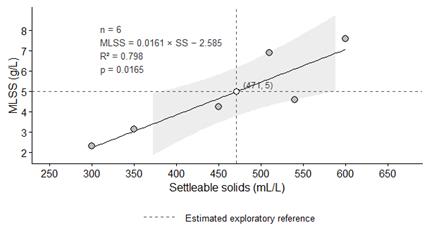
Figure 4: Relationship between settleable solids and MLSS concentrations in the activated sludge reactor during the monitoring period.
Figure 4 shows a significant relationship between settleable solids and MLSS concentrations in the activated sludge reactor based on six paired observations (F = 15.78, p = 0.016, R2=0.798). Based on the obtained regression, an MLSS concentration of 5 g/L corresponds to approximately 471 mL/L of settleable solids. Given the limited number of observations, this value should be regarded as an exploratory, site-specific operational reference rather than as a predictive threshold.
The observed relationship suggests that settleable solids measurements may serve as a practical complementary indicator of mixed liquor conditions under field conditions. Unlike MLSS determination, which requires laboratory procedures and longer analysis times, settleable solids can be rapidly measured onsite using simple field equipment. This operational advantage may be particularly relevant for decentralized WWTPs in low-resource settings, where access to laboratory infrastructure and specialized personnel is often limited.
Consequently, settleable solids monitoring could support rapid field assessment of activated sludge conditions in decentralized systems similar to that evaluated in this study. However, the relationship obtained here should be interpreted cautiously because of the small dataset and the operational variability inherent to full-scale systems. Additional paired observations would be required before the relationship could be used as a predictive surrogate for MLSS or as a formal operational control criterion.
3.3. Operational Indicators: Energy Consumption and Land Requirement
Energy consumption and land requirement were considered as complementary operational indicators for assessing the practical applicability of the evaluated UASB-AS system. These indicators are particularly relevant for decentralized wastewater treatment systems, where operational costs, availability of land, and ease of implementation can strongly influence technology selection and long-term sustainability.
The energy consumption of the Ucureña WWTP was estimated from electricity billing records for the monitoring period and normalized by the volume of wastewater treated. Based on this approach, the specific energy consumption was estimated at 0.94 kWh/m³. Although this value represents the overall electricity use of the facility rather than the consumption of individual units, it provides a useful operational indicator of the energy demand associated with the treatment system. Energy use is a critical factor in wastewater treatment operation, as it can account for a substantial proportion of total operating costs and is mainly associated with pumping and aeration requirements in mechanized systems [41]. Although activated sludge processes are recognized for their high treatment efficiency, they are also characterized by relatively high energy demand. In the evaluated configuration, the UASB reactor acts as a preliminary biological treatment step, removing a considerable fraction of the organic load before the activated sludge stage. This arrangement can reduce the organic load requiring aerobic oxidation compared with conventional activated sludge systems treating raw wastewater.
Reported energy consumption values for conventional activated sludge plants vary widely, from 0.269 to 1.89 kWh/m³ [42,43], while decentralized plants of comparable scale have reported values between 0.35 and 0.65 kWh/m³ [44]. Therefore, the observed value of 0.94 kWh/m³ indicates that energy use remains an important aspect for operational optimization in the Ucureña WWTP. Future improvements could focus on optimizing aeration operation, reviewing pumping requirements, and evaluating complementary renewable energy sources, particularly solar energy, considering the climatic conditions of the study area.
In terms of land requirement, the evaluated system occupied approximately 0.19 m²/cap. This relatively compact footprint is one of the main practical advantages of UASB-AS configurations compared with other decentralized treatment alternatives such as stabilization ponds or constructed wetlands, which typically require larger land areas [32], [45]. This characteristic may be particularly relevant in communities where land availability limits the implementation of extensive natural treatment systems. However, this advantage should be considered together with the higher operational complexity and energy demand associated with mechanized aerobic treatment.
3.4. Economic Analysis
Economic information was included as a complementary criterion to assess the practical feasibility of the evaluated UASB-AS system for decentralized wastewater treatment. Investment and operation costs were obtained from a previously published technical information sheet for the Ucureña WWTP and were organized into capital expenditure (CAPEX) and operation and maintenance expenditure (OPEX). Costs originally reported in Bolivianos (BOB) were converted to US dollars (USD) using the exchange rate applicable in the year of implementation (1 USD = 6.96 BOB) [46]. Although a detailed life-cycle cost analysis was beyond the scope of this study, these indicators allow comparison with other decentralized treatment systems operating in similar regional contexts.
The investment costs for the Ucureña WWTP and the main related items are detailed in Table 6.
Table 6: CAPEX costs
| Item | Total Cost (USD) | Cost (USD/year) |
|---|---|---|
| Land and conditioning | 60,779.19 | 4,169.85 |
| Civil hydraulic works | 219,439.75 | 22,246.54 |
| Electric equipment | 49,963.48 | 7,364.15 |
| Offices and laboratories | 12,643.68 | 822.49 |
| TOTAL | 342,826.10 | 34,603.03 |
The main operation and maintenance costs are described in Table 7.
Table 7: OPEX costs
| Description | Cost (USD/year) |
|---|---|
| Salaries | 4,314.66 |
| Supplies, spare parts, PPEs | 1,494.25 |
| Preventive and corrective maintenance | 3,979.74 |
| Monitoring of WWTP and landfill | 1,508.62 |
| Basic services | 17,327.59 |
| TOTAL | 28,624.86 |
The total investment cost of the Ucureña WWTP was 342,826.10 USD. The annual equivalent cost was estimated at 63,227.89 USD/year, assuming a 5% annual discount rate. Of this amount, 55% corresponded to capital amortization expenses (34,603.03 USD/year), while 45% corresponded to operation and maintenance expenses (28,624.86 USD/year).
The resulting treatment cost was 8.35 USD/cap·year and 0.26 USD/m³ of treated wastewater. This value falls within the range of 0.13-0.48 USD/m³ reported for decentralized wastewater treatment systems operating in the same geographical context [32]. However, the economic implications of the UASB-AS configuration become clearer when capital and operating expenditures are considered separately. In the regional comparison reported by Escalante et al. [32], annualized CAPEX ranged from 22,414 to 97,194 USD/year, whereas OPEX ranged from 16,720 to 28,625 USD/year. The Ucureña WWTP presented an annualized CAPEX of 34,603 USD/year, within the lower portion of the reported range, while its OPEX reached 28,625 USD/year, the highest value among the evaluated systems and largely associated with energy consumption. From a practical perspective, the compact footprint of the UASB-AS configuration contributes to maintaining competitive overall treatment costs, whereas recurrent operating expenditures remain a critical consideration for its long-term sustainability in low-resource rural and semi-rural settings.
4. Conclusions
This study evaluated the performance of a full-scale UASB-activated sludge (UASB-AS) wastewater treatment plant operating in a semi-rural area of the Bolivian high valleys. The monitoring campaign, conducted over nine months, demonstrated that the evaluated configuration provides effective removal of organic matter and suspended solids, achieving overall removal efficiencies of 89% for BOD5, 88% for TCOD, 83% for SCOD, and 89% for TSS. Nutrient removal was moderate, as expected for a system without dedicated nutrient removal processes.
The results showed that satisfactory treatment performance was achieved during the monitoring period despite operation under partial hydraulic loading, resulting in hydraulic retention times and organic loading rates below design values. A simplified organic load balance confirmed the substantial reduction of organic matter throughout the treatment train, highlighting the complementary roles of the UASB and activated sludge stages.
The observed relationship between settleable solids and MLSS suggests that settleable solids may provide a simple complementary indicator of mixed liquor conditions. The estimated value of 471 mL/L corresponding to an MLSS concentration of 5 g/L should be regarded as an exploratory, site-specific operational reference for supporting sludge wasting decisions and maintaining appropriate MLSS concentration rather than as a predictive control threshold.
From a practical perspective, the evaluated UASB-AS configuration combines high treatment efficiency and a compact footprint with treatment costs that are comparable to those of other decentralized wastewater treatment alternatives operating in the same regional context. However, its higher degree of mechanization requires reliable energy supply, preventive maintenance, and trained personnel, and results in comparatively high recurrent operating expenditures, particularly those associated with energy consumption. Overall, the results support the applicability of UASB-AS systems as a viable alternative for decentralized domestic wastewater treatment in semi-arid and semi-rural regions, provided that adequate operational and maintenance capacity is available.

