<?xml version="1.0" encoding="ISO-8859-1"?><article xmlns:mml="http://www.w3.org/1998/Math/MathML" xmlns:xlink="http://www.w3.org/1999/xlink" xmlns:xsi="http://www.w3.org/2001/XMLSchema-instance">
<front>
<journal-meta>
<journal-id>2310-0265</journal-id>
<journal-title><![CDATA[Revista CON-CIENCIA]]></journal-title>
<abbrev-journal-title><![CDATA[Rev.Cs.Farm. y Bioq.]]></abbrev-journal-title>
<issn>2310-0265</issn>
<publisher>
<publisher-name><![CDATA[Facultad de Ciencias Farmacéuticas y BioquímicasUniversidad Mayor de San Andrés]]></publisher-name>
</publisher>
</journal-meta>
<article-meta>
<article-id>S2310-02652016000200002</article-id>
<title-group>
<article-title xml:lang="es"><![CDATA[Estudios de susceptibilidad de cepas de Leishmania aethiopica frente a alcaloides de Galipea longiflora (Evanta)]]></article-title>
<article-title xml:lang="en"><![CDATA[Susceptibility studies on Leishmania aethiopica strains against total alkaloids from Galipea longiflora (Evanta)]]></article-title>
</title-group>
<contrib-group>
<contrib contrib-type="author">
<name>
<surname><![CDATA[Endalamaw]]></surname>
<given-names><![CDATA[Gadisa]]></given-names>
</name>
</contrib>
<contrib contrib-type="author">
<name>
<surname><![CDATA[Abraham]]></surname>
<given-names><![CDATA[Aseffa]]></given-names>
</name>
</contrib>
<contrib contrib-type="author">
<name>
<surname><![CDATA[Salamanca]]></surname>
<given-names><![CDATA[Efrain]]></given-names>
</name>
</contrib>
<contrib contrib-type="author">
<name>
<surname><![CDATA[Ticona]]></surname>
<given-names><![CDATA[Juan Carlos]]></given-names>
</name>
</contrib>
<contrib contrib-type="author">
<name>
<surname><![CDATA[Udaeta]]></surname>
<given-names><![CDATA[Enrique]]></given-names>
</name>
</contrib>
<contrib contrib-type="author">
<name>
<surname><![CDATA[Giménez]]></surname>
<given-names><![CDATA[Alberto]]></given-names>
</name>
</contrib>
<contrib contrib-type="author">
<name>
<surname><![CDATA[Flores]]></surname>
<given-names><![CDATA[Ninoska]]></given-names>
</name>
</contrib>
<contrib contrib-type="author">
<name>
<surname><![CDATA[Chuqui]]></surname>
<given-names><![CDATA[Rogelio]]></given-names>
</name>
</contrib>
</contrib-group>
<aff id="A">
<institution><![CDATA[,  ]]></institution>
<addr-line><![CDATA[ ]]></addr-line>
</aff>
<pub-date pub-type="pub">
<day>00</day>
<month>11</month>
<year>2016</year>
</pub-date>
<pub-date pub-type="epub">
<day>00</day>
<month>11</month>
<year>2016</year>
</pub-date>
<volume>4</volume>
<numero>2</numero>
<fpage>11</fpage>
<lpage>19</lpage>
<copyright-statement/>
<copyright-year/>
<self-uri xlink:href="http://www.scielo.org.bo/scielo.php?script=sci_arttext&amp;pid=S2310-02652016000200002&amp;lng=en&amp;nrm=iso"></self-uri><self-uri xlink:href="http://www.scielo.org.bo/scielo.php?script=sci_abstract&amp;pid=S2310-02652016000200002&amp;lng=en&amp;nrm=iso"></self-uri><self-uri xlink:href="http://www.scielo.org.bo/scielo.php?script=sci_pdf&amp;pid=S2310-02652016000200002&amp;lng=en&amp;nrm=iso"></self-uri><abstract abstract-type="short" xml:lang="es"><p><![CDATA[Resumen El Instituto de Investigaciones Fármaco Bioquímicas (IIFB), dela Facultad de Ciencias Farmacéuticas y Bioquímicas, de la UMSA, desarrolla trabajos sobre la actividad leish-manicida, de los alcaloides totales (CAT) obtenidos de la corteza de la especie medicinal amazónica conocida como Evanta (Galipea longiflora) por los Pueblos Tacana, Tsimane y Mosetene. Como parte de las actividades del Proyecto UMSA-ASDI "Biomoleculas de interés medicinal e industrial (antiparasitarios)" hemos podido contar con la estadía, en el IIFB, de un investigador del Armauer Hansen Research Institute (AHRI) de Etiopia, lo que nos ha permitido desarrollar evaluaciones de CAT, Miltefocine y Amfotericina B, frente a cepas de Leishmania aethiopica, agente causante de las diversa formas de Leishmaniais cutánea en Etiopía. Un total de seis cepas, de L. aethiopi ca, fueron adaptadas a condiciones in vitro y mostraron un comportamiento homogéneo frente a CAT, cinco de estas cepas mostraron un valor promedio de IC50 = 8,68 ± 1,56 mg/mL, valor algo inferior a los calculados para nuestras cepas de referencia, L. ama-zonensis y L. braziliensis con IC50 = 11,73 ± 4,32 mg/mL y IC50 = 12,28 ±- 2,95 mg/mL, respectivamente. Excepto por una cepa de L. aethiopica que mostro valores consistentemente más elevados que el resto con IC50 = 14,37 ±3,58 mg/mL. Como consecuencia de esta interacción científica, la Universidad Mayor de San Andrés (UMSA) ha firmado un Memorandum de Entendimiento para el desarrollo de investigaciones conjuntas, con el Armauer Hansen Research Institute (AH RI), dependiente del Ministerio de Salud de Etiopia y explorar la posibilidad de que nuestra experiencia de validación clínica con Evanta en el tratamiento de leishmaiasis cutánea, en Bolivia, podría ser replicada en Etiopía, donde se reportan entre 20,000 a 30,000 nuevos casos de Leismaniasis por año.]]></p></abstract>
<abstract abstract-type="short" xml:lang="en"><p><![CDATA[Abstract The Instituto de Investigaciones Fármaco Bioquímicas (IIFB), at the Faculty of Pharmaceutical and Biochemical Sciences, from UMSA, carry out work related to the leishmanicidal activity of the total alkaloids (CAT) obtained from the bark of the Ama-zonian medicinal species known as Evanta (Galipea longiflora) by the Tacana, Tsimane y Mosetene people. As part of the activities develop by the UMSA-ASDI Project "Biomolecules of medicinal and industrial Interest (antiparasitic)" we had a visit, in our laboratories at IIFB, of a researcher from The Armauer Hansen Research Institute (AHRI) from Ethiopia, dur-ing his stay we were able to carry out evalu-ations of CAT, Miltefocine and Anphotericin B, against strains of L. aethiopica, causative agent of the different manifestations of cu-taneous leishmaniasis in Ethiopia. A total of six strains of L. aethiopica, were adapted to in vitro a conditions, at IIFB; and did show homogenous behavior against CAT. Five of the strains, showed an average calculated value for IC50 = 8.68 ± 1.56 mg/mL, a value somewhat lower to the calculated for the reference strains L. ama-zonensis and L. braziliensis with IC50 = 11.73 ± 4.32 mg/mL and IC50 = 12.28 +/- 2.95 mg/ mL, respectively. Except for one strain that showed values somewhat higher, to the other strains, consistently through our studies, with IC50 = 14.37 ± 3.58 mg/mL. As a consequence of our scientific inter-action, the Universidad Mayor de San Andrés (UMSA) has signed a Memorandum of Understanding for the development of joint research with the Armauer Hansen Research Institute (AHRI) that belongs to the Ministry of Health in Ethiopia, and explore the possi-bilities to replicate the Bolivian clinical val-idation experience of Evanta in the treat-ment of cutaneous leishmaniasis, in Ethiopia where the annual incidence is estimated to be between 20, 000 to 30, 0000.]]></p></abstract>
<kwd-group>
<kwd lng="es"><![CDATA[Bolivia]]></kwd>
<kwd lng="es"><![CDATA[Etiopia]]></kwd>
<kwd lng="es"><![CDATA[L. aetiopica]]></kwd>
<kwd lng="es"><![CDATA[L.amazonensis]]></kwd>
<kwd lng="es"><![CDATA[L.braziliensis]]></kwd>
<kwd lng="es"><![CDATA[susceptibilidad Alcaloides]]></kwd>
<kwd lng="es"><![CDATA[Galipea longiflora]]></kwd>
</kwd-group>
</article-meta>
</front><body><![CDATA[ <p align="right"><strong><font size="2" face="Verdana">ART&Iacute;CULOS  ORIGINALES</font></strong></p>     <p align="right">&nbsp;</p>     <p align="center"><font face="Verdana" size="4" color="#000000"><strong>Estudios de susceptibilidad de cepas de <i>Leishmania aethiopica </i>frente a alcaloides de <i>Galipea longiflora (Evanta)</i></strong></font></p>     <p align="center">&nbsp;</p>     <p align="center"><font color="#000000" size="3" face="Verdana"><strong>Susceptibility studies on <i>Leishmania aethiopica </i>strains against total alkaloids from <i>Galipea longiflora (Evanta)</i></strong><i></i></font></p>     <p align="center">&nbsp;</p>     <p align="center">&nbsp;</p>     <p align="center"><font face="Verdana"><strong><font size="2">GADISA ENDALAMAW<font color="#000000"><sup>1</sup>,</font> ASEFFA ABRAHAM<font color="#000000"><sup>1</sup>,</font> SALAMANCA EFRAIN<font color="#000000"><sup>2</sup>, </font>TICONA JUAN CARLOS<font color="#000000"><sup>2</sup>, </font> UDAETA ENRIQUE<font color="#000000"><sup>2</sup>, </font>    <br>  GIM&Eacute;NEZ ALBERTO<font color="#000000"><sup>2*</sup>, </font> FLORES NINOSKA CHUQUI  ROGELIO<font color="#000000"><sup>3</sup></font></font></strong><font color="#000000" size="2"><sup></sup></font></font>    <br>   <font color="#000000" size="2" face="Verdana">1&nbsp; &nbsp;Armaeur Hansen Research Institute, Ethiopia</font>    ]]></body>
<body><![CDATA[<br>    <font color="#000000" size="2" face="Verdana">2&nbsp; &nbsp;Area de Qu&iacute;mica Farmac&eacute;utica, Instituto de Investigaciones F&aacute;rmaco Bioqu&iacute;micas</font>    <br>    <font color="#000000" size="2" face="Verdana">3&nbsp; &nbsp;Comunidad Tacana de Santa Rosa de Maravilla</font>    <br>    <font color="#000000" size="2" face="Verdana">*   Autor correspondencia. Instituto de Investigaciones F&aacute;rmaco Bioqu&iacute;micas, Facultad de Ciencias Farmac&eacute;uticas y Bioqu&iacute;micas, Universidad Mayor de San Andr&eacute;s. Av. Saavedra No 2224, Miraflores La Paz, Bolivia</font>    <br>    <font size="2" face="Verdana">Correspondencia: <a href="mailto:agimenez@megalink.com">agimenez@megalink.com</a></font>    <br>    <font color="#000000" size="2" face="Verdana"><strong>FECHA DE RECEPCIÓN:</strong> 23/09/2016</font>	<font color="#000000" size="2" face="Verdana"><strong>FECHA DE ACEPTACIÓN:</strong> 3/11/2016</font></p>     <p align="center">&nbsp;</p>     <p align="center">&nbsp;</p> <hr> <font face="Verdana" size="2" color="#000000"><strong>Resumen</strong></font>     <p align="justify"><font face="Verdana" size="2" color="#000000">El Instituto de Investigaciones Fármaco Bioquímicas (IIFB), dela Facultad de Ciencias Farmacéuticas y Bioquímicas, de la UMSA, desarrolla trabajos sobre la actividad leishmanicida, de los alcaloides totales (CAT) obtenidos de la corteza de la especie medicinal amazónica conocida como Evanta <i>(Galipea longiflora) </i>por los Pueblos Tacana, Tsimane y Mosetene.</font></p>     <p align="justify"><font face="Verdana" size="2" color="#000000">Como parte de las actividades del Proyecto UMSA-ASDI <i>&quot;Biomoleculas de interés medicinal e industrial (antiparasitarios)&quot; </i>hemos podido contar con la estadía, en el IIFB, de un investigador del Armauer Hansen Research Institute (AHRI) de Etiopia, lo que nos ha permitido desarrollar evaluaciones de CAT, Miltefocine y Amfotericina B, frente a cepas de <i>Leishmania aethiopica, </i>agente causante de las diversa formas de <i>Leishmaniais </i>cutánea en Etiopía.</font></p>     <p align="justify"><font color="#000000" size="2" face="Verdana">Un total de seis cepas, de <i>L. aethiopi ca, </i>fueron adaptadas a condiciones <i>in vitro </i>y mostraron un comportamiento homog&eacute;neo frente a CAT, cinco de estas cepas mostraron un valor promedio de IC50 = 8,68 &plusmn; 1,56 mg/mL, valor algo inferior a los calculados para nuestras cepas de referencia, <i>L. amazonensis </i>y <i>L. braziliensis </i>con IC50 = 11,73 &plusmn; 4,32 mg/mL y IC50 = 12,28 &plusmn;- 2,95 mg/mL, respectivamente. Excepto por una cepa de <i>L. aethiopica </i>que mostro valores consistentemente m&aacute;s elevados que el resto con IC50 = 14,37 &plusmn;3,58 mg/mL.</font></p>     ]]></body>
<body><![CDATA[<p align="justify"><font color="#000000" size="2" face="Verdana">Como consecuencia de esta interacci&oacute;n cient&iacute;fica, la Universidad Mayor de San Andr&eacute;s (UMSA) ha firmado un Memorandum de Entendimiento para el desarrollo de investigaciones conjuntas, con el Armauer Hansen Research Institute (AH RI), dependiente del Ministerio de Salud de Etiopia y explorar la posibilidad de que nuestra experiencia de validaci&oacute;n cl&iacute;nica con Evanta en el tratamiento de leishmaiasis cut&aacute;nea, en Bolivia, podr&iacute;a ser replicada en Etiop&iacute;a, donde se reportan entre 20,000 a 30,000 nuevos casos de Leismaniasis por a&ntilde;o.</font></p>     <p align="justify"><font color="#000000" size="2" face="Verdana"><b>Palabras Clave</b></font></p>     <p align="justify"><font color="#000000" size="2" face="Verdana">Bolivia, Etiopia, <i>L. aetiopica, L.amazonensis, L.braziliensis, </i>susceptibilidad Alcaloides, <i>Galipea longiflora</i></font></p> <hr>     <p align="justify"><strong><font face="Verdana" size="2" color="#000000">Abstract</font></strong></p>     <p align="justify"><font face="Verdana" size="2" color="#000000">The Instituto de Investigaciones Fármaco Bioquímicas (IIFB), at the Faculty of Pharmaceutical and Biochemical Sciences, from UMSA, carry out work related to the leishmanicidal activity of the total alkaloids (CAT) obtained from the bark of the Amazonian medicinal species known as Evanta <i>(Galipea longiflora) </i>by the Tacana, Tsimane y Mosetene people.</font></p>     <p align="justify"><font face="Verdana" size="2" color="#000000">As part of the activities develop by the UMSA-ASDI Project <i>&quot;Biomolecules of medicinal and industrial Interest (antiparasitic)&quot; </i>we had a visit, in our laboratories at IIFB, of a researcher from The Armauer Hansen Research Institute (AHRI) from Ethiopia, during his stay we were able to carry out evaluations of CAT, Miltefocine and Anphotericin B, against strains of <i>L. aethiopica, </i>causative agent of the different manifestations of cutaneous leishmaniasis in Ethiopia.</font></p>     <p align="justify"><font face="Verdana" size="2" color="#000000">A total of six strains of <i>L. aethiopica, </i>were adapted to <i>in vitro </i>a conditions, at IIFB; and did show homogenous behavior against CAT. Five of the strains, showed an average calculated value for IC<sub>50</sub> = 8.68 &plusmn; 1.56 mg/mL, a value somewhat lower to the calculated for the reference strains <i>L. ama-zonensis </i>and <i>L. braziliensis </i>with IC<sub>50</sub> = 11.73 &plusmn; 4.32 mg/mL and IC<sub>50</sub> = 12.28 +/- 2.95 mg/ mL, respectively. Except for one strain that showed values somewhat higher, to the other strains, consistently through our studies, with IC<sub>50</sub> = 14.37 &plusmn; 3.58 mg/mL.</font></p>     <p align="justify"><font face="Verdana" size="2" color="#000000">As a consequence of our scientific interaction, the Universidad Mayor de San Andr&eacute;s (UMSA) has signed a Memorandum of Understanding for the development of joint research with the Armauer Hansen Research Institute (AHRI) that belongs to the Ministry of Health in Ethiopia, and explore the possibilities to replicate the Bolivian clinical validation experience of Evanta in the treatment of cutaneous leishmaniasis, in Ethiopia where the annual incidence is estimated to be between 20, 000 to 30, 0000.</font></p>     <p align="justify"><font face="Verdana" size="2" color="#000000"><b>Keywords</b></font></p>     <p align="justify"><font face="Verdana" size="2" color="#000000">Bolivia, Ethiopia, <i>L. aetiopica, L.amazonensis, L.braziliensis, </i>suceptibility Alkaloids <i>Galipea longiflora</i></font></p> <hr>     ]]></body>
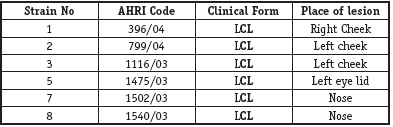
<body><![CDATA[<p align="justify">&nbsp;</p>     <p align="justify">&nbsp;</p>     <p align="justify"><font face="Verdana" size="3" color="#000000"><b>INTRODUCTION</b></font></p>     <p align="justify"><font face="Verdana" size="2" color="#000000"><i>Leishmaniasis </i>is part of the group of forgotten or neglected tropical diseases and one of the most important vectorborne diseases in humans. This disease could be caused by various species of <i>Leishmania </i>parasites, most of which are zoonotic. Different parasite species are associated with different clinical forms of the disease. Many species of <i>Leishmania </i>cause skin ulcers and nodules, leading to cutaneous leishmaniasis (CL) which may be local (LCL) or diffuse (DCL). Some species of these organisms can also affect mucous membranes and may cause injury and disfigure the nose, causing mucocutaneous leishmaniasis (MCL). Other species damage internal organs and cause visceral leishmaniasis (VL), the latter is fatal if not treated in time (Blackwell JM et al. 2009). <i>Leishmaniasis </i>predominantly affectspoor people in Africa, Latin Amerca and Asia. Globally estimated It is estimated to be endemic in 98 countries with annual incidence of 0.9 to 1.6 million cases per year</font></p>     <p align="justify"><font face="Verdana" size="2" color="#000000">There are about 20 species of the <i>Leishmania </i>cause leishmaniasis in human (<a href="#t1">Table 1</a>). These species belong to the Trypanosomatidae family that includes at least eight different Genera. The different clinical manifestations associated with</font> <font face="Verdana" size="2" color="#000000">different <i>Leishmania </i>species. . Currently, the genus <i>Leishmania </i>is divided into two groups: the subGenus <i>Leishmania </i>and subGenus Viannia (Ardaya 2015).</font></p>     <p align="justify"><font face="Verdana" size="2" color="#000000">In the Old World, leishmaniasis could be grouped into two classes, cutaneous (CL), associated with the <i>L. major, L. tropica </i>and <i>L. aethiopica </i>complexes, and visceral (VL), involves up to 4 different species all associated with <i>L. donovani </i>complex (Ayele &amp; Ali 1984). VL is endemic in many tropical and subtropical areas of the world, is the most severe form of leishmaniasis, almost always fatal if left untreated (Lyons et al. 2003). It is estimated that between 200,000 and 400,000 new cases of VL occur in the world each year (WHO, 2013) and of these, East Africa hasthesecond highestnumberof cases, after the Indiansubcontinent (Alvar et al. 2007 and Alvar et al 2012). In the New World, CL infections (LCL and DCL) are associated with <i>L. mexicana </i>and <i>L. braziliensis </i>complexes. MCL, is most often associated with <i>L. braziliensis </i>and <i>L. panamensis, </i>although other species may be involved. The DCL occurs with some species of the parasite and due to host immune factors, while VL is associated with <i>L. chagasi.</i></font></p>     <p align="justify"><font face="Verdana" size="2" color="#000000">In Bolivia, an estimated 0.8 millones of individuals are at high risk of becoming infected with leishmaniasis, the disease is spread in 7 of the 9 departments (except Oruro and Potosi). It is estimated that there are approximately 2,500 new cases per year based on published data, <i>L braziliensis </i>species (CL and MCL) and <i>L. amazonensis </i>(CL) have a clear dominance in national epidemiological indices. <i>L. lainsoni </i>(CL and MCL) and <i>L. chagasi </i>(VL) are presented in rare and few reports (Rojas et al. 2009; Martinez et al. 2002 and Mollinedo etal. 2000). In Bolivia, cases of leishmaniasis tend to increase every year, as well as other vector transmitted diseases like Dengue, Malaria, Chagas Disease (Garcia et al. 2009 and INLASA 2012).</font></p>     <p align="center"><a name="t1"></a><img src="/img/revistas/rcfb/v4n2/a01_figura01.gif" width="546" height="394"></p>     <p align="justify"><font face="Verdana" size="2" color="#000000">Although no official data is available, it is estimated that the population at high risk of contracting some form of leishmaniasis in Ethiopia, is about 30million inhabitants and the total number of cases diagnosed as positive, each year, is estimated at around 20,000 to 30,000, with 25% of cases of VL <i>(L. donovani) </i>and 75% of cases of <b>CL </b><i>(L. aethiopica), </i>the latter comes in three different clinical forms (LCL, <b>MCL </b>and DCL). <b>LCL </b>injuries by L .aethiopica, do not form open sores, as with strains in the New World, <i>(L. mexicana </i>complex). The injuries caused by <i>L. aethiopica </i>are closed (nodules) and is often at the site of vector inoculation. Although, occasionally, severe and persistent LCL, <b>MCL </b>and <b>DCL </b>cause disfiguring and often require prolonged treatment schemes with very low success rate. In the case of <b>DCL, </b>definitive cure is almost never achieved, and relapse is common (Hailu et al. 2006; Lemma et al. 1969; Bryceson 1969 and Sarojini 1984).</font></p>     <p align="justify"><font face="Verdana" size="2" color="#000000">In the area of Pharmaceutical Chemistry at the IIFB (AQF-IIFB), at the Faculty of Pharmaceutical and Biochemical Sciences, UMSA, within the &quot;Project UMSA-SIDA Infections Diseases: Evanta in the Treatment of cutaneous leishmaniasis&quot;, we have produced Evanta based treatments (creams and syrups) (Tacana 1999 and Beatriz 2006), and the effectiveness assessed in a clinical trial (Phase II, treatment of CL), in a comparative treatment versus Glucantime. The study has been carried out in the Hospital of Palos Blancos, from June 2007 to December 2012, with patients diagnosed with <b>CL </b>caused by <i>L. amazonensis </i>and <i>L. braziliensis. </i>A total of 60 individuals (patients with primary infection, over 18 and under 50 years old, as inclusion criteria), were treated, the results of our studies of comparative efficacy for Evanta (29 patients, creams and syrups) are bordering the 68% cure of patients and over 90% cure of patients treated with Glucantime (31 patients, intramuscular) (Magariños2013).</font></p>     ]]></body>
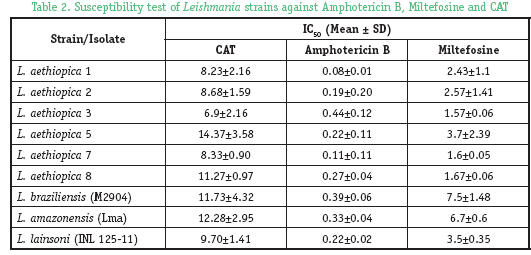
<body><![CDATA[<p align="justify"><font face="Verdana" size="2" color="#000000">Based on the information gathered in the last 10 years, from field and clinic experiences developed in Bolivia, and adding research results from our laboratories, at IIFB, using Evanta (CAT), we can suggest that our experiences of validation of traditional medicines, for the treatment of cutaneous leishmaniasis, could be replicated in Ethiopia (OMS, 2013), where there are reported up to ten times more new cases of leishmaniasis per year, compared to the estimated 2,500 cases per year, in Bolivia.</font></p>     <p align="justify">&nbsp;</p>     <p align="justify"><font face="Verdana" size="3" color="#000000"><b>MATERIALS Y METHODS</b></font></p>     <p align="justify"><font face="Verdana" size="2" color="#000000"><b><i>Leishmania aethiopica </i>strains from AHRI</b></font></p>     <p align="justify"><font face="Verdana" size="2" color="#000000">The <i>Leishmania </i>aethiopica, strains were donated by AHRI, these were obtained from patients ulcers, from a total of ten strains received, six were able to adapt to <i>in vitro </i>cultures at IIFB and were used in the present study.</font></p>     <p align="center"><img src="/img/revistas/rcfb/v4n2/a01_figura02.gif" width="393" height="127"></p>     <p align="center">&nbsp;</p>     <p align="justify"><font face="Verdana" size="2" color="#000000"><strong>Reference <i>Leishmania </i>strains at IIFB</strong></font></p>     <p align="justify"><font face="Verdana" size="2" color="#000000"><i>Leishmania </i>braziliensis (M2904 C192 RJA) and <i>Leishmania </i>amazonensis (Clon 1 NHOM-BR-76-LTB-012). <i>Leishmania </i>lainsoni (INL 125-11)</font></p>     <p align="justify"><font face="Verdana" size="2" color="#000000"><strong>Drugs preparation.</strong></font></p>     ]]></body>
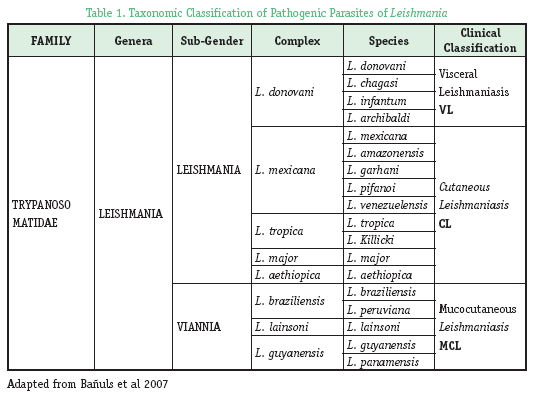
<body><![CDATA[<p align="justify"><font face="Verdana" size="2" color="#000000">The drugs used in the study were Amphotericin-B (ANFOTERICIN-CRI-TÁLIA), Miltefosine (IMPAVIDO) and Total Alkaloids from <i>Galipea longiflora </i>(CAT-IIFB). Amphotericin-B was diluted in Schneider medium (1mg/mL) and dilutions with concentrations ranging from 0.62 to 0.01 ug/mL were prepared. Miltefosine and CAT were diluted with DMSO (10mg/mL), and dilutions with concentrations ranging from 100 to 1.5ug/mL were prepared. Final concentration of DMSO was kept below 1%.</font></p>     <p align="justify"><font face="Verdana" size="2" color="#000000"><strong>Leishmanicidal test</strong></font></p>     <p align="justify"><font face="Verdana" size="2" color="#000000">The activity was measured on <i>in vitro </i>cultures of the <i>Leishmania </i>parasite in promastigote forms, (modified from Salamanca et al 2008), cultivated at 26&deg;C in Schneider medium (pH 6.8) supplemented with inactivated (56&deg;C x 30min) calf bovine serum (10%). Parasites in logarithmic phase of growth, at a concentration of 1x10<sup>6</sup>parasites/mL, were distributed on a 96 micro well plates and the different concentration of the drugs were added. The micro well plates were incubated for 72hrs at 26&deg;C. After incubation, a solution of XTT (1mg/mL) in PBS (pH 7.0 at 37&deg;C) with PMS (Sigma-Aldrich, 0.06mg/mL), was added (50uL/well), and incubated again for 4hrs at 26&deg;C. DMSO (1%) and Anphotericine B (0.5 mg/mL) were used as reference drugs during the evaluations, were done by sextuplicate. Optical density of each well was obtained with a Synergy HT microplate reader with I 200-450nm. The IC<sub>50</sub> values were calculated usingThe Gen5 program (Biotek).</font></p>     <p align="justify">&nbsp;</p>     <p align="justify"><strong><font size="3" face="Verdana">RESULTS</font></strong></p>     <p align="justify"><font face="Verdana" size="2" color="#000000">Because <i>Leishmaniasis </i>is a neglected disease, lack of attention also happens with research and development of new diagnostic tools, drugs or vaccines, because there is no market interested in social groups suffering from the disease (WHO). The misuse and mismanagement of drugs can lead to the emergence of resistance forms (Gil et al. 2007) such is the case with Glucan time, which is well documented in countries like India (Osorio et al 2005), Brazil (Nascimento-Zauli et al. 2010) and Bolivia (10% of treatment failure, Bermudez et al. 2006) and such behavior has been observed within patients with visceral L. coinfected with HIV(Koert etal 2011). While in a clinical trial using Miltefosine, in Palos Blancos, Bolivia, only 50% of patients with MCL were cured (Soto et al. 2007).</font></p>     <p align="justify"><font face="Verdana" size="2" color="#000000">The significant adverse effects reported, such as myalgia, arthralgia, anorexia, nausea and headache and the high costs, in the case of antimonials, stimulate that many patients do not conclude the treatment, favoring the reactivation of the injury, mucous damage and the emergence of drug resistance (Clem A, 2010 and Bhandari et al. 2012). The disadvantages associated with the available drugs and the variability of response to those by <i>Leishmaniasis </i>species, have evidenced the urgent need to develop alternative treatments and monitor treatment efficacy and emerging resistance to drugs in use</font></p>     <p align="justify"><font face="Verdana" size="2" color="#000000">The medicinal plant <i>Galipea longiflora </i>(Evanta) is used in the treatment of cutaneous leishmaniasis by different Amazonian ethnic groups, in Bolivia, and we evaluated the response of six <i>Leishmania </i>aethiopica strains, being the species responsible of the different forms of cutaneous leishmaniasis in Ethiopia, and compared with the response observed for the reference strains at IIFB, when the different strains were exposed to the total alkaloids (CAT) of Evanta. The results are shown on <a href="#t2">Table 2</a>.</font></p>     <p align="center"><a name="t2"></a><img src="/img/revistas/rcfb/v4n2/a01_figura03.gif" width="531" height="255"></p>     <p align="justify">&nbsp;</p>     ]]></body>
<body><![CDATA[<p align="justify"><font face="Verdana"><strong><font size="3">DISCUSSIONS</font></strong></font></p>     <p align="justify"><font face="Verdana" size="2" color="#000000">In Bolivia leishmaniasis infection are caused mainly by <i>L braziliensis </i>(CL and MCL) and <i>L. amazonensis </i>(CL) both species have a clear dominance in national epidemiological indices. While <i>L. lainsoni </i>(CL and MCL) and <i>L. chagasi </i>(VL) are presented in rare and few reports (Rojas E et al. 2009).</font></p>     <p align="justify"><font face="Verdana" size="2" color="#000000">From the six strains of <i>L. aethiopica </i>included in the present studies, five showed homogeneous behavior against all drugs, with an average calculated value for IC<sub>50</sub>=8.68 &plusmn; 1.56ug/mL, when exposed to CAT, a value somewhat inferior to the calculated for the reference strains <i>L. amazonensis, </i>and <i>L. braziliensis </i>with IC<sub>50</sub>=11.73 &plusmn; 4.32ug/mL and IC<sub>50</sub>=12.28 &plusmn; 2.95ug/mL, respectively, but closer to the <i>L. lainsoni, </i>IC<sub>50</sub>=9.7 &plusmn; 1.45 ug/mL. (except <i>L. aethiopica 5, </i>with values somewhat superior to the other strains consistently through our studies: IC<sub>50</sub> = 14.37 &plusmn; 3.58ug/mL against CAT and Miltefosine IC<sub>50</sub>=3.7 &plusmn; 2.39ug/mL).</font></p>     <p align="justify"><font face="Verdana" size="2" color="#000000">All six <i>L. aethiopica </i>showed homogeneous behavior against Amphotericin B (average IC<sub>50</sub>=0.22&plusmn;0.02ug/mL) somewhat lower values when compared with the reference strains <i>L. braziliensis </i>(IC<sub>50</sub>=0.39&plusmn;0.06ug/mL) and <i>L. amazonensis </i>(IC<sub>50</sub>=0.33&plusmn;0.04ug/mL), a similar trend is observed when compared all <i>L. aethiopica </i>strains against Miltefosine (IC<sub>50</sub>=2.26&plusmn;0.76ug/mL) with <i>L. brazi</i></font><font face="Verdana" size="2" color="#000000"><i>liensis </i>and <i>L. amazonensis </i>(IC<sub>50</sub>=7.5&plusmn;1.48ug/mL, and IC<sub>50</sub>=6.7&plusmn;0.6ug/mL, respectively), Interesting to notice that susceptibility values for the <i>L. aethiopica </i>strains are much closer to the values calculated for the less common <i>L. lainsoni </i>strain in Bolivia (IC<sub>50</sub>=0.22&plusmn;0.02ug/mLand IC<sub>50</sub>=3.5&plusmn;0.35ug/mL, respectively).</font></p>     <p align="justify"><font face="Verdana" size="2" color="#000000">The Instituto de Investigaciones Fármaco Bioquímicas (IIFB) belonging to the Faculty of Biochemical and Pharmaceutical Sciences at UMSA, has been working in the analytical (Herrera et al. 2008 and Limachi 2013) chemical (Llanos et al. 2009; Ticona 2005 and 2008; Espinoza 2012) biological (Salamanca 2008 and Herrera 2008) and pharmaceutical formulations (Rodriguez 2006) assessments of the total alkaloids (CAT) produced by Evanta <i>(Galipea longiflora) </i>since 2000 (Gimenez et al. 2005). Moreover, in collaboration with researchers from Brazil, through the CYTED Iberoamerican research network, CAT gastro protective et al. 2009) and antinociceptive (Campos-Buzzi et al 2010) effects were assessed, and results on G. longiflora shows significant inhibition of ulcer formation by decreasing gastric secretion and increase gastric mucus content. Therefore, the IIFB, has produced Evanta based treatments which were used in a clinical study on patients diagnosed with LC, caused by <i>L. amazonensis </i>and <i>L. braziliensis, </i>in Palos Blancos Hospital (2007-12), with efficacy bordering the 68% cure of patients.</font></p>     <p align="justify">&nbsp;</p>     <p align="justify"><strong><font size="3" face="Verdana">CONCLUSIONS</font></strong></p>     <p align="justify"><font face="Verdana" size="2" color="#000000">Our <i>in vitro </i>studies developed at UMSA by researchers from IIFB and AHRI, using strains of <i>L. aethiopica </i>and different local leishmania spp strains circulating in Bolivia, against total alkaloids of Evanta (CAT), have shown that <i>L. aethiopica </i>parasites (media IC<sub>50</sub>=6.93+/-1.89) and the Bolivian strains (media IC<sub>50</sub>=11.24+/-2.89) are sensitive to Evanta alkaloids, suggesting that our experience in clinical validation, previously carried out in Bolivia, could be replicated in Ethiopia, where an estimated of 20,000 to 30,000 new cases of leis-hmaniasis are reported each year.</font></p>     <p align="justify">&nbsp;</p>     <p align="justify"><font face="Verdana" size="2" color="#000000"><b><font size="3">ACKNOWLEDGMENTS</font></b><font size="3">&nbsp; &nbsp; &nbsp;</font> &nbsp; &nbsp; &nbsp; &nbsp; &nbsp; &nbsp; &nbsp; &nbsp; &nbsp; &nbsp; &nbsp; &nbsp; &nbsp; &nbsp; &nbsp; &nbsp; &nbsp; &nbsp; &nbsp; &nbsp; &nbsp; &nbsp; &nbsp; &nbsp; &nbsp; &nbsp;</font></p>     ]]></body>
<body><![CDATA[<p align="justify"><font face="Verdana" size="2" color="#000000">The author wish to thank the UMSA-ASDI Institutional strengthening Program and the Biomolecules (antiparasitic) project, for supporting this study. The IIFB wish to recognize the CIPTA for collaborating on our studies on the Tacana's traditional knowledge.</font></p>     <p align="justify">&nbsp;</p>     <p align="justify"><font face="Verdana" size="3" color="#000000"><b>REFERENCES</b></font></p>     <!-- ref --><p align="justify"><font color="#000000" size="2" face="Verdana">Alvar J, Bashaye S, Argaw D, Cruz I, Aparicio P, et al. (2007) Kalaazar outbreak in Libo Kemkem, Ethiopia: epidemiologic and parasitologic assessment. Am J Trop Med Hyg 77: 275-282</font>&nbsp;&nbsp;&nbsp;&nbsp;&nbsp;&nbsp;&nbsp;&nbsp;[&#160;<a href="javascript:void(0);" onclick="javascript: window.open('/scielo.php?script=sci_nlinks&ref=1245720&pid=S2310-0265201600020000200001&lng=','','width=640,height=500,resizable=yes,scrollbars=1,menubar=yes,');">Links</a>&#160;]<!-- end-ref --><!-- ref --><p align="justify"><font color="#000000" size="2" face="Verdana">Ardaya Daza Cecilia Lorena(2015) ESTUDIO MOLECULAR DE ESPECIES DE <i>Leishmania </i>spp.&quot; &quot;Tesis para optar al titulo de</font> <font color="#000000" size="2" face="Verdana">Magister Scientiarum en Ciencias Biológicas y Biomédicas, UMSA, Bolivia.</font>&nbsp;&nbsp;&nbsp;&nbsp;&nbsp;&nbsp;&nbsp;&nbsp;[&#160;<a href="javascript:void(0);" onclick="javascript: window.open('/scielo.php?script=sci_nlinks&ref=1245721&pid=S2310-0265201600020000200002&lng=','','width=640,height=500,resizable=yes,scrollbars=1,menubar=yes,');">Links</a>&#160;]<!-- end-ref --><!-- ref --><p align="justify"><font color="#000000" size="2" face="Verdana">Ayele T, Ali A (1984) The distribution of visceral leishmaniasis in Ethiopia. Am J Trop Med Hyg 33: 548-552.</font>&nbsp;&nbsp;&nbsp;&nbsp;&nbsp;&nbsp;&nbsp;&nbsp;[&#160;<a href="javascript:void(0);" onclick="javascript: window.open('/scielo.php?script=sci_nlinks&ref=1245722&pid=S2310-0265201600020000200003&lng=','','width=640,height=500,resizable=yes,scrollbars=1,menubar=yes,');">Links</a>&#160;]<!-- end-ref --><!-- ref --><p align="justify"><font color="#000000" size="2" face="Verdana">Desjeux P (2004) <i>Leishmaniasis: </i>current si-tuation and new perspectives. Comp Im-munol Microbiol Infect Dis 27: 305-18.</font>&nbsp;&nbsp;&nbsp;&nbsp;&nbsp;&nbsp;&nbsp;&nbsp;[&#160;<a href="javascript:void(0);" onclick="javascript: window.open('/scielo.php?script=sci_nlinks&ref=1245723&pid=S2310-0265201600020000200004&lng=','','width=640,height=500,resizable=yes,scrollbars=1,menubar=yes,');">Links</a>&#160;]<!-- end-ref --><!-- ref --><p align="justify"><font color="#000000" size="2" face="Verdana">Bañuls AL, Hide M, Prugnolle F. (2007) <i>Leis-hmania </i>and the leishmaniasis a parasi-te genetic update and advances in taxo-nomy, epidemiology and pathogenicity in humans. Adv Parasitol; 64:1-109.</font>&nbsp;&nbsp;&nbsp;&nbsp;&nbsp;&nbsp;&nbsp;&nbsp;[&#160;<a href="javascript:void(0);" onclick="javascript: window.open('/scielo.php?script=sci_nlinks&ref=1245724&pid=S2310-0265201600020000200005&lng=','','width=640,height=500,resizable=yes,scrollbars=1,menubar=yes,');">Links</a>&#160;]<!-- end-ref --><!-- ref --><p align="justify"><font color="#000000" size="2" face="Verdana">Bermudez H, Rojas. E, Garcia .L, Desjeux.P, Dujardin .J.C, Boelaert. M, Chappuis. F. (2006). Generic sodium stibogluconate is as safe and effective as branded me-glumine antimoniate, for the treatment of tegumentary leishmaniasis in Isiboro Secure Park, Bolivia. Annals of Tropical Medicine and Parasitology:100:591-600.</font>&nbsp;&nbsp;&nbsp;&nbsp;&nbsp;&nbsp;&nbsp;&nbsp;[&#160;<a href="javascript:void(0);" onclick="javascript: window.open('/scielo.php?script=sci_nlinks&ref=1245725&pid=S2310-0265201600020000200006&lng=','','width=640,height=500,resizable=yes,scrollbars=1,menubar=yes,');">Links</a>&#160;]<!-- end-ref --><!-- ref --><p align="justify"><font color="#000000" size="2" face="Verdana">Blackwell JM, Fakiola M, Ibrahim ME, Jamie-son SE, Jeronimo SB, Miller EN, Mishra a, Mohamed HS, Peacock C, Raju M, Sun-dar s, Wilson ME. (2009) Genetics and visceral leishmaniasis of mice and man. Parasite Immunol: 31:254-66.</font>&nbsp;&nbsp;&nbsp;&nbsp;&nbsp;&nbsp;&nbsp;&nbsp;[&#160;<a href="javascript:void(0);" onclick="javascript: window.open('/scielo.php?script=sci_nlinks&ref=1245726&pid=S2310-0265201600020000200007&lng=','','width=640,height=500,resizable=yes,scrollbars=1,menubar=yes,');">Links</a>&#160;]<!-- end-ref --><!-- ref --><p align="justify"><font color="#000000" size="2" face="Verdana">Bryceson AD (1969). Diffuse cutaneous leishmaniasis in Ethiopia. I. The clinical and histological features of the disease. Trans R SocTrop Med Hyg 63:708-737</font>&nbsp;&nbsp;&nbsp;&nbsp;&nbsp;&nbsp;&nbsp;&nbsp;[&#160;<a href="javascript:void(0);" onclick="javascript: window.open('/scielo.php?script=sci_nlinks&ref=1245727&pid=S2310-0265201600020000200008&lng=','','width=640,height=500,resizable=yes,scrollbars=1,menubar=yes,');">Links</a>&#160;]<!-- end-ref --><!-- ref --><p align="justify"><font color="#000000" size="2" face="Verdana">Campos-Buzzi F., M. Fracasso, BK Clasen, JC Ticona, A. Giménez and V. Cechinel-Fil-ho. (2010) Evaluation of antinociceptive effects of Galipealongiflora alkaloid ex-tract and major alkaloid 2-fenilquinoli-ne.Methods and Findings in Experimental and ClinicalPharmacology, 32 (10): 707-711.</font>&nbsp;&nbsp;&nbsp;&nbsp;&nbsp;&nbsp;&nbsp;&nbsp;[&#160;<a href="javascript:void(0);" onclick="javascript: window.open('/scielo.php?script=sci_nlinks&ref=1245728&pid=S2310-0265201600020000200009&lng=','','width=640,height=500,resizable=yes,scrollbars=1,menubar=yes,');">Links</a>&#160;]<!-- end-ref --><!-- ref --><p align="justify"><font color="#000000" size="2" face="Verdana">Espinoza Cruz Boris Mayko (2012). &quot;Estudio de Plantas Antiparasitarias de Farmacopeas Tradicionales de Bolivia <i>&quot;Galipea longiflora </i>Krause y Piper hispidum Swartz&quot; Tesis de Maestría en Ciencias Biológicas y Biomédicas, Mención BIOLOGÍA DE POBLACIONES, UMSA</font>&nbsp;&nbsp;&nbsp;&nbsp;&nbsp;&nbsp;&nbsp;&nbsp;[&#160;<a href="javascript:void(0);" onclick="javascript: window.open('/scielo.php?script=sci_nlinks&ref=1245729&pid=S2310-0265201600020000200010&lng=','','width=640,height=500,resizable=yes,scrollbars=1,menubar=yes,');">Links</a>&#160;]<!-- end-ref --><!-- ref --><p align="justify"><font color="#000000" size="2" face="Verdana">Garcia AL, Parrado R, Rojas E, Delgado R, Dujardin JC, REithinger R (2009). <i>Leishmaniasis </i>in Bolivia: Comprehensive re-view and current status. Am J Trop Med Hyg 80:704-711</font>&nbsp;&nbsp;&nbsp;&nbsp;&nbsp;&nbsp;&nbsp;&nbsp;[&#160;<a href="javascript:void(0);" onclick="javascript: window.open('/scielo.php?script=sci_nlinks&ref=1245730&pid=S2310-0265201600020000200011&lng=','','width=640,height=500,resizable=yes,scrollbars=1,menubar=yes,');">Links</a>&#160;]<!-- end-ref --><!-- ref --><p align="justify"><font color="#000000" size="2" face="Verdana">Gil Eric, Cunha Luiz, Goncalves Aurèlia, Souza Aparecido, Negron Valderrama (2007). Importancia de los Compuestos Inorgánicos en el Tratamiento de la <i>Leishmaniasis. </i>Latin American Journal of Pharmacy. 26 (3): 454-461.</font>&nbsp;&nbsp;&nbsp;&nbsp;&nbsp;&nbsp;&nbsp;&nbsp;[&#160;<a href="javascript:void(0);" onclick="javascript: window.open('/scielo.php?script=sci_nlinks&ref=1245731&pid=S2310-0265201600020000200012&lng=','','width=640,height=500,resizable=yes,scrollbars=1,menubar=yes,');">Links</a>&#160;]<!-- end-ref --><!-- ref --><p align="justify"><font color="#000000" size="2" face="Verdana">A. Giménez, G. Ruiz, J.A. Avila, et al. (2005) Estudios químicos, biológicos y farmacológicos de <i>Galipea longiflora, </i>Krause. Revista Boliviana de Química. Vol 22 No 1,94-107.</font>&nbsp;&nbsp;&nbsp;&nbsp;&nbsp;&nbsp;&nbsp;&nbsp;[&#160;<a href="javascript:void(0);" onclick="javascript: window.open('/scielo.php?script=sci_nlinks&ref=1245732&pid=S2310-0265201600020000200013&lng=','','width=640,height=500,resizable=yes,scrollbars=1,menubar=yes,');">Links</a>&#160;]<!-- end-ref --><!-- ref --><p align="justify"><font color="#000000" size="2" face="Verdana">Herrera Vania, Juan Carlos Ticona, Enrique Udaeta, Rogelio Chuqui, Alberto Giménez (2008) &quot;Validación del método analítico para la cuantificación de alcaloides quinolínicos del extracto de <i>Galipea longiflora </i>Krause&quot; BIOFARBO; Vol 16, 47</font>&nbsp;&nbsp;&nbsp;&nbsp;&nbsp;&nbsp;&nbsp;&nbsp;[&#160;<a href="javascript:void(0);" onclick="javascript: window.open('/scielo.php?script=sci_nlinks&ref=1245733&pid=S2310-0265201600020000200014&lng=','','width=640,height=500,resizable=yes,scrollbars=1,menubar=yes,');">Links</a>&#160;]<!-- end-ref --><!-- ref --><p align="justify"><font color="#000000" size="2" face="Verdana">Herrera Choque Vania Cecilia (2008). Toxicidad de extractos de alcaloides totales de la <i>Galipea longiflora </i>Krause Kallun-ki (Evanta) en fase preclínica. Tesis de Maestría en Ciencias Biológicas y Biomédicas, Mención PARASITOLOGIA. UMSA</font>&nbsp;&nbsp;&nbsp;&nbsp;&nbsp;&nbsp;&nbsp;&nbsp;[&#160;<a href="javascript:void(0);" onclick="javascript: window.open('/scielo.php?script=sci_nlinks&ref=1245734&pid=S2310-0265201600020000200015&lng=','','width=640,height=500,resizable=yes,scrollbars=1,menubar=yes,');">Links</a>&#160;]<!-- end-ref --><!-- ref --><p align="justify"><font color="#000000" size="2" face="Verdana">INLASA (2012): Norma de vigilancia y control de leishmaniasis en Bolivia.</font>&nbsp;&nbsp;&nbsp;&nbsp;&nbsp;&nbsp;&nbsp;&nbsp;[&#160;<a href="javascript:void(0);" onclick="javascript: window.open('/scielo.php?script=sci_nlinks&ref=1245735&pid=S2310-0265201600020000200016&lng=','','width=640,height=500,resizable=yes,scrollbars=1,menubar=yes,');">Links</a>&#160;]<!-- end-ref --><!-- ref --><p align="justify"><font color="#000000" size="2" face="Verdana">Koert Ritmeijer, Rachel ter Horst, Solomon Chane, Endashaw Mengistu Aderie, Tu</font><font color="#000000" size="2" face="Verdana">rid Piening, Simon M. Collin, Robert N. Davidson (2011). Limited Effectiveness of High-Dose Liposomal Amphotericin B (Am Bisome) for Treatment of Visceral <i>Leishmaniasis </i>in an Ethiopian Popu-lation With High HIV Prevalence. Clinical Infectious Diseases 53:152-58.</font>&nbsp;&nbsp;&nbsp;&nbsp;&nbsp;&nbsp;&nbsp;&nbsp;[&#160;<a href="javascript:void(0);" onclick="javascript: window.open('/scielo.php?script=sci_nlinks&ref=1245736&pid=S2310-0265201600020000200017&lng=','','width=640,height=500,resizable=yes,scrollbars=1,menubar=yes,');">Links</a>&#160;]<!-- end-ref --><!-- ref --><p align="justify"><font color="#000000" size="2" face="Verdana">Lemma A, Foster WA, Gemetchu T, Preston PM, Bryceson A, Minter DM (1969). Stu-dies on leishmaniasis in Ethiopia. I. Pre-leishmaniasisinEthiopia.I.Pre-liminary investigation into the epidemiology of cutaneous leishmaniasis in the highlands. Ann Trop Med Parasitol, 63:455-472</font>&nbsp;&nbsp;&nbsp;&nbsp;&nbsp;&nbsp;&nbsp;&nbsp;[&#160;<a href="javascript:void(0);" onclick="javascript: window.open('/scielo.php?script=sci_nlinks&ref=1245737&pid=S2310-0265201600020000200018&lng=','','width=640,height=500,resizable=yes,scrollbars=1,menubar=yes,');">Links</a>&#160;]<!-- end-ref --><!-- ref --><p align="justify"><font color="#000000" size="2" face="Verdana">Limachi Valdez Ivan (2013) &quot;Análisis químico cuantitativo y el uso como antiparasitario del extracto etanólico de <i>Galipea longiflora </i>(Evanta)&quot; Tesis de Maestría en Ciencias Biológicas y Biomédicas, Mención PRODUCTOS NATURALES. UMSA</font>&nbsp;&nbsp;&nbsp;&nbsp;&nbsp;&nbsp;&nbsp;&nbsp;[&#160;<a href="javascript:void(0);" onclick="javascript: window.open('/scielo.php?script=sci_nlinks&ref=1245738&pid=S2310-0265201600020000200019&lng=','','width=640,height=500,resizable=yes,scrollbars=1,menubar=yes,');">Links</a>&#160;]<!-- end-ref --><!-- ref --><p align="justify"><font color="#000000" size="2" face="Verdana">Llanos Medina Fabiola, Boris Espinoza Cruz, Efrain Salamanca Capusiri, Rogelio Chuqui, Ninoska Flores Quisbert, Alberto Giménez Turba (2009). &quot;Extracción Acuosa de Corteza de <i>Galipea longiflora </i>y su actividad <i>Leishmaniacida&quot; </i>BIOFARBO; Vol 17 (2), 32 - 38</font>&nbsp;&nbsp;&nbsp;&nbsp;&nbsp;&nbsp;&nbsp;&nbsp;[&#160;<a href="javascript:void(0);" onclick="javascript: window.open('/scielo.php?script=sci_nlinks&ref=1245739&pid=S2310-0265201600020000200020&lng=','','width=640,height=500,resizable=yes,scrollbars=1,menubar=yes,');">Links</a>&#160;]<!-- end-ref --><!-- ref --><p align="justify"><font color="#000000" size="2" face="Verdana">Magariños Walter (2013). MD Responsable Proyecto Enfermedades Infecciosas comunicación personal</font>&nbsp;&nbsp;&nbsp;&nbsp;&nbsp;&nbsp;&nbsp;&nbsp;[&#160;<a href="javascript:void(0);" onclick="javascript: window.open('/scielo.php?script=sci_nlinks&ref=1245740&pid=S2310-0265201600020000200021&lng=','','width=640,height=500,resizable=yes,scrollbars=1,menubar=yes,');">Links</a>&#160;]<!-- end-ref --><!-- ref --><p align="justify"><font color="#000000" size="2" face="Verdana">Lyons S, Veeken H, Long J (2003) Visceral leishmaniasis and HIV in Tigray, Ethiopia. Trop Med Int Health 8: 733-739</font>&nbsp;&nbsp;&nbsp;&nbsp;&nbsp;&nbsp;&nbsp;&nbsp;[&#160;<a href="javascript:void(0);" onclick="javascript: window.open('/scielo.php?script=sci_nlinks&ref=1245741&pid=S2310-0265201600020000200022&lng=','','width=640,height=500,resizable=yes,scrollbars=1,menubar=yes,');">Links</a>&#160;]<!-- end-ref --><!-- ref --><p align="justify"><font color="#000000" size="2" face="Verdana">Martinez E, Mollinedo S, Torrez M, Muñoz M, Bañuls AL, Le Pont F (2002). Co-infec-tion by <i>Leishmania </i>amazonensis and L. infantum chagasi in a case of diffuse cutaneous leishmaniasis in Bolivia. Trans R SocTrop Med Hyg; 96:529-532.</font>&nbsp;&nbsp;&nbsp;&nbsp;&nbsp;&nbsp;&nbsp;&nbsp;[&#160;<a href="javascript:void(0);" onclick="javascript: window.open('/scielo.php?script=sci_nlinks&ref=1245742&pid=S2310-0265201600020000200023&lng=','','width=640,height=500,resizable=yes,scrollbars=1,menubar=yes,');">Links</a>&#160;]<!-- end-ref --><!-- ref --><p align="justify"><font color="#000000" size="2" face="Verdana">Mollinedo S, Torrez M, Holguin E, Vargas F (2000). <i>Leishmaniasis </i>en Bolivia. <a href="www.galenored.com" target="_blank">www.galenored.com</a></font>&nbsp;&nbsp;&nbsp;&nbsp;&nbsp;&nbsp;&nbsp;&nbsp;[&#160;<a href="javascript:void(0);" onclick="javascript: window.open('/scielo.php?script=sci_nlinks&ref=1245743&pid=S2310-0265201600020000200024&lng=','','width=640,height=500,resizable=yes,scrollbars=1,menubar=yes,');">Links</a>&#160;]<!-- end-ref --><!-- ref --><p align="justify"><font color="#000000" size="2" face="Verdana">Nascimento-Zauli Rogèria, Miguel Danilo, Yokoyama-Yasuyama Jenicer, Pereira Le-dice, Pelli de Oliveira Milton, Ribeiro-Dias Fátima, Dorta Mirian, Uliana Silvia (2010). In vitro sensitivity of <i>Leishmania </i>(Viannia) braziliensis and <i>Leishmania (Leishmania) </i>amazonensis Brazilian isolates to meglumine antimoniate and amphotericin B. Tropical Medicine And International Health. 15: 68-76.</font>&nbsp;&nbsp;&nbsp;&nbsp;&nbsp;&nbsp;&nbsp;&nbsp;[&#160;<a href="javascript:void(0);" onclick="javascript: window.open('/scielo.php?script=sci_nlinks&ref=1245744&pid=S2310-0265201600020000200025&lng=','','width=640,height=500,resizable=yes,scrollbars=1,menubar=yes,');">Links</a>&#160;]<!-- end-ref --><!-- ref --><p align="justify"><font color="#000000" size="2" face="Verdana">Osorio Edison, Robledo Sara, Arango Gabriel, Muskus Carlos (2005). <i>Leishmania: </i>papel de la glicoproteína P en la medición de la resistencia a medicamentos y estrategias de reversión. Biomedica 25:242-260.</font>&nbsp;&nbsp;&nbsp;&nbsp;&nbsp;&nbsp;&nbsp;&nbsp;[&#160;<a href="javascript:void(0);" onclick="javascript: window.open('/scielo.php?script=sci_nlinks&ref=1245745&pid=S2310-0265201600020000200026&lng=','','width=640,height=500,resizable=yes,scrollbars=1,menubar=yes,');">Links</a>&#160;]<!-- end-ref --><!-- ref --><p align="justify"><font color="#000000" size="2" face="Verdana">Rodríguez Olguín Beatriz Amparo (2006). &quot;Estudio de Preformulación en una forma farmacéutica semisólida de uso tópico para el extracto orgánico y concentrado de alcaloides totales de la especie <i>Galipea longiflora </i>Krause &quot;Evanta&quot;. Tesis de Maestría en Tecnología Farmacéutica y Control de Calidad de Medicamentos. FCFYB UMSA. Tutores: Alberto Giménez Turba y Francisco López Naranjo</font>&nbsp;&nbsp;&nbsp;&nbsp;&nbsp;&nbsp;&nbsp;&nbsp;[&#160;<a href="javascript:void(0);" onclick="javascript: window.open('/scielo.php?script=sci_nlinks&ref=1245746&pid=S2310-0265201600020000200027&lng=','','width=640,height=500,resizable=yes,scrollbars=1,menubar=yes,');">Links</a>&#160;]<!-- end-ref --><!-- ref --><p align="justify"><font color="#000000" size="2" face="Verdana">Rojas E, Parrado R, Delgado R, Reithinger R, Garcia AL (2009). <i>Leishmaniasis </i>in Chaparé, Bolivia. Emerging Infectious Diseases.; 15 (4): 678-680</font>&nbsp;&nbsp;&nbsp;&nbsp;&nbsp;&nbsp;&nbsp;&nbsp;[&#160;<a href="javascript:void(0);" onclick="javascript: window.open('/scielo.php?script=sci_nlinks&ref=1245747&pid=S2310-0265201600020000200028&lng=','','width=640,height=500,resizable=yes,scrollbars=1,menubar=yes,');">Links</a>&#160;]<!-- end-ref --><!-- ref --><p align="justify"><font color="#000000" size="2" face="Verdana">Salamanca Capusiri Efrain, Grace Ruiz Pi-nell, Juan Carlos Ticona Huallpara, Alberto Giménez Turba (2008) <sup>“</sup>Método colorimétrico - XTT: como evaluación de alto rendimiento de sustancias con actividad leishmanicida&quot;, BIOFARBO; Vol 16,21 -27</font>&nbsp;&nbsp;&nbsp;&nbsp;&nbsp;&nbsp;&nbsp;&nbsp;[&#160;<a href="javascript:void(0);" onclick="javascript: window.open('/scielo.php?script=sci_nlinks&ref=1245748&pid=S2310-0265201600020000200029&lng=','','width=640,height=500,resizable=yes,scrollbars=1,menubar=yes,');">Links</a>&#160;]<!-- end-ref --><!-- ref --><p align="justify"><font color="#000000" size="2" face="Verdana">Salamanca Capusiri Efrain (2008). Actividad antiparasitaria múltiple de los alcaloides totales de corteza de <i>Galipea longiflora </i>Krause Kallunki (Evanta) Tesis de Maestría en Ciencias Biológicas y Biomédicas, Mención PARASITOLOGIA. UMSA.</font>&nbsp;&nbsp;&nbsp;&nbsp;&nbsp;&nbsp;&nbsp;&nbsp;[&#160;<a href="javascript:void(0);" onclick="javascript: window.open('/scielo.php?script=sci_nlinks&ref=1245749&pid=S2310-0265201600020000200030&lng=','','width=640,height=500,resizable=yes,scrollbars=1,menubar=yes,');">Links</a>&#160;]<!-- end-ref --><!-- ref --><p align="justify"><font color="#000000" size="2" face="Verdana">Sarojini PA, Humber DP, Yemane-Berhan T, Fekete E, Belehu A, Mock B, Warndorff JA (1984). Cutaneous leishmaniasis cases seen in two years atthe All Africa Le-prosy and Rehabilitation Training Centre Hospital. Ethiop Med J 22:7-11</font>&nbsp;&nbsp;&nbsp;&nbsp;&nbsp;&nbsp;&nbsp;&nbsp;[&#160;<a href="javascript:void(0);" onclick="javascript: window.open('/scielo.php?script=sci_nlinks&ref=1245750&pid=S2310-0265201600020000200031&lng=','','width=640,height=500,resizable=yes,scrollbars=1,menubar=yes,');">Links</a>&#160;]<!-- end-ref --><!-- ref --><p align="justify"><font color="#000000" size="2" face="Verdana">Soto J, Toledo J, Valda L, Balderrama M, Rea I, Parra R, Ardiles J, Soto P, Gomez A, Molleda F, Fuentelsaz C, Anders G, Sin-dermann H, Engel J, Berman J. (2007). Treatment of Bolivian Mucosal <i>Leishmaniasis </i>with Miltefosine. Clinical Infec-tious Diseases,:44:350-356.</font>&nbsp;&nbsp;&nbsp;&nbsp;&nbsp;&nbsp;&nbsp;&nbsp;[&#160;<a href="javascript:void(0);" onclick="javascript: window.open('/scielo.php?script=sci_nlinks&ref=1245751&pid=S2310-0265201600020000200032&lng=','','width=640,height=500,resizable=yes,scrollbars=1,menubar=yes,');">Links</a>&#160;]<!-- end-ref --><p align="justify"><font color="#000000" size="2" face="Verdana">&quot;TACANA: ECUANASHA AQUÍ, ECUANAS-HA ID'RENE CUANA, ME SCHANAPA-QUE&quot; (TACANA: Conozcan nuestros árboles, nuestras hierbas). (1999) Editorial Plural La Paz, Bolivia Editores. Responsables: G. Bourdy-IRD, A. Giménez-UM-SA y Celin Quenevo-CIPTA Autores: Varios.</font></p>     <!-- ref --><p align="justify"><font color="#000000" size="2" face="Verdana">Ticona Huallpara Juan Carlos (2005) &quot;Estudio comparativo de métodos de extracción de alcaloides quinolínicos de la Angostura longiflora K. Kallunki (Evanta) con actividad leishmanicida&quot;. Tesina de Licenciatura en Bioquímica, UMSA.</font>&nbsp;&nbsp;&nbsp;&nbsp;&nbsp;&nbsp;&nbsp;&nbsp;[&#160;<a href="javascript:void(0);" onclick="javascript: window.open('/scielo.php?script=sci_nlinks&ref=1245753&pid=S2310-0265201600020000200033&lng=','','width=640,height=500,resizable=yes,scrollbars=1,menubar=yes,');">Links</a>&#160;]<!-- end-ref --><!-- ref --><p align="justify"><font color="#000000" size="2" face="Verdana">Ticona Huallpara Juan Carlos (2008). Estudio químico de dos plantas bolivianas de la Etnia Tacana: <i>Galipea longiflora </i>y Bow-dichia virgilioides&quot; Tesis de Maestría en Ciencias Biológicas y Biomédicas, Mención BIOLOGIA DE POBLACIONES. UMSA</font>&nbsp;&nbsp;&nbsp;&nbsp;&nbsp;&nbsp;&nbsp;&nbsp;[&#160;<a href="javascript:void(0);" onclick="javascript: window.open('/scielo.php?script=sci_nlinks&ref=1245754&pid=S2310-0265201600020000200034&lng=','','width=640,height=500,resizable=yes,scrollbars=1,menubar=yes,');">Links</a>&#160;]<!-- end-ref --><!-- ref --><p align="justify"><font color="#000000" size="2" face="Verdana">Tsegaw T, Gadisa E, Seid A, Abera A, Tesho-me A, et al. (2013) Identification of en-vironmental parameters and risk map-ping of visceral leishmaniasis in Ethiopia by using geographical information sys-tems and a statistical approach. Geospat Health 7: 299-308</font>&nbsp;&nbsp;&nbsp;&nbsp;&nbsp;&nbsp;&nbsp;&nbsp;[&#160;<a href="javascript:void(0);" onclick="javascript: window.open('/scielo.php?script=sci_nlinks&ref=1245755&pid=S2310-0265201600020000200035&lng=','','width=640,height=500,resizable=yes,scrollbars=1,menubar=yes,');">Links</a>&#160;]<!-- end-ref --><!-- ref --><p align="justify"><font color="#000000" size="2" face="Verdana">Zanatta F, Gandolfi RB, Lemos M, Ticona JC, Gimenez A, Clasen BK,etal. (2009) Gas-troprotective activity of alkaloid extract and 2-phenylquinoline obtained from the bark of <i>Galipea longiflora </i>Krause (Rutaceae).Chem Biol Interact. 180(2): 312-17.</font>&nbsp;&nbsp;&nbsp;&nbsp;&nbsp;&nbsp;&nbsp;&nbsp;[&#160;<a href="javascript:void(0);" onclick="javascript: window.open('/scielo.php?script=sci_nlinks&ref=1245756&pid=S2310-0265201600020000200036&lng=','','width=640,height=500,resizable=yes,scrollbars=1,menubar=yes,');">Links</a>&#160;]<!-- end-ref --><!-- ref --><p align="justify"><font color="#000000" size="2" face="Verdana">WHO (2013) <i>Leishmaniasis, </i>Fact sheet N&deg;375: <A href=http://www.who.int/mediacen- target="_blank">http://www.who.int/mediacentre/factsheets/fs375/en/</A>.</font>&nbsp;&nbsp;&nbsp;&nbsp;&nbsp;&nbsp;&nbsp;&nbsp;[&#160;<a href="javascript:void(0);" onclick="javascript: window.open('/scielo.php?script=sci_nlinks&ref=1245757&pid=S2310-0265201600020000200037&lng=','','width=640,height=500,resizable=yes,scrollbars=1,menubar=yes,');">Links</a>&#160;]<!-- end-ref --><!-- ref --><p align="justify"><font color="#000000" size="2" face="Verdana">WHO (2010) Control of the leishmaniases. WHO Tec Rep Ser 949: 1-186.</font>&nbsp;&nbsp;&nbsp;&nbsp;&nbsp;&nbsp;&nbsp;&nbsp;[&#160;<a href="javascript:void(0);" onclick="javascript: window.open('/scielo.php?script=sci_nlinks&ref=1245758&pid=S2310-0265201600020000200038&lng=','','width=640,height=500,resizable=yes,scrollbars=1,menubar=yes,');">Links</a>&#160;]<!-- end-ref --><p align="justify"><font color="#000000" size="2" face="Verdana">WHO <A href=http://www.who.int/gho/neglected_ target="_blank">http://www.who.int/gho/neglected_diseases/leishmaniasis/en/)</A>.</font></p>     <p align="justify">&nbsp;</p>     <p align="justify">&nbsp;</p>      ]]></body><back>
<ref-list>
<ref id="B1">
<nlm-citation citation-type="">
<person-group person-group-type="author">
<name>
<surname><![CDATA[Alvar]]></surname>
<given-names><![CDATA[J]]></given-names>
</name>
<name>
<surname><![CDATA[Bashaye]]></surname>
<given-names><![CDATA[S]]></given-names>
</name>
<name>
<surname><![CDATA[Argaw]]></surname>
<given-names><![CDATA[D]]></given-names>
</name>
<name>
<surname><![CDATA[Cruz]]></surname>
<given-names><![CDATA[I]]></given-names>
</name>
<name>
<surname><![CDATA[Aparicio]]></surname>
<given-names><![CDATA[P]]></given-names>
</name>
</person-group>
<source><![CDATA[Kalaazar outbreak in Libo Kemkem, Ethiopia: epidemiologic and parasitologic assessment]]></source>
<year></year>
<edition>77</edition>
<page-range>275-282</page-range></nlm-citation>
</ref>
<ref id="B2">
<nlm-citation citation-type="">
<person-group person-group-type="author">
<name>
<surname><![CDATA[Ardaya Daza]]></surname>
<given-names><![CDATA[Cecilia Lorena]]></given-names>
</name>
</person-group>
<source><![CDATA[ESTUDIO MOLECULAR DE ESPECIES DE Leishmania]]></source>
<year></year>
</nlm-citation>
</ref>
<ref id="B3">
<nlm-citation citation-type="">
<person-group person-group-type="author">
<name>
<surname><![CDATA[Ayele]]></surname>
<given-names><![CDATA[T]]></given-names>
</name>
<name>
<surname><![CDATA[Ali]]></surname>
<given-names><![CDATA[A]]></given-names>
</name>
</person-group>
<source><![CDATA[The distribution of visceral leishmaniasis in Ethiopia]]></source>
<year></year>
</nlm-citation>
</ref>
<ref id="B4">
<nlm-citation citation-type="">
<person-group person-group-type="author">
<name>
<surname><![CDATA[Desjeux]]></surname>
<given-names><![CDATA[P]]></given-names>
</name>
</person-group>
<source><![CDATA[Leishmaniasis: current si-tuation and new perspectives]]></source>
<year></year>
</nlm-citation>
</ref>
<ref id="B5">
<nlm-citation citation-type="">
<person-group person-group-type="author">
<name>
<surname><![CDATA[Bañuls]]></surname>
<given-names><![CDATA[AL]]></given-names>
</name>
<name>
<surname><![CDATA[Hide]]></surname>
<given-names><![CDATA[M]]></given-names>
</name>
<name>
<surname><![CDATA[Prugnolle]]></surname>
<given-names><![CDATA[F]]></given-names>
</name>
</person-group>
<source><![CDATA[Leis-hmania and the leishmaniasis a parasi-te genetic update and advances in taxo-nomy, epidemiology and pathogenicity in humans]]></source>
<year></year>
</nlm-citation>
</ref>
<ref id="B6">
<nlm-citation citation-type="">
<person-group person-group-type="author">
<name>
<surname><![CDATA[H]]></surname>
<given-names><![CDATA[Bermudez]]></given-names>
</name>
<name>
<surname><![CDATA[Rojas]]></surname>
<given-names><![CDATA[E]]></given-names>
</name>
<name>
<surname><![CDATA[Garcia]]></surname>
<given-names><![CDATA[L]]></given-names>
</name>
<name>
<surname><![CDATA[Desjeux]]></surname>
<given-names><![CDATA[P]]></given-names>
</name>
<name>
<surname><![CDATA[Dujardin]]></surname>
<given-names><![CDATA[J.C]]></given-names>
</name>
<name>
<surname><![CDATA[Boelaert]]></surname>
<given-names><![CDATA[M]]></given-names>
</name>
<name>
<surname><![CDATA[Chappuis]]></surname>
<given-names><![CDATA[F]]></given-names>
</name>
</person-group>
<source><![CDATA[Generic sodium stibogluconate is as safe and effective as branded me-glumine antimoniate, for the treatment of tegumentary leishmaniasis in Isiboro Secure Park, Bolivia]]></source>
<year></year>
</nlm-citation>
</ref>
<ref id="B7">
<nlm-citation citation-type="">
<person-group person-group-type="author">
<name>
<surname><![CDATA[Blackwell]]></surname>
<given-names><![CDATA[JM]]></given-names>
</name>
<name>
<surname><![CDATA[Fakiola]]></surname>
<given-names><![CDATA[M]]></given-names>
</name>
<name>
<surname><![CDATA[Ibrahim]]></surname>
<given-names><![CDATA[ME]]></given-names>
</name>
</person-group>
<source><![CDATA[Genetics and visceral leishmaniasis of mice and man]]></source>
<year></year>
</nlm-citation>
</ref>
<ref id="B8">
<nlm-citation citation-type="">
<person-group person-group-type="author">
<name>
<surname><![CDATA[Bryceson]]></surname>
<given-names><![CDATA[AD]]></given-names>
</name>
</person-group>
<article-title xml:lang="en"><![CDATA[Diffuse cutaneous leishmaniasis in Ethiopia. I. The clinical and histological features of the disease.]]></article-title>
<source><![CDATA[]]></source>
<year></year>
</nlm-citation>
</ref>
<ref id="B9">
<nlm-citation citation-type="">
<person-group person-group-type="author">
<name>
<surname><![CDATA[Campos-Buzzi]]></surname>
<given-names><![CDATA[F]]></given-names>
</name>
<name>
<surname><![CDATA[Fracasso]]></surname>
<given-names><![CDATA[M]]></given-names>
</name>
<name>
<surname><![CDATA[Clasen]]></surname>
<given-names><![CDATA[BK]]></given-names>
</name>
<name>
<surname><![CDATA[Ticona]]></surname>
<given-names><![CDATA[A]]></given-names>
</name>
</person-group>
<article-title xml:lang="en"><![CDATA[Evaluation of antinociceptive effects of Galipealongiflora alkaloid ex-tract and major alkaloid 2-fenilquinoli-ne]]></article-title>
<source><![CDATA[]]></source>
<year></year>
</nlm-citation>
</ref>
<ref id="B10">
<nlm-citation citation-type="">
<person-group person-group-type="author">
<name>
<surname><![CDATA[Espinoza Cruz]]></surname>
<given-names><![CDATA[Boris Mayko]]></given-names>
</name>
</person-group>
<article-title xml:lang="en"><![CDATA[Estudio de Plantas Antiparasitarias de Farmacopeas Tradicionales de Bolivia "Galipea longiflora Krause y Piper hispidum Swartz"]]></article-title>
<source><![CDATA[]]></source>
<year></year>
</nlm-citation>
</ref>
<ref id="B11">
<nlm-citation citation-type="">
<person-group person-group-type="author">
<name>
<surname><![CDATA[Garcia]]></surname>
<given-names><![CDATA[AL]]></given-names>
</name>
<name>
<surname><![CDATA[Parrado]]></surname>
<given-names><![CDATA[R]]></given-names>
</name>
<name>
<surname><![CDATA[Rojas]]></surname>
<given-names><![CDATA[E]]></given-names>
</name>
<name>
<surname><![CDATA[Delgado]]></surname>
<given-names><![CDATA[R]]></given-names>
</name>
<name>
<surname><![CDATA[Dujardin]]></surname>
<given-names><![CDATA[JC]]></given-names>
</name>
<name>
<surname><![CDATA[REithinger]]></surname>
<given-names><![CDATA[R]]></given-names>
</name>
</person-group>
<article-title xml:lang="en"><![CDATA[Leishmaniasis in Bolivia: Comprehensive re-view and current status]]></article-title>
<source><![CDATA[]]></source>
<year></year>
</nlm-citation>
</ref>
<ref id="B12">
<nlm-citation citation-type="">
<person-group person-group-type="author">
<name>
<surname><![CDATA[Gil]]></surname>
<given-names><![CDATA[Eric]]></given-names>
</name>
<name>
<surname><![CDATA[Cunha]]></surname>
<given-names><![CDATA[Luiz]]></given-names>
</name>
<name>
<surname><![CDATA[Goncalves]]></surname>
<given-names><![CDATA[Aurèlia]]></given-names>
</name>
<name>
<surname><![CDATA[Souza]]></surname>
<given-names><![CDATA[Aparecido]]></given-names>
</name>
<name>
<surname><![CDATA[Negron]]></surname>
<given-names><![CDATA[Valderrama]]></given-names>
</name>
</person-group>
<article-title xml:lang="en"><![CDATA[Importancia de los Compuestos Inorgánicos en el Tratamiento de la Leishmaniasis]]></article-title>
<source><![CDATA[]]></source>
<year></year>
</nlm-citation>
</ref>
<ref id="B13">
<nlm-citation citation-type="">
<person-group person-group-type="author">
<name>
<surname><![CDATA[Giménez]]></surname>
<given-names><![CDATA[A]]></given-names>
</name>
<name>
<surname><![CDATA[Ruiz]]></surname>
<given-names><![CDATA[G]]></given-names>
</name>
<name>
<surname><![CDATA[Avila]]></surname>
<given-names><![CDATA[J.A]]></given-names>
</name>
</person-group>
<article-title xml:lang="es"><![CDATA[Estudios químicos, biológicos y farmacológicos de Galipea longiflora, Krause.]]></article-title>
<source><![CDATA[]]></source>
<year></year>
</nlm-citation>
</ref>
<ref id="B14">
<nlm-citation citation-type="">
<person-group person-group-type="author">
<name>
<surname><![CDATA[Herrera]]></surname>
<given-names><![CDATA[Vania]]></given-names>
</name>
<name>
<surname><![CDATA[Ticona]]></surname>
<given-names><![CDATA[Juan Carlos]]></given-names>
</name>
<name>
<surname><![CDATA[Udaeta]]></surname>
<given-names><![CDATA[Enrique]]></given-names>
</name>
<name>
<surname><![CDATA[Chuqui]]></surname>
<given-names><![CDATA[Rogelio]]></given-names>
</name>
<name>
<surname><![CDATA[Giménez]]></surname>
<given-names><![CDATA[Alberto]]></given-names>
</name>
</person-group>
<article-title xml:lang="es"><![CDATA[Validación del método analítico para la cuantificación de alcaloides quinolínicos del extracto de Galipea longiflora Krause]]></article-title>
<source><![CDATA[]]></source>
<year></year>
</nlm-citation>
</ref>
<ref id="B15">
<nlm-citation citation-type="">
<person-group person-group-type="author">
<name>
<surname><![CDATA[Herrera Choque]]></surname>
<given-names><![CDATA[Vania Cecilia]]></given-names>
</name>
</person-group>
<article-title xml:lang="es"><![CDATA[Toxicidad de extractos de alcaloides totales de la Galipea longiflora Krause Kallun-ki (Evanta) en fase preclínica]]></article-title>
<source><![CDATA[]]></source>
<year></year>
</nlm-citation>
</ref>
<ref id="B16">
<nlm-citation citation-type="">
<collab>INLASA</collab>
<article-title xml:lang="es"><![CDATA[Norma de vigilancia y control de leishmaniasis en Bolivia]]></article-title>
<source><![CDATA[]]></source>
<year></year>
</nlm-citation>
</ref>
<ref id="B17">
<nlm-citation citation-type="">
<person-group person-group-type="author">
<name>
<surname><![CDATA[Ritmeijer]]></surname>
<given-names><![CDATA[Koert]]></given-names>
</name>
</person-group>
<article-title xml:lang="es"><![CDATA[Limited Effectiveness of High-Dose Liposomal Amphotericin B (Am Bisome) for Treatment of Visceral Leishmaniasis in an Ethiopian Popu-lation With High HIV Prevalence.]]></article-title>
<source><![CDATA[]]></source>
<year></year>
</nlm-citation>
</ref>
<ref id="B18">
<nlm-citation citation-type="">
<person-group person-group-type="author">
<name>
<surname><![CDATA[Lemma]]></surname>
<given-names><![CDATA[A]]></given-names>
</name>
<name>
<surname><![CDATA[Foster]]></surname>
<given-names><![CDATA[WA]]></given-names>
</name>
<name>
<surname><![CDATA[T]]></surname>
<given-names><![CDATA[Gemetchu]]></given-names>
</name>
<name>
<surname><![CDATA[Preston]]></surname>
<given-names><![CDATA[PM]]></given-names>
</name>
<name>
<surname><![CDATA[Bryceson]]></surname>
<given-names><![CDATA[A]]></given-names>
</name>
<name>
<surname><![CDATA[Minter]]></surname>
<given-names><![CDATA[DM]]></given-names>
</name>
</person-group>
<article-title xml:lang="en"><![CDATA[Stu-dies on leishmaniasis in Ethiopia. I.]]></article-title>
<source><![CDATA[]]></source>
<year></year>
</nlm-citation>
</ref>
<ref id="B19">
<nlm-citation citation-type="">
<person-group person-group-type="author">
<name>
<surname><![CDATA[Limachi Valdez]]></surname>
<given-names><![CDATA[Ivan]]></given-names>
</name>
</person-group>
<article-title xml:lang="en"><![CDATA[Análisis químico cuantitativo y el uso como antiparasitario del extracto etanólico de Galipea longiflora (Evanta)]]></article-title>
<source><![CDATA[]]></source>
<year></year>
</nlm-citation>
</ref>
<ref id="B20">
<nlm-citation citation-type="">
<person-group person-group-type="author">
<name>
<surname><![CDATA[Llanos Medina]]></surname>
<given-names><![CDATA[Fabiola]]></given-names>
</name>
<name>
<surname><![CDATA[Espinoza Cruz]]></surname>
<given-names><![CDATA[Boris]]></given-names>
</name>
<name>
<surname><![CDATA[Salamanca Capusiri]]></surname>
<given-names><![CDATA[Efrain]]></given-names>
</name>
<name>
<surname><![CDATA[Chuqui]]></surname>
<given-names><![CDATA[Rogelio]]></given-names>
</name>
</person-group>
<article-title xml:lang="es"><![CDATA[Extracción Acuosa de Corteza de Galipea longiflora y su actividad Leishmaniacida]]></article-title>
<source><![CDATA[]]></source>
<year></year>
</nlm-citation>
</ref>
<ref id="B21">
<nlm-citation citation-type="">
<person-group person-group-type="author">
<name>
<surname><![CDATA[Magariños]]></surname>
<given-names><![CDATA[Walter]]></given-names>
</name>
</person-group>
<source><![CDATA[]]></source>
<year></year>
</nlm-citation>
</ref>
<ref id="B22">
<nlm-citation citation-type="">
<person-group person-group-type="author">
<name>
<surname><![CDATA[Lyons]]></surname>
<given-names><![CDATA[S]]></given-names>
</name>
<name>
<surname><![CDATA[Veeken]]></surname>
<given-names><![CDATA[H]]></given-names>
</name>
<name>
<surname><![CDATA[Long]]></surname>
<given-names><![CDATA[J]]></given-names>
</name>
</person-group>
<article-title xml:lang="en"><![CDATA[Visceral leishmaniasis and HIV in Tigray, Ethiopia]]></article-title>
<source><![CDATA[]]></source>
<year></year>
</nlm-citation>
</ref>
<ref id="B23">
<nlm-citation citation-type="">
<person-group person-group-type="author">
<name>
<surname><![CDATA[Martinez]]></surname>
<given-names><![CDATA[E]]></given-names>
</name>
<name>
<surname><![CDATA[Mollinedo]]></surname>
<given-names><![CDATA[S]]></given-names>
</name>
<name>
<surname><![CDATA[Torrez]]></surname>
<given-names><![CDATA[M]]></given-names>
</name>
<name>
<surname><![CDATA[Muñoz]]></surname>
<given-names><![CDATA[M]]></given-names>
</name>
</person-group>
<article-title xml:lang="en"><![CDATA[Co-infec-tion by Leishmania amazonensis and L. infantum chagasi in a case of diffuse cutaneous leishmaniasis in Bolivia]]></article-title>
<source><![CDATA[]]></source>
<year></year>
<page-range>529-532</page-range></nlm-citation>
</ref>
<ref id="B24">
<nlm-citation citation-type="">
<person-group person-group-type="author">
<name>
<surname><![CDATA[Mollinedo]]></surname>
<given-names><![CDATA[S]]></given-names>
</name>
<name>
<surname><![CDATA[Torrez]]></surname>
<given-names><![CDATA[M]]></given-names>
</name>
<name>
<surname><![CDATA[Holguin]]></surname>
<given-names><![CDATA[E]]></given-names>
</name>
<name>
<surname><![CDATA[Vargas]]></surname>
<given-names><![CDATA[F]]></given-names>
</name>
</person-group>
<article-title xml:lang="es"><![CDATA[Leishmaniasis en Bolivia]]></article-title>
<source><![CDATA[]]></source>
<year></year>
</nlm-citation>
</ref>
<ref id="B25">
<nlm-citation citation-type="">
<person-group person-group-type="author">
<name>
<surname><![CDATA[Nascimento]]></surname>
<given-names><![CDATA[Zauli Rogèria]]></given-names>
</name>
<name>
<surname><![CDATA[Danilo]]></surname>
<given-names><![CDATA[Miguel]]></given-names>
</name>
<name>
<surname><![CDATA[Yokoyama]]></surname>
<given-names><![CDATA[Yasuyama Jenicer]]></given-names>
</name>
</person-group>
<article-title xml:lang="en"><![CDATA[In vitro sensitivity of Leishmania (Viannia) braziliensis and Leishmania (Leishmania) amazonensis Brazilian isolates to meglumine antimoniate and amphotericin B]]></article-title>
<source><![CDATA[]]></source>
<year></year>
</nlm-citation>
</ref>
<ref id="B26">
<nlm-citation citation-type="">
<person-group person-group-type="author">
<name>
<surname><![CDATA[Osorio]]></surname>
<given-names><![CDATA[Edison]]></given-names>
</name>
<name>
<surname><![CDATA[Robledo]]></surname>
<given-names><![CDATA[Sara]]></given-names>
</name>
<name>
<surname><![CDATA[Arango]]></surname>
<given-names><![CDATA[Gabriel]]></given-names>
</name>
<name>
<surname><![CDATA[Muskus]]></surname>
<given-names><![CDATA[Carlos]]></given-names>
</name>
</person-group>
<article-title xml:lang="es"><![CDATA[Leishmania: papel de la glicoproteína P en la medición de la resistencia a medicamentos y estrategias de reversión.]]></article-title>
<source><![CDATA[]]></source>
<year></year>
</nlm-citation>
</ref>
<ref id="B27">
<nlm-citation citation-type="">
<person-group person-group-type="author">
<name>
<surname><![CDATA[Rodríguez Olguín]]></surname>
<given-names><![CDATA[Beatriz Amparo]]></given-names>
</name>
</person-group>
<article-title xml:lang="es"><![CDATA[Estudio de Preformulación en una forma farmacéutica semisólida de uso tópico para el extracto orgánico y concentrado de alcaloides totales de la especie Galipea longiflora Krause]]></article-title>
<source><![CDATA[]]></source>
<year></year>
</nlm-citation>
</ref>
<ref id="B28">
<nlm-citation citation-type="">
<person-group person-group-type="author">
<name>
<surname><![CDATA[Rojas]]></surname>
<given-names><![CDATA[E]]></given-names>
</name>
</person-group>
<article-title xml:lang="es"><![CDATA[Leishmaniasis in Chaparé, Bolivia. Emerging Infectious Diseases]]></article-title>
<source><![CDATA[]]></source>
<year></year>
</nlm-citation>
</ref>
<ref id="B29">
<nlm-citation citation-type="">
<person-group person-group-type="author">
<name>
<surname><![CDATA[Salamanca Capusiri]]></surname>
<given-names><![CDATA[Efrain]]></given-names>
</name>
</person-group>
<article-title xml:lang="es"><![CDATA[Método colorimétrico - XTT: como evaluación de alto rendimiento de sustancias con actividad leishmanicida]]></article-title>
<source><![CDATA[]]></source>
<year></year>
</nlm-citation>
</ref>
<ref id="B30">
<nlm-citation citation-type="">
<person-group person-group-type="author">
<name>
<surname><![CDATA[Salamanca Capusiri]]></surname>
<given-names><![CDATA[Efrain]]></given-names>
</name>
</person-group>
<article-title xml:lang="es"><![CDATA[Actividad antiparasitaria múltiple de los alcaloides totales de corteza de Galipea longiflora Krause Kallunki (Evanta)]]></article-title>
<source><![CDATA[]]></source>
<year></year>
</nlm-citation>
</ref>
<ref id="B31">
<nlm-citation citation-type="">
<person-group person-group-type="author">
<name>
<surname><![CDATA[Sarojini]]></surname>
<given-names><![CDATA[PA]]></given-names>
</name>
</person-group>
<article-title xml:lang="es"><![CDATA[). Cutaneous leishmaniasis cases seen in two years atthe All Africa Le-prosy and Rehabilitation Training Centre Hospital]]></article-title>
<source><![CDATA[]]></source>
<year></year>
</nlm-citation>
</ref>
<ref id="B32">
<nlm-citation citation-type="">
<person-group person-group-type="author">
<name>
<surname><![CDATA[Soto]]></surname>
<given-names><![CDATA[J]]></given-names>
</name>
</person-group>
<article-title xml:lang="en"><![CDATA[Treatment of Bolivian Mucosal Leishmaniasis with Miltefosine]]></article-title>
<source><![CDATA[]]></source>
<year></year>
</nlm-citation>
</ref>
<ref id="B33">
<nlm-citation citation-type="">
<person-group person-group-type="author">
<name>
<surname><![CDATA[Ticona Huallpara]]></surname>
<given-names><![CDATA[Juan Carlos]]></given-names>
</name>
</person-group>
<source><![CDATA[Estudio comparativo de métodos de extracción de alcaloides quinolínicos de la Angostura longiflora K. Kallunki (Evanta) con actividad leishmanicida]]></source>
<year></year>
</nlm-citation>
</ref>
<ref id="B34">
<nlm-citation citation-type="">
<person-group person-group-type="author">
<name>
<surname><![CDATA[Ticona Huallpara]]></surname>
<given-names><![CDATA[Juan Carlos]]></given-names>
</name>
</person-group>
<source><![CDATA[Estudio químico de dos plantas bolivianas de la Etnia Tacana: Galipea longiflora y Bow-dichia virgilioides]]></source>
<year></year>
</nlm-citation>
</ref>
<ref id="B35">
<nlm-citation citation-type="">
<person-group person-group-type="author">
<name>
<surname><![CDATA[Tsegaw]]></surname>
<given-names><![CDATA[T]]></given-names>
</name>
</person-group>
<source><![CDATA[Identification of en-vironmental parameters and risk map-ping of visceral leishmaniasis in Ethiopia by using geographical information sys-tems and a statistical approach.]]></source>
<year></year>
</nlm-citation>
</ref>
<ref id="B36">
<nlm-citation citation-type="">
<person-group person-group-type="author">
<name>
<surname><![CDATA[Zanatta]]></surname>
<given-names><![CDATA[F]]></given-names>
</name>
</person-group>
<article-title xml:lang="en"><![CDATA[Gas-troprotective activity of alkaloid extract and 2-phenylquinoline obtained from the bark of Galipea longiflora Krause (Rutaceae).]]></article-title>
<source><![CDATA[]]></source>
<year></year>
</nlm-citation>
</ref>
<ref id="B37">
<nlm-citation citation-type="">
<collab>WHO</collab>
<source><![CDATA[) Leishmaniasis, Fact sheet]]></source>
<year></year>
</nlm-citation>
</ref>
<ref id="B38">
<nlm-citation citation-type="">
<collab>WHO</collab>
<source><![CDATA[Control of the leishmaniases]]></source>
<year></year>
</nlm-citation>
</ref>
</ref-list>
</back>
</article>