Twilights and rebirths of National Development Banks in Latin America: Understanding factors that could have affected different trajectories in Argentina and Brazil
Ocasos y resurgimientos de los Bancos Nacionales de Desarrollo en Latinoamérica: entendiendo factores que pudieron haber afectado las diversas trayectorias en Argentina y Brasil
María Luz Martínez Sola*
National Development Banks (NDB) could be pictured as engines pushing backward economies through the developmental ladder's rungs. After being key protagonists of industrial policy after Second World War, most NDBs were dismantled during the 1980s and 90 s. Notable exceptions to this trend exist, however. The goal of this study is thus to understand the political economy issues; Institutional Capacity International Bargaining Power and Domestic Political Coalitions; that explain those trajectories, by taking the cases of Argentina (BANADE) and Brazil (BNDES). When analyzing these three dimensions of political economy the paper concludes that the main difference between BANADE and BNDES' trajectories seems to stem from the diverse Domestic Political Coalitions crafted by Argentina and Brazil, in each historical period. Understanding the underlying conditions to create a cohesive and solid NDB is fundamental to reassess their roles in the XXI century industrial policy
Keywords: Finance for Development, National Development Banks, Political Economy.
Resumen
Los Bancos Nacionales de Desarrollo (BND) pueden representarse como motores que impulsan a las economías emergentes a través de los peldaños de la escalera de desarrollo. Luego de haber sido protagonistas de las estrategias de política industrial luego de la Segunda Guerra Mundial, la mayoría de los BND fueron desmantelados durante los 1980s y 90s. Sin embargo, existen notorias excepciones a esta tendencia. El objetivo de este estudio es entender los asuntos de política económica; capacidad institucional, atributos relativos de poder a nivel internacional, coaliciones de gobierno; que explican cada una de estas trayectorias, tomando los casos de Argentina (BANADE) y Brasil (BNDES). Al analizar las tres dimensiones de política económica, el estudio concluye que la principal diferencia entre las trayectorias del BANADE y el BNDES emerge de las diversas coaliciones de poder conformadas por los gobiernos de Argentina y Brasil. Comprender las condiciones subyacentes para constituir un BND sólido y eficaz es fundamental para delinear qué rol deben cumplir en la política industrial del siglo XXI.
Palabras clave: Finanzas para el desarrollo, Bancos Nacionales de Desarrollo, política económica.
Classification/Clasificación JEL: 011, G20
1. Introduction
]]> During the 2000s, Polanyi's (1944) pendulum swung back towards State intervention, in what emerged as a natural countermovement against the failed 'Washington Consensus' recommendations in Latin America. In that context, industrial policy debates re-emerged and many Latin America centre-left governments pushed for a 'renewed developmentalist' agenda. In their role as catalysers for sustainable economic development, National Development Banks (NDBs) became a part of this picture (Ketterer, 2016). For instance, in 2011 the Banco Nacional de Desarrollo Económico y Social' (BNDES) assets represented 15% of the national gross domestic product (GDP) (Chandrasekhar, 2014). Thus, the current interest on the matter gives this study the perfect context to further analyse the role that NDBs have had in two of the largest economies in Latin America, as well as its implications for innovation-led industrial policy after the 2000s (Mazzucato & Penna, 2015b).The point of departure of this study is the shared belief that NDBs have been essential for spurring developmental outcomes in 'late' and 'late late' industrialised countries in the XIX and XX centuries (Gerschenkron, 1962; Hirschman, 1968), or, in Amsden's (2001:285) words that they have been the "flagship of the Developmental State". However, after the Import Substitution Industrialisation (ISI) model failed and balance of payment, fiscal deficits and debt crises emerged, severe critiques to sectorial industrial policy became widespread. Neoliberal economists argued that 'financial repression' -the preferential credit allocation to selected beneficiaries- was inefficient and led to rent-seeking behaviour, and advocated for 'financial liberalisation' (Díaz Alejandro, 1984;McKinnon & Mathieson, 1981). Against the backdrop of this hostile theoretical environment, many developing countries dismantled their NDBs during the 1980s and 1990's. Yet others where preserved, as the 550 developmental financial institutions that remained in place by 1998 testify (Bruck, 1998:66). Our goal then is to understand the underlying political economy factors that explain these divergent trajectories, as well as to explore the implications that follow therefrom for industrial policy in the XXI century We thus formulate the following research question:
Why could Brazil preserve its National Development Bank, BNDES, while Argentina dismantled its Banco Nacional de Desarrollo (BANADE) during the 1990s? What were the political economy factors at play that differentiate both trajectories?
Some readers may think that the answer is straightforward when looking at the non-performing loans level of BANADE before its liquidation, which amounted to over 90%. However, the purpose of this study is to go beyond that figure, exploring the historical, political-economy factors that resulted in the different outcomes. Understanding their historical configurations is essential to gain a deeper insight into the necessary conditions for a developmental institution to be effective. Thus, the question that this study ultimately answers is what the appropriate local and international conditions are for NDBs to develop effectively. In a second step, we then explore what difference the financing via NDBs made, when compared to other public funding tools of industrial policy in the 2000s.
To do so, this paper proposes to compare three spheres of political economy1 that could have affected differently each bank, to understand if the banks' divergent trajectories stemmed from any of these. First, we look into differences among their institutional structures, where we find that while both NDBs had highly trained and qualified employees, BANADE 's Board of Directors did not have enough autonomy and was co-opted by private interest during the last period of our analysis. Second, we compare State-Society relations, which we claim to be the middle puzzle piece that merges the whole picture together. In other words, we conclude that while the successive Brazilian governments have been able to craft a unified and strong societal class, interested in its developmental project, Argentina has largely failed to do so. Third, we analyse the international scenario during the 1980s and 1990s, assessing the extent to which it played a role in deciding whether or not to dismantle the NDB. In doing this, we observe differences in each country's bargaining power, but find that international negotiations are ultimately defined by local class' demands, which diverged the most. Finally we analyse the consequences of not being able to configure a solid NDB, on the 2000s' industrial policy Although we acknowledge the implications that this can have at different levels -such as at deploying counter-cyclical policies after the 2008 crisis- we limit our analysis to innovation policies in the biotechnology sector.
The remainder of this study is structured as follows. We first present our methodology in section 2, then explain the theoretical frameworkused to construct our hypothesis in Section 3. Then follows the analysis of our case studies, Argentina and Brazil in Section 4. In Section 5 we foresee the implications of the cases' different trajectories for 'renewed developmental' government 's innovation policies. The last section presents the conclusions.
2. Methodology
This study intends to understand what political economy factors (institutional Capacity International Bargaining Power and Domestic Political Coalitions2) could affect the consolidation of a NDB with a clear and cohesive mandate, and the implications that its absence had for Latin American developing countries' industrial policies in the XXI century.
To do so, we use the "most similar case study" (Berg-Schlosser, 2001) and compare the cases of Argentina and Brazil, to explore why Brazil could constitute a solid NDB whereas Argentina did not. Case studies are specially well fitted to answer why questions in explanatory research because they offer a holistic view (Saunders et al., 2011:139). Specifically the most similar approach is useful to explore the theoretical reasons that could account for different outcomes in similar cases. Thus, we chose Brazil as the successful case that accomplished to develop and preserve its NDB and Argentina as the case with the opposite result.
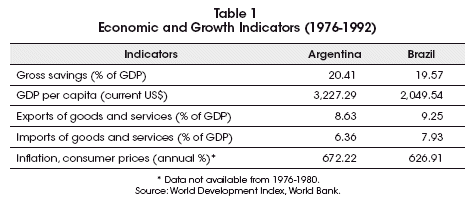
]]> The case selection was done considering both countries' representativeness in Latin America and the variation on our variable of interest. Also, both present similar political economy characteristics in the timeframe analyzed to answer our research question, since 1930 until mid-1990s. Due to the lack of consistent information during the first three periods, Table 1 summarizes some comparable cross-national indicators for the last cluster of the periodization described in Section 4c, to show the common patterns between both countries. Most importantly their political economy processes have been alike, as we detail in depth on Section 4c. Both countries started to develop their industries during the ISI period, experienced more outward oriented developmentalist governments in the late 1950s and had military regimes during the decades that followed. In 1982 debt crises erupted in both and resulted in the lost decade'. Finally in the 1990s they underwent stabilisation programmes, following the 'Washington Consensus'.
Following a 'pattern matching' (Yin, 2003), we constructed three hypotheses, based on our theoretical framework. These hypotheses (dependent variables) will give three alternative theoretical explanations that could account for the different trajectories of BNDES and BANADE (independent variable). When analyzing secondary data that looks into to each of our hypothesis, in a systematic way, we will be able to understand what historical political factors could have played a role in differentiating both trajectories. That is to say, they would enable us to explore the historical reasons that enabled Brazil to constitute a solid and cohesive NDB while Argentina failed to do so.
In other words, if the secondary data shows that each banks' international or domestic political economy process was similar, during the same historical time-period, it would probably imply that the factor is not driving the difference between them both. In case of different trajectories, the author will analyze in depth where could they stem from and present its conclusions.
To be sure, the explanation for the divergent trajectories may result from a combination of factors, as the hypothesis are not mutually exclusive. Furthermore, the analysis focuses on political economy issues, but other factors may also be playing a role, but will not be accounted for here. It is also worth to notice that the main value added of this paper is to use the already existent secondary data to answer a new question, by analyzing it in a comparative manner.
The three hypothesis look into the potential political economy factors at play when governments pretend to perform industrial policy with a developmental approach. The first and second hypotheses were designed to explore domestic variables that affect the NDB' performance, both within the institution and between it and the society. The third one completes the previous two, by analyzing the international scenario. While the first one does not make a clear time division, it comprehends the whole period of analysis since each NDB was created and until BANADE was liquidated, detailing time-variations when necessary The second analyses four time clusters from 1930 to 1990s and the last one focuses on the 1990s, when the decision to dissolve the BANADE was taken.
To test our hypotheses, we analyzed secondary sources, such as reports and previous literature, and conducted interviews, to complement the analysis with the interviewees' visions and experiences. The interviews performed are not our main source, but serve as 'key informant interviews' (Evans, 1995:19) from some of those who have worked at a highly-ranked position in the respective NDBs, and from bureaucrats of the agencies responsible for the biotechnology financial programmes in the 2000s. We have interviewed nine civil servants and used two different models, as detailed in the Appendix. The interviews were semi-structured and the questions open-ended. The results are presented as translated extracts to exemplify our arguments. Finally, to explore the implications on the 2000s industrial policies in Argentina and Brazil, we contrasted their main biotechnology financial programmes.
The shortcoming of the most similar methodology is that while its internal validity is strong, its external validity is less so. Extrapolating the findings of our case studies to the regional population requires further research. Moreover, other factors that we have not considered may have had a decisive impact and be omitted variables. However, we do not pretend to perform an exhaustive study given the limited scope and specific aims of this research.
]]> 3. Theoretical framework
3.1. Industrial Policy in the XXI century
Different dimensions of development have been prioritised by scholars throughout time. Chang (2013) shows how, after the rise of neoliberalism during the 1980s and 1990s, the discourse focused on the 'humanitarian' perspectives, neglecting the production side. Put differently the main goal was to alleviate poverty by ensuring the basic needs, without empowering individuals with the necessary tools to self-sustain their livelihoods in an independent and sustainable manner (Amsden, 2010). However, the last decades have witnessed the re-assessment of industrial policies as growth levers, even among mainstream scholars (Rodrik, 2008; Lin and Chang, 2009). It is therefore one of the main goals of this paper to understand the role that NDBs could play in the re-appearance of industrial policy3 after the 2000s, as a policy tool of 'new or renewed developmental' centre-left governments in Latin America (Bresser-Pereira, 2011; Hochstetler and Montero, 2013)4
While a recent consensus is emerging on the role the State should have in steering resources into high value added activities that could catalyse sustainable economic growth in developing countries (Whitfield, 2015), the industrialisation path still remains to be an issue mired in conflict. On the one hand, scholars identifying with 'New Structuralism' such as Lin (2012:205), point out that the market ought to allocate resources and the State should provide infrastructure and coordinate firms when information is incomplete or in presence of other externalities. On the otherhand, Chang (in Lin and Chang, 2009:489) defends that the State should defy the country's comparative advantages to be capable of catching up. This paper contends that if the State act as a mere facilitator, private actors will prefer to pursue safe investments that do not jeopardize their capital and thus, development leaps will be eluded, especially in developing countries with frequent macroeconomic imbalances. In words of Mazzucato (2015), the State should take those risks, by creating rents that aim to 'shape and create new markets'.
This study will base the case for industrial policy after the 2000s on Mazzucato 's and Chang 's frameworks and stress the key role that NDBs have in pursuing sectorial industrial policy by granting financial support to certain sectors considered strategic for technological and industrial upgrade, such as biotechnology To be sure, this study acknowledges that during the 2000s, many others industrial policy tools have been used, such as tax exemptions, patent regulation, free economic zones and currency policies.
Unlike New Institutionalist Economists, who stress that public institutions' main role is to secure property rights and market freedom (Chang, 2011), we contend that they should take a step further. In this sense, we will invoke the figure of the 'Entrepreneurial State' (Mazzucato, 2015), who supports strategic, dynamic and innovative sectors to push the country towards the next 'techno-economic paradigm', a concept introduced by Pérez (1984) to describe"... the most effective ways of using the new technologies within and beyond the new industries (...) to become the engines of growth...." (Pérez, 2010a: 189).
That said, we now turn our attention to the broader international arena and its consequences on national autonomy Despite having gained more space on the current debate, the formal instruments available for industrial policy have been constrained by international regulations, limiting 'renewed developmental' available strategies. The new international trade structure has tilted the balance in developed countries' favour (Wade, 2003; Chang, 2002). However, this paper observes that emerging countries still have formal policy space to foster structural transformation. Not only macroeconomic and exchange rate policies (Mayer, 2009; Rodrik, 2008), but also supporting specific sectors 'picked' by the government. We contend that NDBs are particularly well suited to pursue strong industrial policy (Khan and Blankenburg, 2009), due to its institutional capability to demand reciprocity by requiring performance standards and monitoring its compliance. Amsden (2001:140) showed that "Development banks influenced the efficiency of their clients by subjecting them to performance standards related to (...) national policy goals (...) (1) exporting; (2) localizing the production..."
However, the examples are before the World Trade Organization's (WTO) rules were imposed. This suggest the need to further investigate whether these performance requirements can still be pursued, in the XXI century industrial policy scenario.
Based on BNDES' current loan policies, whose subsidized credits have a national content restriction if funded through one of their main sources (FAT)5, we could jump into the conclusión that public funding institutions could still demand reciprocity in their loan conditions, without being restricted by WTO 's rules. The same conclusion may arise from examining the export credits offered through BNDES Exim programmes, granted exclusively to exporters, at an interest rate below the minimum established by OECD (CIRR) (Moreno Caiado, 2010). However, the Subsidies and Countervailing Measures (SCM) Agreement prohibits granting subsidized loans contingent to export performance or local contení, and establishes as 'actionable' any subsidy that could hamper external competitors on a discriminatory basis. Thus, it seems that the whole role of NDBs could be potentially disputed. It is not the intention of this paper to fully answer this aspect of the analysis, but just to delineate a potential path for future research.
3.2. The Role of National Development Banks
]]> The scholarly conceptualization of development banking as a source of long-term funding has evolved along with the school of thoughts of development processes. Industrial Banking practices emerged in early history (XIX century) when the 'relative backward countries' (Gerschenkron, 1962) were developing industrialising strategies. After the Second World War, when the ideas of Early Development Economists ideas flourished, both multilateral and NDBs started playing a central role in steering funds to large investment projects, with potential transformational impacts on the economy. They were a key element of the 'Developmental States' (Amsden, 2001) and had leading roles in many countries such as Brazil, South Korea, India and México (Culpeper, 2012). This is to say they were essential in the catching-up process of both 'late' industrialisers in the XIX century and 'late late' industrialisers6 in the XX century However, during the 1980s and 1990s State-owned banks received severe critiques from neoliberal economists, who argued that 'financial repression' (Mc Kinnon and Mathieson, 1981) mechanisms encouraged uncompetitive firms, 'picked' by the government to receive political favours, and contributed towards fiscal and balance of payments imbalances. In this context, this paper aspires to understand why after the 1990s, Brazil has been capable of maintaining BNDES, while Argentina dismantled BANADE.Since then, the role that the State should have on the banking system has been highly contentious. This paper rejects the position adopted by authors who neglect State-owned banks as growth catalysers, grounded on political favoritism arguments (La Porta et al, 2002; Sapienza, 2004); sustaining that their role is essential. Not only to passively complement 'incomplete markets' (Stiglitz, 1994:27) for long-term project, when externalities compensate for public costs (Levi-Yeyati et al, 2004), but to discover new markets with high growth potential and encourage their development. Our argument invokes Mazzucato and Penna's (2015a:5) concept of "...market shaping and creating roles of state investment banks". Hereafter, we will adopt their heterodox framework, to understand the role of NDBs, which not only cover missed long-term contracts, grant counter-cyclical loans and fund public goods, but also fund projects with the specific aim to increase employment rates, encourage the development of new techno-economic paradigms and coordinate public and private actors to create social capital (Mazzucato and Penna, 2015a:36-39). Drawing on Keynes' concept, Mazzucato and Penna (2015a:4l) claim that NDBs"... pave the way for a 'Great Transformation', as described by Polanyi (...) (which) will not arise from market forces, because markets are 'blind', and even if they do not fail in a Pareto sense, they are incapable of providing a new, qualitatively different direction to economic development".
Henceforth, we will define NDB as State-owned banks, whose mandate is to provide long-term funds for real economy investments with positive externalities in terms of job creation, productivity exports, environment and social inclusion.
3.3. Institutions Structures and State-Society Relations
In the following, we will try to provide a thorough description of the necessary features that an Entrepreneurial State should have in order to lead an industrialization process. Features that describe both its structure and its ability to craft domestic political coalitions with external actors engaged in the developmental project. The figure of the 'Entrepreneurial State' stems from the concept of 'Developmental State' and goes beyond by pointing out its risk-taking role (Mazzucato, 2015). When describing Developmental States, Doner et al. (2005:328) highlights the public-private relations as a key characteristic. Similarly, Evans (1995:36) reinforces the importance of focusing not only on State 's structures but also on State-Society relations.
Mazzucato and Penna(2015a:38) show that NDBs have a key role in coordinating societal actors in backward economies planning to forge ahead. Hence, we need first to analyze their ideal bureaucratic structure as well as bureaucrats' relations with the private sector and politics. To do so, we will base our claims on Evans' (1995) concept of 'embedded autonomy', drawn from the Weberian ideal bureaucracy which has been defined as an 'autonomous' technical and highly qualified body of State employees, whose meritocratic recruitment and long-term career gives them a sense of belonging and identification with the public interests. These organizational features aim to restrict bureaucrats from being easily co-opted by private interests and from responding to political interests. Other feature that we deem essential is 'higher ranks" autonomy (Evans, 1995:52). Meritocratic agencies could still be co-opted if members of the Board of Directors are politically appointed or 'colonised' (O'Donnell, 1984) by speculator industrialists, and lack the necessary control mechanisms.
Notwithstanding, as Evans correctly observes, isolated government experts cannot perform industrial policy in an effective manner. They need to be 'embedded', to relate to private firms in 'joint projects', and so identify their specific sectorial constrains. In the case of NDBs, this 'connectedness' is essential, to consider sectorial particularities when evaluating the loan projeets, especially for innovative firms that would otherwise remain unattended. Also, when assessing NDBs capabilities to pursue 'strong' industrial policy7, it is essential to consider whether they have sufficient ability to demand 'reciprocity' from the private sector. This design feature is a necessary condition to attain smooth State-Society relations that translate into a win-win situation in public-private relations. Governments that create monopoly rents (Schumpeter, 1934 [1912])8 to foster specific innovative sectors, must have enough capacity to manage them to avoid private sector capture, and accomplish public sector development strategies. In words of Khan and Blankenburg (2009:8), the State should impose sanctions to non-performing firms so as to have enough credibility However, we note here that NDBs abilities to impose many of these standards, which would highly contribute towards developmental goals have been hindered by WTO 's rules.
Fully embracing the concept of 'embedded autonomy' also implies to acknowledge its limitations. On this respect, critiques can be made on both halves of the concept. On the one hand, creating autonomy by guaranteeing long-term careers to its members could potentially undermine employees' motivation to collaborate with the incumbent government's strategy As stated by Rauch and Evans (2000:53) themselves, civil servants in Weberian bureaucracies could lack motivation and be hard to fire. Additionally it could also be argued that underdeveloped regions cannot build effective autonomous institutions, because they do not have enough resources, where 'patron-client' relations (Whitfield and Buur, 2014) are necessary for primitive accumulation. However, this paper remains skeptical of this claim, and contend that these kind of relations should be avoided, even if"... the effect of (...) the corrupt transaction is positive..." in developmental terms (Khan, 2006). Relations that are solely embedded, but based on incumbent's self-ambitions will probably result in rent-seeking behaviors, plundering State 's resources. Ironically it is precisely this kind of argument that is most widely used by orthodox scholars to oppose to industrial policy and State intervention. Therefore, this paper advocates for the careful construction of a committed bureaucracy with independent motivations that prevents the kind of behavior that could grant valid arguments to tear apart Developmental States missions.
Regarding ' embeddedness', it is important to consider that, regardless of the institution 's features and ambition to discover the best strategy to support the industrial sector, it will ultimately depend on the demands that the counterpart poses. It could be the case that long-term projects are not prioritized, even if subsidized. Finally strong institutions with enough political power are also crucial to confront potential resistance from other sectors that are not receiving benefits and see their privileged positions jeopardized. In this regard, Evans (1995:37) calis on Migdal's (1988) 'zero-sum' game between the State and the society to explain why on some occasions granting power to the State implies to diminish elite 's power. However, if the adequate private counterpart finds a loud voice on societal spaces and the State helps to reinforce their emergence, the aforementioned 'joint projects' can be smoothly deployed over this 'mutually reinforcing relation'.
In sum, this study considers that the analysis of State agencies' features is key to understand the potential scope of their action to foster industrial upgrade. In our case studies, we attempt to provide a detail analysis of both the NDB's structures and State-Society relations, to investigate whether these differences could help us understand why Brazil was successful in constituting a NDB with a clear mandate, while Argentina could not. Nonetheless, it is essential to bear in mind that the same institutional structure could result in totally different outcomes. We claim that there is no 'one-size-fits-all', and invoke Öniş (1991:125) when arguing that the action of autonomous developmental institutions' could result in positive or negative outcomes, depending on historical conditions. In other words, it is not only important to determine the agencies' structure, but also to understand both internal and external political coalitions and their historical conformation.
]]> 3.4. International Bargaining Power and the Washington ConsensusThe previous section of this theoretical framework looked into domestic variables that affect developmental outcomes, related with features within the developmental institution and between it and the domestic political coalition, which frame our first two hypotheses. Against the backdrop of which we can then formulate our third hypothesis, to review the effect that the international 'outer wheel' could have when defining the role of the NDBs.
After the international rate level peaked during 1982, many emerging economies collapsed into severe debt crisis. Later on, in 1989, as part of the 'Washington Consensus', International Financial Institutions (IFIs) such as the International Monetary Fund (IMF) designed Structural Adjustment Programmes (SAP), subject to conditionalities, which mainly consisted on fiscal austerity privatization and liberalization ofthe trade and financial systems. However, within Latin American region, country's responses varied widely incorporating neoliberal economic policies to different extents and at different paces. It is in this context that we attempt to explore the international conditions under which Argentina dismantled its NDB, while Brazil preserved it.
Seeking to understand how the international economic regime during the 'Washington Consensus' could have affected the configuration of the financial mechanisms to encourage development, embraced in the figure of NDBs, we analyze the room of maneuver that Brazil and Argentina had to negotiate with the international actors in the Global North. To do so, we will follow Putman 's (1988) theoretical approach of the 'two-level game', according to which the domestic and international spheres interact to determine one another on political economy matters and revise the international conditions that may have influenced domestic economic policies decisions on both countries.
4. A Comparative Approach: National Development Banks in Argentina and Brazil 1930s-1990s
4.1. Introduction
The objective of this chapter is to examine the political economy factors at play when trying to understand why two seemingly similar economies, such as Argentina and Brazil, adopted such different strategies regarding their NDBs, when exposed to similar conditions, delimited by the surge of neoliberal reforms in Latin America during the 1990s. To do so, we draw on Hira's (1998:3) approach to political economy which include the 'Statist', 'Domestic Coalition' and 'International Level' level of analysis, constituting them as alternative hypothesis that contribute to explain our research question.
Argentina founded its NDB as soon as 1944, it was initially called Banco de Crédito Industrial Argentino (BCIA), then relaunched as BIRA in 1967 and as BANADE in 1971, finally liquidated in 1993. In the case of Brazil, the BNDES was created in 1952 during Vargas presidency and is currently the second largest development bank in the world, its annual disbursements being higher than the Inter-American Development Bank 's (IADB) and the World Bank's (WB) together (Armijo, 2013).
The decision to dismantle BANADE carne as a natural one given that the non-performing loan portfolio skyrocketed to over 99% and 50% of the debt belonged to only 20 firms. That is why, the ultimate purpose of our research question is not limited to understand why BANADE was dismantled while BNDES survived. Rather we explore the historical reasons that enabled Brazil to constitute a solid and cohesive NDB, which was and continues to be the 'flagship' (Amsden, 2001) of its developmental strategy while Argentina failed to do so.
]]> 4.2. Institutional CapacityThe main interest in this section is to compare the institutional features of the BCIA/ BANADE and the BNDES, to explore the extent to which these differences could have had a decisive influence on their divergent trajectories and success as industrial policy tools. To do so, we examine their structural features by first looking into their financial structures, their level of autonomy and embeddedness and finally their discipline mechanisms.
When referring to financial structure, we analyze the funding sources and lending policies in terms of maturity and sector, as these define the bank 's capability to fulfill its mandate as a development agency. The BCIA's main initial sources were funds provided by the public treasury. After the first year, however, short-term deposits were authorized (Rougier, 2011). This hampered the BCIA's capabilities to successfully grant long-term loans, without stressing the bank's balance sheet. The BNDES, instead, has never taken short-term funds, thus being capable to avoid maturity mismatches and preserve its mandate. Furthermore, in 1974 they were held responsible to manage a worker's fund for unemployment insurance (PIS/PASEP), which gave them a ring-fence from the Treasury, essential to gain autonomy In relation to the lending policies, while the BNDES has always granted long-term loans and pursued strong sectorial industrial policy supporting heavy industry infrastructure and energy sectors, the BCIA started granting short-term loans in 1945 and its sectorial support was not developmentalist (Sikkink, 1991:199).
With regard to their 'autonomy', while the BNDES has been largely recognised as a 'pocket of efficiency' by many scholars, Sikkink (1991) contends that Argentina did not have such insulated State agencies. When looking into the BNDES' Annual Reports (1956:33), we notice that a recruitment system to forge long-term careers for professionals was already at place in 1956, still being recognised nowadays as one of the most competitive public bureaucracies (Doctor, 2015:210). In the case of the BCIA/BANADE, Sikkink (1991:198) and Schvarzer (1981:35) show the high levels of education and continuing training of their employees, which is compatible with the declarations of our interviewees from the BANADE, who claimed that 'An interview and exam are necessary to be pre-selected' (Participant B, interview, August 8, 2016). Thus, it seems rather clear that the lack of meritocratic careers is not the variable that explains the different trajectories.
The most significant difference seems to stem from the composition of their Board of Directors. According to a BNDES' interviewee, '... most of the time executive directors are selected in academia and the private sector. Political appointments are rare... ' (Participant E, interview, June 26, 2016). Likewise, Sikkink (1991:204) highlighted that directors were professional economists, who did not represent specific sectorial interests. Conversely when referring to Argentina, Sikkink (1991:178) claims that the"... state had little autonomy from dominant classes...". This is also perfectly illustrated when exploring the composition of the Board of Directors of the BCIA/BANADE during this period and the following (Table 2), when members of the most traditional families of the country like Companc and Bulgheroni, were appointed. What is more, Bulgheroni 's pulp firm 'Papel del Tucumán', was the most indebted company when the bankwas dismantled (Gonolbek, 2008). Inwords of Castellani (2008:96) the bank was "prone to serve business demands...". This is an undisputable piece of evidence of the lack of transparency and prejudicial dynamics that may result from patron-client relations that benefit private interest, neglecting collective objectives and jeopardizing the whole role of Developmental States.
Regarding 'embeddedness', we found that whereas the BNDES is acknowledged for its reciprocal relations with industrialists, there is not such evidence for the BCIA/BANADE. According to the interviewees, the BNDES works as an ' ...important bridge, promoting healthy and strong dialogue between the government and business' (Participant C, interview, July 22, 2016), where 'Bank employees tend to specialize and become very close to private parties in specific sectors' (Participant E, June 26, 2016). On the contrary it is difficult to picture any kind of real 'embeddedness' between BCIA/BANADE and the private sector, in a context of institutional instability in which the main authorities lasted less than one year in average, from 1944 to 1976 (Rougier, 2011). Also, during Frondizi 's government, industrial policies were taken in isolation from industrialists (Sikkink, 1991:107) and during the 1970s relations with the local companies happened on a personal level, creating a 'precarious and instable' system (Rougier, 2011:97).
Finally we explore the extent to which these institutions exert discipline to the beneficiaries of the subsidized loans, an essential component of Developmental State 's success. Amsden (2001:142) showed that BNDES' loans were conditioned to 'techno-standards', that demanded reciprocity in terms of local-content, technological upgrade and others. Even currently despite subject to potential WTO's demands, export loans prioritize producers with 60% of local content (Anderson, 2011). On the contrary, in the BCIA/BANADE the business class threatened politicians' governability capacities and only promised to maintain employment levels (Rougier, 2011:98). Inexistent monitoring processes enabled private firms to deviate the long-term funds and use them to cover operational costs (Brennan and Rougier, 2009:52). The lack of control mechanisms was so serious, that the liquidation of the institution is recalled by authors such as Quiniela (2005:231) as one of the largest depletions in the Argentinean financial system. On the contrary, when asked about corruption scandals around the BNDES during the 1990s, none of the interviewees recalled any. Internal control mechanisms for loan approval could provide part of the explanation for the different outcomes in this regard, as declared by an interviewee from the BNDES, '... decision making process is collective (so, it is) difficult to get your own 'deal'... ' (Participant C, interview, July 22, 2016).
All in all, our findings show a considerable variance between the financial structure and level of autonomy of the BCIA/BANADE and the BNDES' Boards of Directors, along with different capacity to impose discipline to the beneficiaries. However, it is at this point essential to ask where do this dissimilarities spring from. In other words, building institutional capacity is not a one-size-fits-all model that every country should copy but each institution mirrors its surroundings and"... reproduce the pre-existent contradictions and power distributions..." (Rougier, 2011:57). Therefore, in the next section we analyse both the domestic and international political interactions to gain a deeper understanding of the divergent trajectories' origin.
5. Domestic Political Coalitions in Argentina and Brazil
]]> This hypothesis explores the domestic configuration of vested interest groups in Argentina and Brazil and attempts to understand the role they played in defining the existence of a NDB. To do this, we will define three domestic actors, industrialists, agriculturalists and workers, and attempt to acknowledge their influence on economic policy matters. Our timeframe in this section will cluster four different periods, adapting Rougier's (2011) division for the BCIA/BANADE, to compare it with the Brazilian case. Our first period, 1930s to 1955, focuses on the government of Perón in Argentina and Vargas in Brazil. The second period, 1955 to 1966, on the governments of Frondizi and Kubitschek. The third, 1966 to 1976, will contrast military governments' alliances. Finally we will briefly review the period from 1976s to 1990s, to understand the political economy scenario that resulted in BANADE 's liquidation and BNDES resilience. We will contend that while Brazil crafted a government coalition capable of supporting its developmental strategies, such as the consolidation of a NDB, the Argentinean government failed to do so. In this sense, Evans (1995:72) draws our attention to the importance of finding and shaping a compatible 'societal counterpart' to perform structural transformation effectively.5.1. First Period: 1930-1945
During the first period, Perón 's government in Argentina, extensively recognised as an industrialising government (Brennan and Rougier, 2009), failed to engage industrialists for two causes. Firstly, the strategy depended on plundering a still dominant agricultural sector, and was reluctant to create a win-win situation, as Brazil did. Secondly, the government's failed to design mechanisms that encourage a more fluent relation between businessmen and the labour force, which Brazil managed to do.
Regarding the first claim, we suggest that a successful redistributive strategy would require to either diminish rural power before carrying it out, such as East Asian countries did through land reform (Kay 2002) or to create win-win situations, such as Brazil did. Otherwise, creating a public 'enemy' figure in a still powerful agriculturalist sector (O'Donnell, 1984:21), entails the risk of encountering an effective opposition for industrial policies. In Argentina, the BCIA was in opposition to landlord interests, whose crops were bought at a below market price for redistributive purposes by the Instituto Argentino para la Promoción del Intercambio (lAPl),which used the BCIA as their 'financial agent' (Schvarzer, 1981:33). Agriculturalists' opposition hampered the whole industrial strategy, because the government was highly dependent on the commodities' foreign exchange. Hence, after the 1949' balance of payment crisis, the government was forced to improve IAPI 's prices, implying a backlash for the grounds on which the coalition with industrialists relied. For instance, metalworkers' chamber, Perón 's main powerful industrialists' allies9, attempted to withdrew their support at the time (Rougier, 2001:80). On the contrary Vargas, whose historical traditional landlord oligarchy used to dominate national politics, managed to prevent their uprise by creating win-win situations and avoiding direct confrontation. Vargas did also intervene on commodities' exportations, but by guaranteeing coffee producers a minimum price, which created a win-win situation. What is more, many studies recognise that Vargas' had an intentional 'hidden' pact with rural producers to avoid conflict (Welch, 2016).
Regarding the second claim, we contend that the social fragmentation created in Argentina by opposing workers' benefits to industrialists' interests, further undermined the consolidation of a coalition to support a cohesive NDB. To be sure, we do not claim that defending workers' rights without capitalist's opposition is an overall feasible strategy However, somehow Vargas attempts to smooth its relations proved more effective. Brazil's industrialists' confederations, such as Federação das Industrias do Estado de São Paulo (FIESP), accomplished to merge workers' and industrialists' interests (Bárbara Weinstein in Rougier, 2001). For instance, they created a special social programme, administered by confederations, to qualify industrial workers (Schneider, 2004:101).
Also, fragmentations within industrialists contributed to their lack of engagement in supporting the NDB. Perón 's industrialisation programme was not supported by the largest industrial representatives, Unión Industrial Argentina (UIA). The only confederation who consistently advocated for the existence of the BCIA was the Confederación General de Empresas (CGE), representatives of Small and Medium Enterprises (SMEs) from the interior of the country On the contrary FIESP and the Confederação Nacional da Industria (CNI), represented the vast majority of both big and small businesses and were the largest promoters of Vargas' developmentalist policies. Consequently we contend that BCIA's immediate turn to short-term credits, was related to the characteristics of the CGE, which had small scale projects due to their firms' size. Also, they were permeable to the demands of the strongest allies of Perón, the workers, who demanded working capital to cover wage increases (Rougier, 2011:79). These elements greatly contributed to the bank's lack of coherence as a solid developmentalist instrument, since the very beginning. In opposition, "Brazilian (...) industrial groups in the 1940s and 1950s (....) saw themselves as protagonists and leaders of the process of industrialization..." (Sikkink, 1991:154). Hence, a unified industrial sector in Brazil was able to advocate for a solid NDB with a clear long-term funding mandate.
5.2. Second Period: 1955-1966
During the second period, Frondizi followed Prebisch's recommendations and tried to recover the role of the BCIA as a genuine Development Bank, but failed. He could not gain support from UIA, its natural ally to expand heavy industry because they were suspicious about his alliance with Perón 's coalitions. Also, his plan to attract foreign capital received clear opposition from CGE's 'nationalist'. UIA's representatives paradoxically defended free-market ideas, despite the potential material benefit that State protection may have given them. Thus, instead of promoting State's industrial policies, they chose to ally with the landlord oligarchies represented by the Sociedad Rural Argentina (SRA) and the Stock Market Association to form a new entity ACIEL (Sikkink, 1991:106).
Contrarily in Brazil, industrialists' support for Kubitschek's 'Target Plan' was always straightforward. Again, during this period we can see how Brazil's State incumbents reached political harmony due to their belonging to a merge of political parties (PSD and PTB), that represented, apart from industrialists, landed oligarchies and workers. What is more, while Kubitschek's governmental coalitions of industrialists enabled his decision to reject the IMF Stabilization Plan, UIA's representatives advocated for IMF's Stabilisation Plan, which pressured Frondizi to downsize his developmental strategy (Sikkink, 1991). In sum, we cannot but conclude that in Argentina domestic political coalitions did not enabled Prebisch 's plan to reinstall BCIA as a real development bank to succeed. Conversely, BNDES role was essential for Kubitschek 's economic policy plan, as it was responsible not only for implementing, but also for coordinating and advising in the formulation of the 'Target Plan'.
5.3. Third Period: 1966-1976
]]> In the third period both countries were ruled by military governments. In Argentina, in 1966, Onganía overthrew Illia's mándate, with an initial overwhelming support from both popular and business sectors. Later, Onganía's 'State Reorganization' plan responded to the industrial elite's interests, as it shrunk almost every State activity but sought to provide them the necessary support (O 'Donnell, 1982). Thus, in opposition with the previous period, the UIA formed coalition with the government. In this context, with the support of a powerful domestic coalition, BCIA managed to get rid from its commercial loans, prioritizing medium and long-term ones (Rougier, 2011:77) and even receiving additional funding sources from the Central Bank (López and Rougier, 2013:11). Local industrialists used State's benefits to build new industrial plants, produce intermediate inputs and pursue infrastructure works (Rougier, 2011:78). In 1971, with Lanusse as president, the BCIA was renamed into the BANADE, with extensive support from the dominant class and mandate to boost basic industries and energy infrastructure. However, the Board of Directors was soon captured by the private interests of the industrial establishment (Golonbek, 2008:13). In Brazil, Castelo Branco assumed through a coup detat in 1963 and after a period of stabilisation policies, opposed by the business class, he turned to expansionary policies (Massi, 2014). For instance, the BNDES launched FINAME in 1964, a funding agency to incentivise the machinery and equipment local industry and coordinated the Programa Estratégico de Desenvolvimento (PED) in 1968.5.4. Fourth Period: 1976 1990s
Finally from 1976 to the 1990s, the BANADE 's operations suffered a staggering decline and were highly concentrated on foreign currency and big companies, which became the main protagonist ofthe governmental coalition during the period. However, the industrial élite business men's higher profits, in a period of global financial liberalisation, originated from financial endeavours (Kaufman, 1990:82). In 1983, the BCIA was the banking institution with the highest external debt in the country, a time when over a 50% of the loan portfolio was non-performing (Rougier, 2011:86), figure that skyrocketed further to 99% towards the 1990s. With companies from the industrial establishment, such as 'Papel de Tucumán', among the larger debtors, this period appears to be one of plundering and co-option of public interest. Once again, the political economy features of the BNDES were radically different. Geisel (1974-1979), launched the Plan of National Development (PNDII), whose objective was to strengthen private national capital and increase technological capacity with a focus on heavy industry Brazilian industrialists, unlike Argentineans, had large investments in the real economy and advocated for concessional loan policies (Kaufman, 1990:2). Thus, far from decreasing the volume of operations, the BNDES designed a new financial mechanism to expand the available resources, PIS/PASEP.
What is more surprising and essential to answer our research question, is that the BNDES' existence was not questioned even when the neoliberal recommendations of ending 'financial repression' flourished. Not even during the presidencies of Collor (1990-1992) or Cardoso (1995-2002), who defended neoliberal conceptions and shrunk many State functions, did the existence of the NDB become subject to hard scrutiny The BNDES was not dismantled, but it did change its mandate in 1990, being made responsible of coordinating the privatisation programme called Programa Nacional de Desestatização (PND) and for granting loans to modernize and increase the international competitiveness of previously State-Owned Enterprises (SOEs). While the bank's structure was shrunk, it continued to support the industrial sector under the 'nova política industrial' (BNDES, 1990:44); maintaining its mandate. When asked about the reasons of BNDES continuity most of the interviewees just said the reason was simple, the BNDES 'was a Development Bank' after all. It seemed indisputable, from those on the left and those on the right, that the government should still encourage long-term development, even in a context of generalised liberalization of the global economy.
To sum up, whereas the BNDES' had a clear support from a cohesive industrial class, represented by FIESP and CNI with a developmentalist ideology generally opposed to stabilisation plans and defenders of soft credit policies, the BCIA/BANADE could not craft a government coalition with UIA, the industrialists' representatives with the capacity to perform long-term projects, except from 1966 to 1969. We contend that the major factor at play which differentiates both NDB 's trajectories, is the high fragmentation within industrialist's representatives and between them, agriculturalists and workers. Unlike Brazil, where since Vargas' government social harmony was sought, Argentina had a highly-fragmented society. In the run-up to the 1992' the BANADE liquidation, we see that, the project of a NDB firstly received support from an actor (CGE) without sufficient leverage or interest to stand up for preserving the long-term mandate. Then, when it had the support from a powerful actor, UIA, their firms soon diverted their investment priorities to financial activities in the 1970s, 'colonising' and plundering the institution. The only exception was during Onganía's period, when the bank attained a successful mandate due to large industrialists' commitment with real economy projects and developmental positive externalities.
6. International Bargaining Power and the Washington Consensus
Authors such as Hochstetler and Montero (2013) argue that Brazil entered later than most countries in Latin America into neoliberalism, and that the 'Washington Consensus' was never fully adopted. On this subject, Kearney (2001) suggests that one possible explanatory variable is the level of national power that Brazil has had, to prevent stabilisation policies that would not report an immediate positive effect on the wellbeing of the society. Hence, we will compare Argentina 's and Brazil 's international bargaining power by analyzing their debt and current account indicators during the 1980s and 1990s, to understand if Brazil has had more maneuver room in the international arena, and thus, greater ability to defend the existence of a highly interventionist institution, as was the BNDES. To be sure, we will analyse the macroeconomic hard data, but contend that negotiation capabilities with creditors who impose conditionalities, are also a product of soft power capabilities.
The size of both economies and the contagious impact of their defaults gave Argentina and Brazil considerable bargaining power with the international creditors. However, when looking closer into the figures we can note that the leverage to negotiate could have vastly differed. For instance, Figure 1 shows how, after 1985, the current account balance over GDP recovered faster in Brazil than in Argentina, what signals a more vulnerable position to negotiate the conditions for fresh capital inflows for Argentina. Also, Figures 2 and 3 denote that Argentina 's total debt service and paid interests in terms of its exports were significantly higher than in Brazil, what indicates that its balance of payment was more stressed, what has probably undermined its negotiating capabilities vis a vis Brazil. Figure 4 deplets IMF outstanding debt level, including loans relating to any Structural Adjustment Facility (SAF), and reflect that from late 1980s, while Brazil's outstanding level plummeted, Argentina's soared. These divergent trends very much illustrate the different positions that each country could have assumed when negotiating the content of the conditionalities imposed by the IMF.
We contend that bargaining power could have influenced, to some extent, the capacity to resist external pressure and negotiate the design of local industrial policy tools. However, we claim that international bargaining power cannot be effective, unless domestic political coalitions provide a clear support for the developmentalist instrument. When the BANADE was dismantled, the elite industrialists in Argentina, with more inherence in the institution during the last two periods, far from advocating for its remaining, preferred it to be liquidated. As declared in the interview, elite businessmen whose companies were largely indebted were the largest beneficiaries of the bank's liquidations, as it gave them the opportunity to diminish their debts' (Participant A, interview, August 12, 2016). To be sure, the BANADE 's non-performing portfolio during the last decade, was reason enough for local and external actors to demand its liquidation, however, as explained above we intend to look into the reasons for such mismanagement. To sum up, international bargaining power does not seem to be the decisive element on its own in our analysis, even if it has granted differential maneuver room in each case.
]]>7. Renewed Developmental State: Biotechnology Policies in Argentina and Brazil
Up to this point we have analysed the reasons that explain why Brazil was capable of developing a coherent and effective NDB while Argentina could not. Now, we attempt to account for the relevance of such institutions, as policy tools for industrialisation, during the XXI century when many center-left governments in Latin America re-established developmentalist policies with an outward orientation and a focus on innovation (Bresser-Pereira, 2011; Hochstetler and Montero, 2013). Specifically we will examine how industrial policies with focus on innovation may differ when conducted by NDBs, looking into the case of biotechnology.
Biotechnology has dynamic characteristics and large complementarities with multiple activities in which many Latin American countries are already competitive, such as agriculture, human or animal health. Thus, authors such as Pérez (2010b) suggest that these kind of technologies could lead to the next techno-economic paradigm. However, this kind of innovative projects have limited access to traditional financial sources due to their particular characteristics. Their future cash flows and success probabilities are uncertain, their projects' maturity extremely lengthy, they lack physical assets to use as collateral and their technical specificities are difficult to monitor and assess for credit rating evaluators. All the aforementioned is reinforced when the company is a start-up that cannot provide any track record.
Both Argentinean and Brazilian governments have designed special funding mechanisms to, on the one hand, help biotech companies overcome their financial restrictions and on the other hand, forge new dynamic industries. In Brazil, the main financial programmes for biotech, implemented by BNDES and FINEP (a public agency that depends from the Ministry of Science, Technology and Innovation) are PAISS, PADIQ, BNDES Profarma Biotecnología, and CRIATEC. In Argentina, in the absence of a NDB, the biotech programmes are conducted by a public ageney dependent on the Ministry of Science, Technology and Productive Innovation (MINCyT). The main programmes are ANR Bio-Nano-TICs, ANR TEC and FS Biotecnología.
In Brazil, PAISS, launched jointly by BNDES and FINEP, encourages the production of biofuels from sugar cane (Nyko et al, 2013). One outstanding feature is that they focus not only on the pilot plants, but also on the industrialisation and commercialization stages (Nyko et. al., 2013: 67). BNDES also acts as coordinator and decides which financial instrument is more suitable for each project. This programme was so successful that it achieved to create an internationally competitive new market, previously inexistent as shown in Figure 6 (Milanez, 2014), with positive spillovers to other technological industries, such as flex fuel vehicles. Given the success of this model, it has been copied by other programmes, such as PADIQ, which supports the chemical industry In this case, BNDES requested a sectorial research to outline which areas within the chemical industry have the greatest potential and designed a financial mechanism accordingly which exemplifies the capacity of a NDB to discover new sectors that could help the country to catch-up in development. Also, the programme launched an innovative financial mechanism called THAI, a hybrid equity instrument that participates in the project 's performance and shares its risks, to enable industrial scale-up (BNDES, 2016). BNDES Profarma Biotecnología also contemplates scale-up activities to take the product into the market and has successfully provided R$ 400 million to Bionovis, to develop biotech medicine for cancer treatment. Finally CRIATEC is an equity fund that depends on the BNDES and invest in seed capital and start-up projects, mostly directed towards ICT and biotech (Mazzucato and Penna, 2016:43).
In opposition to BNDES and as declared by an interviewee, MINCyT only '... covers up to the pilot stage, no programme covers the scale-up (...) historically the implementation of a productive project was never covered... ' (Participant H, interview, July 27, 2016). For instance, ANR-Bio-Nano-Tec only covers up to the pilot stage or prototype and most programmes focus exclusively on R&D activities, without covering scale-up projects to take the product to the market. FS Biotecnología programme is a sectorial fund that encourages the creation of public-private associations to develop biotech platforms for human health, also focused on research and diagnosis. Lastly it is noteworthy that none of the programmes are well suited to encourage the creation of new biotech companies, which have no alternative source to fund the costs not strictly related to R&D or pilot plants, such as operational costs. As declared by the interviewee from MINCyT '... for new companies it is not enough (Participant H, interview, July 27, 2016).
All in all, by comparing the design and potential scope of the programmes designed by the Argentinean public agency and the BNDES, we note some remarkable differences that could potentially account for a differential impact on the 'renewed developmentalist' strategies. Firstly the NDBs have the required financial expertise to design special financial mechanisms, adapted to the reality of the sector, as shown with the THAI mechanism. Also, having a wide range of credit lines available, they can work as coordinating agencies and allocate the project to the most suitable line, as the BNDES did with PAISS' projects. Most importantly NDBs can cover all the stages of the project for it to be successful in the market and go beyond the R&D and pilot stages. As noticed above, MINCyT does not cover nascent firms, nor scale-ups to industrialise their prototypes and launch the product to the market, because the expenses that the projects would need to cover in these stages, are not specifically related to innovative activities and, are thus not part of their mandate. The case of BNDES shows how a NDB could cover those functions by the creation of seed capital funds, such as CRIATEC and by focusing on the scale-up and industrialisation stages, such as BNDES does with Profarma Biotecnologia and PAISS. We contend that covering the whole range of stages of innovative projects, is a key aspect for any innovation-led mission-oriented policy which intends to shape and create competitive sectors. This study suggests that NDBs are the adequate institutions to conduct this kind of missions, because they have the necessary resources, ability and knowledge to devise what sector could be competitive, as illustrated with the case of the chemical industry Finally it seems to be the case that NDBs are better equipped to shape and create new markets, as was the case with Bioethanol, beyond merely covering market failures.
8. Conclusions
]]> After at least two decades of being a shadow player, industrial policy debate re-emerged within the XXI century academic and policy making landscape (Lin and Chang, 2009; Rodrik, 2008). In particular, many centre-left Latin American governments resumed interventionist economic policies with a special focus on innovative sectors. Thus, the role of NDBs as sustainable growth catalysers, ought to be reassessed. After the alleged failure of the ISI model, several critics pointed out that State intervention favoured rent-seeking behaviours and advocated for global financial liberalisation. In this context, many NDBs with fiscal constraints and non-performing loans were eliminated during the 1980s and 1990s (Culpeper, 2012), but others were resilient. Why? In an attempt to shed light on this issue, this study took the cases of Brazil, who could establish a long-standing NDB resilient to these critiques, and Argentina, with opposing results. To answer the research question we have compared political economy factors related to institutional capabilities, domestic political coalitions and international determinants.The main finding of this study is that all the three hypothesis that served as independent variables to explain the different decision making of Argentina and Brazil regarding their NDBs (dependent variable). Therefore, the three political economy factors interplayed to explain why Argentina failed to develop and effective NDB, resilient to the 1990s neoliberal policies, while Brazil succeded.
However, even if all the elements may have some explanatory power in determining the endurance or elimination of the NDB, we understand that the indispensable middle puzzle piece is the consolidation of committed domestic political coalitions, engaged in the developmentalist plan. In a nutshell, we contend that the central answer to our question is that Argentina, unlike Brazil, was not capable of crafting a long-standing societal counterpart with enough leverage to advocate for long-term loans, and an interest in investing in the real economy. Thus, even ifwe have demonstrated that Brazil had more international bargaining power than Argentina after the debt crisis, this variable by its own has no explanatory power to answer our research question. Why would the government negotiate the maintenance of a policy instrument that was not advocated for by the societal class that it intended to benefit? Actually exactly the opposite was trae, as the elite businessmen sought its liquidation, to diminish their liabilities. During the financial globalisation, many Argentinean industrialists profited from the money market and had their interests aligned with those of international actors, who advocated to end the so-called 'financial repression', as they themselves would have probably favoured more from higher interest rates than from long-term subsidized credits. On the contrary, the Brazilian industrial sector, with high sunk costs real investments on the real economy, ' ...was inclined to push hard for easy credit policies and to resist orthodox approaches' (Kaufman, 1990:82). Thus, we claim that the explanatory power of the international bargaining power argument must be understood against the backdrop of domestic coalitions. To be sure, the reader may well be thinking that BCIA 's non-performing loans level would suffice to explain its liquidation. However, that fact alone does not account for the reasons why one country could avoid those results while the other did not.
The explanation partly relies on the level of institutional capacity to avoid plundering by disciplining the beneficiaries and having enough autonomy from the executive elites, who could co-opt the institution with their private interests. As mentioned above, while BNDES is commonly recognised as a 'pocket of efficiency' with the appropriate discipline and monitoring capabilities, BCIA's Board of Directors lacked the sufficient autonomy and granted loans to an industrial establishment who was not contributing towards sustainable growth. However, here once again, it is important to analyse not only the institutional capabilities, but first and foremost, the class interests of the domestic counterpart, whose characteristics will be significant to define the final outcomes. After all, if the government supplies developmental plans with appropriate institutional capabilities, but the firms do not demand long-term credits, what market can we expect?
Thus, we claim that the most relevant factor at play when trying to understand NDB 's outcomes, are the characteristics of the political coalition advocating for their existence. In the case of Argentina, during the first period the coalition was with CGE, who represented small projects and had no capacity to demand long-term loans, having also to satisfy its workers demands, who pushed for working capital loans to increase their wages. During the second period, Frondizi had no support either from UIA nor from CGE. It was only during Onganía's government, when UIA, a powerful ally with the capacity to pursue long-term investments, had an interest in the bank. This was the only period when the BCIA was capable of fulfilling its mandate of granting long-term loans with positive externalities, without being co-opted. Thus, we claim that crafting a powerful domestic coalition, with long-term projects in the real economy, occupies the central stage as the middle puzzle piece. It is the cornerstone for NDBs' to have a cohesive mandate, the necessary and minimum condition. To be sure, this study has not looked into the factors that explain the different levels of commitment from industrialists to long-term real economy projects, which remains as an interesting question for a future cross-country research. Possible explanations may arise from exploring macroeconomic vulnerabilities or relation with foreign markets.
After reaching this conclusion, we continued to analyse the implications that the elimination of NDBs had for 'renewed Developmental States' seeking to perform innovative-led mission oriented policies (Mazzucato, 2015) by comparing some outstanding differences in the biotechnology policies performed by the BNDES in Brazil and by the MINCyT in Argentina. We showed that NDBs, unlike government innovation agencies, have an overarching capacity to design financial mechanisms that adapt to the specific needs of innovative and highly uncertain projects. BNDES can also cover all the stages of a project, from seed capital to scale-up and production stages, unlike MINCyT. This is crucial to create and shape new markets that could potentially lead the country to forge ahead in the next techno-economic revolution.
All in all, we suggest that crafting the necessary societal coalition, with an immanent interest in advocating for the consolidation of a NDB is indispensable for it to pursue its mandate and encourage developmental outcomes. In this sense, and given the renewed interest in industrial policies from both academy and government, we suggest that innovative entrepreneurs could be a fruitful engaged counterpart to conform NDB in the XXI century in Latin America, due to their restricted access to other kind of funding sources and the high endowment of natural resources and human capabilities in the region. To be sure, it would be necessary to conduct interviews with the entrepreneurs to understand their main needs, their potential growth and to fully engage them. Finally the crafting of the societal counterpart ought to be complemented with the appropriate discipline mechanisms and enough international bargaining power to turn the puzzle into a glittering picture.
Fecha de recepción: 30 de marzo de 2017
Fecha de aceptación: 28 de abril de 2017
]]> Manejado por la A.B.C.E.Notas
* Development Finance Specialist, London Sohool of Economics and Political Science, Godoy Cruz 2861 5 A, Capital Federal, Argentina. Contact: luz.martinezsola@gmail.com.
1 This paper understanding of Political Economy is based on Hira's (1998) description of traditional approaches. lt encompasses the International-Level Approach (which dominant variable is "International Distribution of Power', referred by this paper as 'International Bargaining Power'), the Domestic Coalitions approaoh (which dominant variable are "Domestic Interest Groups', referred by this paper as 'Domestic Political Coalitions') and the Statist (which dominant variable is 'State Capacity and Institutional Arrangements', referred by this paper as 'Institutional Capacity').
2 Idem footnote 1
3 This paper's definition of industrial policy goes beyond targeting 'manufacturing' (Palma, 2005) and drives its attention to innovative activities that yield increasing returns to spur sustainable growth, regardless of it being in the manufacturing, non-traditional agriculture or services sector (Whitfield et al., 2015; Rodrik, 2008).
4 In opposition to 'old developmentalism' of the ISI period, it differ in its currency policies, outward orientation and focus on innovation.
5 According to one to the interviewee Participant C “…when using the local Workers Support Fund (FAT, Fundo de Amparo ao Trabalhador), national content is a condition”.
6 See Hirschman (1968:8) on the differences between ´late´ industrialized countries (Russia, Italy and Germany) (Gerschenkron, 1962) and ´late late´ industrializers, called by Amsden (2001) ´the rest´ (Argentina, Brazil, Chile, Mexico, Turkey, India, China, South Korea, Taiwan, Malaysia, Indonesia).
7 See Khan and Blankenburg (2009:6) for a further illustration on the differences between 'strong' or 'sectorial' and 'weak' or 'horizontal' Industrial policy.
]]> 8 Sohumpeterian rents result from a process of 'creative destruction', where the discovery of new innovative productive processes replace old ones and create new markets.9 One of the few allies from UIA.
References
1. Agreements, W. T. O. 1995. “Agreement on Subsidies and Countervailing Measures”. Retrieved from https://www.wto.org/english/docs_e/legal_e/24-scm.pdf. Accesed on 30 July 2016.
2. Amsden, A. H. 2001. The rise of “the rest”: challenges to the west from late-industrializing economies. Oxford: Oxford University Press.
3. ---------- 2010. “Say’s Law, Poverty Persistence, and Employment Neglect”. Journal of Human Development and Capabilities, 11(1), 57-66.
4. Anderson, S. 2011. How Do International Trade and Investment Rules Affect Public Finance for Development? Institute for Policy Studies. [ Links ]
5. Argentina. MINCyT. Ministerio de Ciencia, T. e I. P. (2012). “Empresas biotecnológicas beneficiarias del financiamiento del FONTAR”. Documentos de Trabajo N° 1. Retrieved ]]> from: http://doi.org/10.1017/CBO9781107415324.004. Accesed on 1 August 2016.
6. Armijo, L. 2013. “Brazil’s New Developmentalism: The BNDES and the Public Bank Trilemma”. Paper Prepared for International Studies Association Conference, San Francisco.
7. Berg-Schlosser, D. 2001. “Comparative Studies: Method and Design”. International Encyclopedia of the Social & Behavioral Sciences (Second Edi, Vol. 4). Elsevier.
http://doi.org/10.1016/B0-08-043076-7/00752-X
8. BNDES 1956. “Relatório de atividades 1956”. Retrieved from https://web.bndes.gov.br/bib/jspui/handle/1408/2361/browse?type=title&submit_browse=T%C3%ADtulo. Accesed on 5 July 2016.
9. ---------- 1990. “Relatório de atividades 1990”. Retrieved from https://web.bndes.gov.br/bib/jspui/handle/1408/3838. Accesed on 5 July 2016.
10. ---------- 1995. “Relatório de Atividades 1995”. Retrieved from https://web.bndes.gov.br/bib/jspui/handle/1408/3863. Accesed 5 July 2016.
11. ---------- 1998. “Relatório de atividades 1998”. Retrieved from https://web.bndes.gov.br/bib/jspui/handle/1408/5325. Accesed on 5 July 2016.
12. ---------- 2016. “BIO World Congress on Industrial Biotechnology”. Retrieved from https://wc16.eventsbio.com/connect/search. Accesed on 6 June 2016.
13. Boussichas, M. & P. Guillaumont (eds.). 2015. Financing Sustainable Development: Addressing Vulnerabilities. Paris: Editions Economica.
]]> 14. Brennan, J. P. & M. Rougier. 2009. The politics of national capitalism: Peronism and the Argentine bourgeoisie, 1946-1976. Penn State Press.15. Bresser-Pereira, L. C. 2011. “From old to new developmentalism in Latin America”. In: J.A. Ocampo y J. Ros (eds.), Handbook of Latin America Economics, Oxford, Oxford University Press.
16. Bruck, N. 1998. “Role of Development Banks in the Twenty-First Century”. Journal of Emerging Markets, 3: 39-68.
17. Castellani, A. 2008. La ampliación del complejo económico estatal-privado y su incidencia sobre el perfil de la cúpula empresaria. Argentina 1966-1975. IDAES-UBA-CONICET, 2, II. [ Links ]
18. Chandrasekhar, C. P. 2014. “National Development Banks in a Comparative Perspective”. Unpublished background paper prepared for UNCTAD.
19. Chang, H. J. 2002. Kicking away the ladder: development strategy in historical perspective. Anthem Press. [ Links ]
20. ---------- 2004. “Regulation of foreign investment in historical perspective”. The European Journal of Development Research, 16(3), 687-715.
21. ---------- 2009. “Hamlet without the Prince of Denmark: How Development has Disappeared from Today’s” “Development”. Global Governance at Risk.
]]> 22. ---------- 2011. “Institutions and economic development: theory, policy and history”. Journal of Institutional Economics, 7(04), 473-498.23. ---------- 2013. “Hamlet without the Prince of Denmark: How Development has Disappeared from Today’s ´Development´”. Global Governance at Risk, 129.
24. Culpeper, R. 2012. “Financial Sector Policy and Development in the Wake of the Global Crisis: the role of national development banks”. Third World Quarterly, 33(3), 383–403.
http://doi.org/10.1080/01436597.2012.657470
25. Diaz-Alejandro, C. F. 1984. Good-Bye Financial Repression, Hello Financial Crash. Kellogg Institute. [ Links ]
26. Doctor, M. 2015. “Assessing the Changing Roles of the Brazilian Development Bank, Bulletin of Latin American Research”. Journal of the Society for Latin American Studies,
34(2), 197–213.
27. Doh, J. P. 2003. “The Bombardier-Embraer Dispute and its Implications for Western Hemisphere Integration”, Policy Papers on the Americas, vol. 14, Study 12.
28. Doner, R. F., B. K. Ritchie & D. Slater. 2005. “Systemic vulnerability and the origins of developmental states: Northeast and Southeast Asia in comparative perspective”. ]]> International organization, 59(02), 327-361.
29. Esterberg, K. G. 2002. Qualitative methods in social research (No. 300.18 E8). Boston: McGraw-Hill. [ Links ]
30. Evans, P. B. 1995. Embedded autonomy: states and industrial transformation (Vol. 25). Princeton, NJ: Princeton University Press.
31. Geddes, B. J. 1986. Economic development as a collective action problem: individual interests and innovation in Brazil. University of California, [ Links ] Berkeley.
32. Gerschenkron, A. 1962. Economic Backwardness in Historical Perspective. Cambridge: Harvard University Press. [ Links ]
33. Golonbek, C. 2008. “Banca de desarrollo en Argentina: breve historia y agenda para el debate. CEFIDAR. Documento de trabajo No 21.
34. Hira, A. 1998. Ideas and economic policy in Latin America: Regional, national, and organizational case studies. Greenwood Publishing Group. [ Links ]
35. Hirschman, A. O. 1968. “The political economy of import-substituting industrialization in Latin America”. The Quarterly Journal of Economics, 82 (1): 1-32.
36. Hochstetler, K. & A. Montero. 2013. “The Renewed Developmental State: The National Development Bank and the Brazil Model”. The Journal of Development Studies, 49(11),1484-1499 0388 (January). http://doi.org/10.1080/00220388.2013.807503
37. Jaquet, P. 2015. Public Development Banks and SDGs. Presentation at ALIDE. Lima, Peru.
38. Kaufman, R. 1990. “Stabilization and Adjustment in Argentina, Brazil, and Mexico”. In: Joan M. Nelson (ed.), Economic crisis and policy choice: the politics of adjustment in the Third
World, Princeton, N.J.: Princeton University Press.
39. Kay, C. 2002. “Why East Asia overtook Latin America: agrarian reform, industrialization and development”. Third World Quarterly, 23(6), 1073-1102.
40. Kearney, C. 2001. “The poverty of Neoliberalism in Brazil: Economic Culture and Policy Choice”. Latin American Studies Association.
41. Ketterer, J. A. 2016. “Nuevos tiempos traen nuevos desafios para los bancos de desarrollo”. Revista ALIDE. http://doi.org/10.1017/CBO9781107415324.004.
42. Khan, Mushtaq. 2006. “Corruption and Governance”. In: S. Kwame Jomo and Ben Fine (eds.), The New Development Economics: after the Washington Consensus. London and New ]]> Dehli: Zed Press and Tulika, 200-221.
43. Khan, M., & S. Blankenburg. 2009. “The political economy of industrial policy in Asia and Latin America”. Industrial Policy and Development, 1-39. Retrieved from http://eprints.soas.ac.uk/9854/1/Khan_and_Blankenburg.pdf
44. La Porta, R., F. Lopez‐de‐Silanes & A. Shleifer. 2002. “Government ownership of banks”. The Journal of Finance, 57(1), 265-301.
45. Levy-Yeyati, E., A. Micco & U. Panizza. 2004. “Should the government be in the banking business? The role of state-owned and development banks”. Inter-American Development
Bank, (November), 1–43. Retrieved from http://papers.ssrn.com/sol3/papers.cfm?abstract_id=1818717
46. Lin, J. Y. 2012. New structural economics: A framework for rethinking development and policy. World Bank Publications. [ Links ]
47. Lin, J., & H. J. Chang. 2009. “Should Industrial Policy in developing countries conform to comparative advantage or defy it? A debate between Justin Lin and Ha‐Joon Chang”. Development Policy Review, 27(5), 483-502.
48. Lopez, P.J. 2011. “El BNDES brasileño”. Unpublished manuscript.
]]>
49. Lopez, P. J. & M. Rougier. 2013. “Nacimiento y trayectoria de la banca de desarrollo en Argentina en el contexto latinoamericano: una mirada de largo plazo”, 1–20.
50. Massi, E. 2014. “The political economy of development finance: The BNDES and Brazilian industrialization”. PhD Dissertation, SOAS-University of London.
51. Mayer, J. 2009. “Policy space: what, for what, and where?” Development Policy Review, 27(4), 373-395.
52. Mazzucato, M. 2015. The entrepreneurial state: Debunking public vs. private sector myths. Anthem Press. [ Links ]
53. Mazzucato, M. & C. Penna. 2016. “The brazilian innovation system: a mission-oriented policy proposal”. Retrieved from: https://www.cgee.org.br/documents/10195/909424/The_Brazilian_Innovation_System-CGEE-MazzucatoandPenna-FullReport.pdf. Accesed on 10 July 2016.
54. ---------- 2015a. “Beyond market failures: The market creating and shaping roles of state investment banks”. Levy Economics Institute of Bard College, Working Paper N° 831.
55. ---------- (eds.). 2015b. Mission-oriented finance for innovation: New ideas for investment-led growth. Pickering & Chatto Publishers.
56. Mckinnon, R. I. & D. J. Mathieson. 1981. “How to Manage a Repressed Economy”. Essays in International Finance, N° 145. Retrieved from: https://www.princeton.edu/~ies/IES_Essays/E145.pdf
]]>57. Migdal, J. S. 1988. Strong societies and weak states: state-society relations and state capabilities in the Third World. Princeton University Press. [ Links ]
58. Milanez, A. Y. 2014. “The BNDES Support to the Biofuels Industry”. Retrieved from: https://www.iea.org/media/technologyplatform/workshops/brazilnov2014/AgriculturalPAISSandOtherDevelopmentInitiativesonBioenergyinBrazil.pdf. Accesed on 5 August 2016.
59. Moreno Caiado, J. G. 2010. (September 14) "O credito a exportacao no Brasil e o acordo sobre subsidios da OMC".. Retrieved from: http://www.ictsd.org/bridges-news/pontes/news/o-cr%C3%A9dito-%C3%A0-exporta%C3%A7%C3%A3o-no-brasil-e-o-acordo-sobre-subs%C3%ADdios-da-omc. Accesed on 30 July. [ Links ]
60. Nyko, D., M. S. Valente, F. B. Dunham, A. Y. Milanez, L. M. D. Costa, F. D. S. Pereira & A. V. P. Rodrigues. 2013. “Planos de fomento estruturado podem ser mecanismos mais
eficientes de politica industrial? Uma discussao a luz da experiencia do PAISS e seus resultados”. BNDES Setorial, Rio de Janeiro, N° 38, 55-78.
61. O’Donnell, G. A. 1982. El Estado burocrático autoritario 1966-1973: triunfos, derrotas y crisis. Prometeo Libros.
62. ---------- 1984. ¿Y a mí, qué me importa?: notas sobre sociabilidad y política en Argentina y Brasil. Estudios CEDES. [ Links ]
]]> 63. Oniş, Z. 1991. “The Logic of the Developmental State”. Review of Asia’s Next Giant: South Korea and Late Industrialization; Comparative Politics, Ph.D. Programmes in Political Science, City University of New York, 24(1), 109–126.64. Palma, J. G. 2005. “The seven main “stylized facts” of the Mexican economy since trade liberalization and NAFTA”. Industrial and Corporate Change, 14(6), 941-991.
65. Perez C. 2010a. “Technological revolutions and techno-economic paradigms”. Cambridge Journal of Economics, 34(1), 185-202.
66. ---------- 2010b. “Technological dynamism and social inclusion in Latin America: a resource-based production development strategy”. CEPAL Review, 100: 121-141.
67. Polanyi, K. 1944. Origins of our time: the great transformation. V. Gollancz.
68. Putnam, R. D. 1988. “Diplomacy and domestic politics: the logic of two-level games”. International Organization, 42(3), 427-460. http://doi.org/10.1017/S0020818300027697.
69. Quintela, R. L. 2005. Crisis bancarias y corrupción. Editorial Dunken. [ Links ]
70. Rauch, J. E. & P. B. Evans. 2000. “Bureaucratic structure and bureaucratic performance in less developed countries”. Journal of public economics, 75(1), 49-71.
71. Rodrik, D. 2008. Normalizing industrial policy. International Bank for Reconstruction and Development/The World Bank. [ Links ]
72. Rougier, M. 2001. La política crediticia del Banco Industrial durante el primer peronismo (1944-1955). Universidad de Buenos Aires, CEEED-Centro de Estudios Económicos de la Empresa y el Desarrollo. [ Links ]
73. ---------- 2011. La banca de desarrollo en América Latina: luces y sombras en la industrialización de la región. Buenos Aires: Fondo de Cultura Economica. [ Links ]
74. Sapienza, P. 2004. “The effects of government ownership on bank lending”. Journal of financial economics, 72(2), 357-384.
75. Saunders, M. N., P. Lewis & A. Thornhill (2011). Research methods for business students, Pearson Education India, 5 ed.
76. Schneider, B. R. 2004. From Corporatism to Reorganized Disarticulation in Brazil. Cambridge University Press. [ Links ]
]]> Appendix
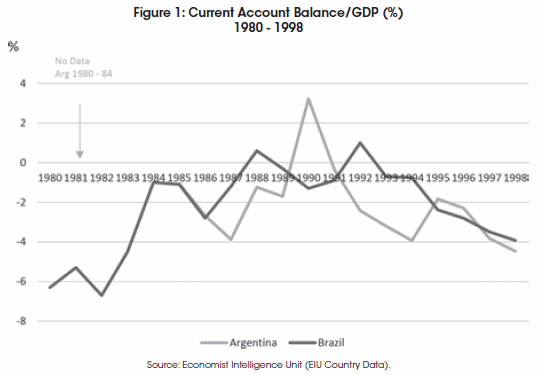
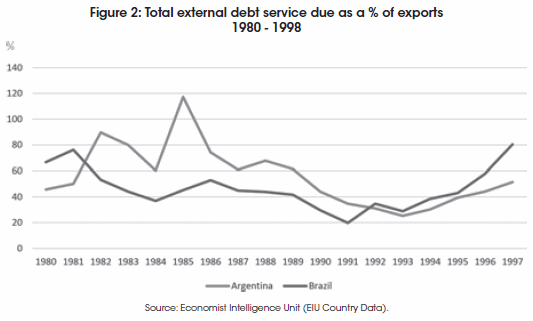
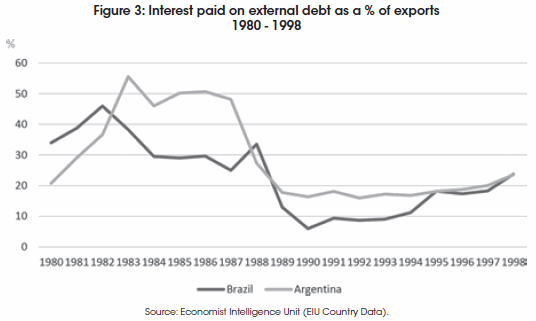
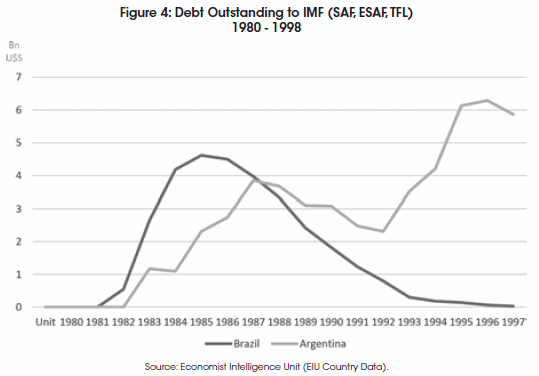
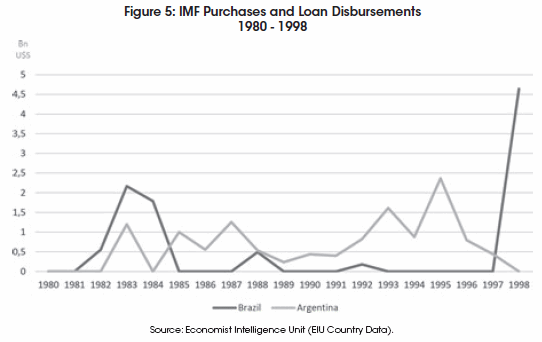
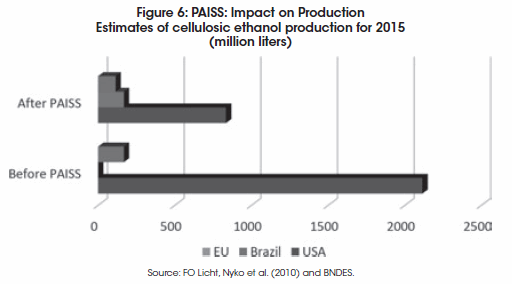
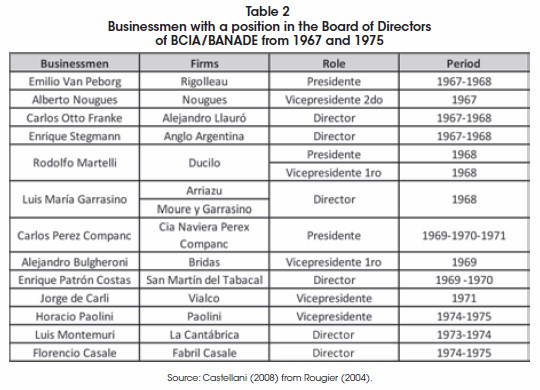
]]>