The Role of EU-ETS Mechanism as Environmental Investment Promoter in Europe and Developing Countries
El rol del mercado de bonos de carbono europeo (EU–ETS) como gestor de inversión en medioambiente en Europa y países en desarrollo
Carlos Díaz Valdivia*
This research attempts to provide a better understanding about the role of the European Union Emission Trading System (EU-ETS) as private environmental investment promoter.
It explores the macroeconomic behavior of private environmental investments before and after the implementation of EU-ETS in 2005 until the end of Phase I of the mechanism. Also, private environmental investments are contrasted with variables like: economic growth, interest rates, and energy prices (gas and electricity) in order to quantify the impact of these on private environmental decisions and evaluate the level of impact (slow, moderate and strong) of all these variables together with the EU-ETS implementation on private environmental investment decisions. For this purpose it is used a statistical approach through multiple linear regressions for the cases of Germany, Spain, France and The Netherlands and a single panel estimation with data information of all the countries mentioned. The results show that the signature of Kyoto Protocol in year 1997 -as a preamble of EU-ETS- provided a perverse incentive on private environmental investments until 2004. During Phase I (2005–2007) of the EU-ETS mechanism, private environmental investments showed an important positive recovery that was not enough to reach pre Kyoto Protocol levels. Finally, it is analyzed the investment in developing countries through CDM projects.
Key words: EU-ETS, environmental investments, CDM.
Classification JEL: A30, C10, C22, C23, O13, Q56.
Resumen
Esta investigación intenta proveer una mejor comprensión acerca del rol que juega el mercado de bonos de carbono Europeo (European Union – Emissions Trading System) como gestor de inversión privada en medioambiente. Se explora el comportamiento macroeconómico de la inversión privada en medioambiente antes y después de la implementación del mecanismo en el año 2005 hasta el final de la Fase I del mismo. Además, la inversión privada en medioambiente es contrastada con variables como crecimiento económico, tasas de interés y precios de energía (electricidad y gas) con el fin de cuantificar el impacto de estas variables sobre decisiones de inversión en medioambiente y evaluar el nivel de impacto (pequeño, moderado o fuerte) de todas estas variables junto con la implementación del mecanismo de mercado sobre decisiones de inversión en medioambiente. Para este propósito se utiliza una aproximación estadística mediante las regresiones lineales múltiples para los casos de Alemania, España, Francia y Holanda y una estimación de datos de panel con la información estadística de todos los países mencionados. Los resultados muestran que la firma del Protocolo de Kyoto en el año 1997 – como preámbulo a la implementación del mecanismo EU-ETS- otorgó incentivos perversos hacia las inversiones privadas en medioambiente hasta el año 2004. Durante la Fase I (2005 – 2007) del mecanismo de mercado EU-ETS, las inversiones en medioambiente mostraron una recuperación positiva e importante que no fue suficiente para alcanzar los niveles vistos antes del Protocolo de Kyoto. Finalmente, se analiza la inversión en países en desarrollo a través de proyectos bajo el Mecanismo de Desarrollo Limpio (MDL).
Palabras clave: EU-ETS, inversión, medioambiente, mecanismo de desarrollo limpio, MDL.
Clasificación JEL: A30, C10, C22, C23, O13, Q56.
]]>
List of Acronyms
CCS Carbon Capture and Storage
CER Certified Emission Reduction
CDM Clean Development Mechanism
CO2 Carbon Dioxide
EU European Union
EU-ETS European Union – Emissions Trading System
EUA European Union Allowances ]]> ERU Emission Reduction Unit
Eviews Econometric Views
GDP Gross Domestic Product
GHG Greenhouse Gases
IEA International Energy Agency
JI Joint Implementation
OLS Ordinary Least Square
RD&D Research, Development and Deployment (or Demonstration)
UNFCCC United Nations Framework Convention on Climate Change
]]> 1. Introduction
Global warming, climate change and its worldwide broadly known effects are putting in danger life on the planet and its economic growth. The European Union Emission Trading Scheme (EU-ETS) is one of the cornerstone market-based mechanisms created by the European Union with the aim of reduce greenhouse gas emissions (GHG) from power generation and industry in a cost-effectively way. The idea behind this carbon market is to reduce GHG emissions through the promotion of investments in cleaner ways of production (EU, 2005). The aims of this research, based on previous studies and public available data are: (i) to evaluate the role of EU-ETS as private environmental investment promoter, (ii) to identify the determinants of environmental investment, (iii) to evaluate the consequences of the signature of Kyoto Protocol on the promotion of environmental investments before the EU-ETS implementation and, (iv) to provide an insight about the role of CDM investment projects in developing countries.
2. Background
2.1. The European Union Emission Trade System
Since the industrial revolution in the mid-18th century until date, the overall world economic production, consumption and wealth has increased faster than in previous episodes of our history. Nevertheless, the negative “externalities” derived from this economic boom have important effects on the environment. In this sense, the concentration of greenhouse gases in the atmosphere has been rising up at alarming rates over the last two hundred years (IEA, 2012) as a consequence of the acceleration of energy consumption based on fossil fuels for power generation and the production of goods/services. As a result, global warming, climate change and its worldwide effects are threatening against the people’s welfare putting in danger the availability of drinkable water and food, increasing the recurrence and severity of natural disasters and putting in danger the ecosystems.
With the aim of reduce greenhouse gas (GHG) emissions, a multilateral international treaty was signed (by 154 countries) at Rio de Janeiro in 1992, giving birth to the United Nations Framework Convention on Climate Change (UNFCCC). Nevertheless, this treaty was not legally binding until the signature of Kyoto Protocol in 1997. In the Kyoto Protocol was agreed on an overall world emission reduction of 5% compared to 1990 levels during the 2008-2012 period, which is known as the Kyoto commitment period. The treaty intended to achieve the stabilization of CO2 concentration in the atmosphere at a level that would prevent dangerous anthropogenic interference with the climate system.
In order to accomplish the emissions reduction, the European Union Member States designed and launched an Emission Trading Scheme (EU-ETS) in 2005. The UE-ETS is the first, largest and multi-sector international carbon trading system in the world and nowadays covers around 11,000 installations through 30 countries (the 27 EU Member States plus Iceland, Liechtenstein and Norway) responsible for the 40% of the total European Union GHG emissions (UNFCCC webpage)1. This scheme is based on a cap and trade mechanism where European Union Members are free to buy or sell emission allowances as they are required. A set of national authorities leaded by the European Commission control the total yearly allowed emissions (the cap). This cap is reduced every year based on emission reduction targets. The companies that manage to reduce its emissions below their individual cap are allowed to sell their unused emission allowances to companies that do not meet their caps.
The allocation of allowances is proposed by each state member in order to allocate them into their polluting industries. The quantity of allowances proposed by the member states is subject to review and approval by the European Commission according to procedures and criteria established in the EU emissions trading directive (Ellerman, 2008). All these industries must return at the end of the year the number of credits that correspond with the total amount of verified emissions related to their yearly operation. The units traded are the European Union Allowances (EUA) and have an equivalence of 1 ton of carbon dioxide. A company that is allocated with fewer credits than it is expected to produce must: (1) reduce its production in order to reduce its emissions or; (2) buy additional credits from the market or; (3) invest in new technologies that allow the company to pollute less per unit of production (Obermayer, 2010). Since production reduction (industry and/or power) could signify enormous problems for the economy and carbon credit supply is limited and decreasing, the EU-ETS theoretically should encourage polluters to invest in cleaner ways of production in order to reduce GHG emission.
The system covers emissions of CO2 from power plants, a wide range of energy-intensive industry sectors and commercial airlines (the latter since Phase III). Nitrous oxide emissions from the production of certain acids and emissions of per-fluorocarbons from aluminum production are also included since Phase III. Participation in the EU ETS is mandatory for companies operating in these sectors, but in some sectors only plants above a certain size are included (UNFCCC webpage)2. In summary, the economic sectors that are part of this trading scheme are: the energy sector, the industrial sector and the financial sector (Obermayer, 2010). The energy sector needs the carbon credits in order to cover the emissions that come from the burn of fossil fuels (coal, oil and gas) used to produce power and heat. The industrial sector needs the carbon credits to cover the emissions that come from their production of goods and services. Finally, the financial sector buys and sells carbon credits with the expectancy of generate some profitable margins.
]]> The EU-ETS is designed to run in three phases: Phase I, known as a trial phase (2005-2007); Phase II known as Kyoto Commitment period (2008-2012) and; Phase III known as post Kyoto Commitment period (2013-2020). The phase I was implemented by giving to the companies the 100% of its emissions in carbon credits. Nevertheless, the companies overclaimed the amount of emissions required. As a consequence the market was over-supplied with carbon credits and carbon prices went down reaching values of zero. However, since the credits from phase I couldn’t be banked to phase II, the futures market for phase II credits still maintained high prices since failures identified in phase I will be adjusted for phase II. Under phase II, the mechanism is designed to trade and price the credits freely by the market (Kossoy and Ambrosi, 2012).
2.2. Carbon Offsets and Prices
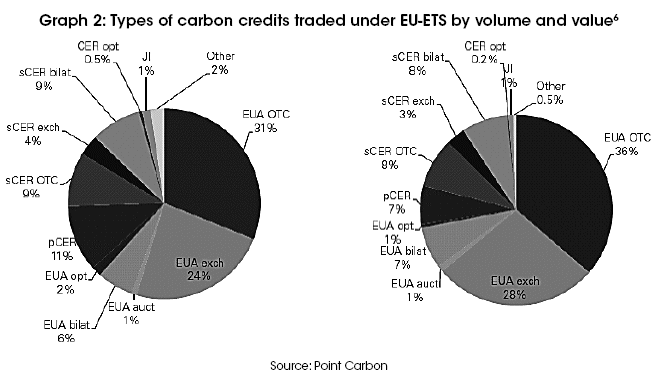
It is important to distinguish that under the EU-ETS diverse kind of carbon credits are traded, the most important are: ERU’s, CER’s and EUA’s. In this sense, an Emission Reduction Unit (ERU) is a carbon credit originated from a Joint Implementation (JI) project. The JI mechanism allows trading of carbon credits originated from emission reductions and/or emission removals between developed countries (Annex I parties) within the European Union (Annex 3)3. A Certified Emission Reduction (CER) is a carbon credit originated from a Clean Development Mechanism (CDM) project (Annex 4). The CDM allows trading of carbon credits originated from emission reductions projects in developing countries (UNFCCC webpage4).
Finally, the European Union Allowances (EUA) are emission allowances provided to the industry by the single Union Registry. From the launch of the EU ETS in January 2005, national registries ensured the accurate accounting of all allowances issued. This task was taken over during 2012 by the single Union registry operated by the Commission. From 2012 the Union registry includes accounts for aircraft operators. During phase II the national and Union registries recorded: National allocation plans, Accounts of companies or physical persons holding those allowances, Transfers of allowances (“transactions”) performed by account holders, Annual verified CO2 emissions from installations, Annual reconciliation of allowances and verified emissions, where each company must have surrendered enough allowances to cover all its verified emissions (European Commission webpage5).
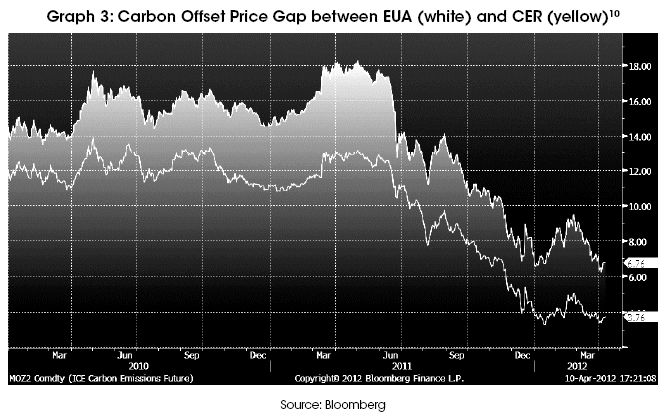
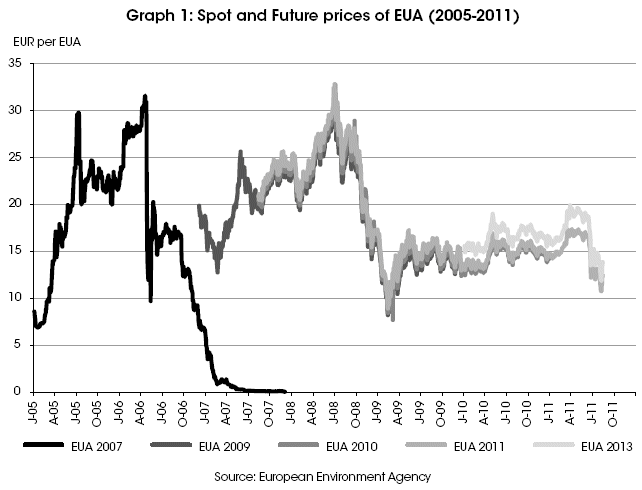
Under the phase I (2005-2007) and phase II (2008-2012) of the EU-ETS, spot and future prices of the EUA have behaved unstably, reaching top prices of almost 35 Euros per ton of CO2 but also reaching bottom prices below the 10 Euros per ton of CO2 during the period 2005-2011. Nowadays, the price of a EUA fluctuates around the 8 Euros per ton of CO2. The consequences of this fluctuation are discussed in the next section.
3. Problem Identification
Assuming that investment and technology innovation and its subsequent implementation is one of the most important (if not the most important) tool for adaptation and mitigation to climate change, the concern is that price volatility of an offset such important for the EU-ETS, as the European Union Allowance (EUA), could erode the capacity for rational economic calculation and could give rise to investment uncertainty from industry and power generation (Chester and Rosewarne, 2011). As a consequence, price instability could diminish the incentives for cleaner and environmental investment initiatives since investors perceive uncertainty about the future and adopt a position similar to “wait and see”. In other words, investors do not have information that allows them to compare their cheapest solution about their emission reductions (buy carbon credits versus invest in environmental and cleaner technologies). This situation can become in a serious threat for the EU-ETS since the main objective of the scheme (reduce emissions) wouldn’t be achieved, at least not as a consequence of cleaner investments.
The main objective of this research is to provide an insight about the role of the European Union Emission Trading Scheme (EU-ETS) as a cleaner investment promoter. For this purpose, this study will analyze the links between private environmental investment and its possible determinants: interest rates, economic growth, the implementation of EU-ETS in 2005, carbon offset prices and energy prices since the creation and running of the EU-ETS in 2005 until 2007 (Phase I) through the modeling of econometric estimations. As secondary objectives, this research will provide a literature review about the link between carbon markets and the promotion of cleaner investment initiatives; will identify other variables than EU-ETS that determined the behavior of environmental investments and; will evaluate the consequences of the signature of Kyoto Protocol on the promotion of environmental investments before the implementation of EU-ETS in 2005 and will analyze the impact of CDM projects on developing countries.
]]>4. Literature Review
There are diverse issues that have been studied in the recent years about the performance of the EU-ETS and its effects on environment, industry and economics. Among these, it’s possible to differentiate two major issues related to: (1) the operating of the mechanism and (2) its economic effects (Zhang and Wei, 2010). About issues of the operating mechanism, these are focused in two major problems: allowance allocation mechanism (that takes into account over-allocation and banking problems) and carbon offset pricing (that takes into account the interrelations between energy prices and carbon prices, the liquidity of carbon offsets and the relation between stock market and carbon prices). About issues related to the economic effects of the EU-ETS, it is necessary to differentiate effects on: (1) energy industry, (2) non-energy industry with high energy intensity and (3) socio-economy (Zhang and Wei, 2010).
The studies about the effects of EU-ETS on energy industry are mainly focused on: the impact of carbon pricing in generation costs, the impact of EU-ETS on investment decisions and the impact of carbon pricing on value of the firm. The studies about the effects of EUETS on the non-energy industry are mainly focused on: the impacts of including the aviation sector into the mechanism, the impacts of carbon price variation in productivity and the impact on emissions reductions and cleaner technology investments. Finally, the studies about the effects of EU-ETS on the socio-economy are mainly focused on the relation of carbon futures market and macro-economic variables and the influence of the EU-ETS on enterprise financial performance and the employment situation (Zhang and Wei, 2010).
As it may be acknowledged, the existing literature about the issues in the EU-ETS is extensive. Since the main issue studied under this research is the role of EU-ETS as environmental investment promoter, the literature to be reviewed will focus on previous research that studies the relation between EU-ETS and cleaner technology investments. In this sense, this literature review will emphasize on empirical studies that provide a better understanding of the EU-ETS -cleaner investments relation.
Lacombe (2008) studied the economic impact of the EU-ETS on the refining industry in Europe during phase I of the mechanism. The author affirms that the companies took into account carbon prices in a statistically efficient way, but this led to second-order emission abatements rather than dynamic changes in operations. The author divides the analysis of EUETS and its impact on investments in the short and long-run. In this sense, the author affirms that in the short-run a certain number of abatement investments have been considered by industry but few projects have resulted in actual investments so far. The widespread opinion among the participants (refining companies) is that, while the cost of carbon in the current environment is not enough yet to create by itself strong incentives for actors to change their operations, it has compounded with the recent increase in energy prices and led companies to become much more serious about energy efficiency investments.
After consultations with experts about the long-run impact of EU-ETS on cleaner investments, the author affirms that long-run impact of the carbon price on investments is not yet clear. Nevertheless, considering carbon prices of 40 Euro per tonne in the future will induce significant changes in the existing industrial basis, with more investments coming on line. In overall, there is some room for investment in abatement technologies and the incentives created by EU-ETS are mostly seen as credible and durable. However, a number of internal (workforce liability) and external constraints (sulfur content regulation) and the signal that low price of carbon offered during phase I, have discouraged most companies from heavily investing up to date.
Hoffmann (2007) conducted five case studies in German power generation companies in order to analyze the effect of EU-ETS on environmental investment decisions during the first period of the scheme (Phase I). Remarkably, this study shows that the economic principle of the scheme is working since the market price of CO2 allowances is reflected in dispatch11, investment decisions and energy prices. Nevertheless, this study concludes that the EU-ETS constitutes a main driver for small-scale investments with short amortization times while its impact on large-scale investments in power plants or in R&D efforts is limited. The study shows that high price volatility of allowances and the regulatory uncertainty that surrounds EU-ETS creates a high risk to long-term investments.
Furthermore, the author suggests that elements of the regulation that provide incentives for increasing efficiencies should be fostered, such as benchmarking or the malus rule12. Regulatory uncertainty should also be reduced, for example by increasing the length of the trading periods to make them more comparable to typical amortization times. Finally, policy makers should provide guidance for the sector as a whole on how to balance the necessity for low carbon investments with favoring investments that increase electricity supply security.
Following the same line, Rogue and Hoffmann (2009) studied the impact of the EUETS on the sectorial innovation system for power generation technologies in Germany based on 42 interviews with experts in the field. The findings of this study show that EU-ETS has influenced the sectorial innovation system of power generation technologies of Germany in several areas. The most pronounced change concerns the Research, Development and Deployment (RD&D) on Carbon Capture and Storage (CCS) technologies and the rise of awareness of corporate actors about CO2 emission consequences. These changes already occurred at the very beginning of the EU-ETS and have further gained in importance.
]]> Based on these findings, the authors expect that the revised EU-ETS will continue to be an important, although insufficient in itself, element in the policy mix needed to promote investments in cleaner technologies within the power sector. Also, according to the authors, policy makers interested in increasing the innovation impact (cleaner investments) of the EU- ETS up to 2020 should strive for the cap to be raised, and consider communicating the desired long-term reduction path more clearly, with the aim of decreasing uncertainty on the part of innovators (Engau and Hoffmann, 2010).Rogge et al. (2010) leads a similar study based on 19 power generators in Germany. The author concludes that the innovation impact of the EU-ETS has remained limited because of the scheme’s price volatility and the limited institutional predictability characterized by short trading phases (3-5 years). This lack of certainty undermines the long-term and capital-intensive investments decisions of power sector investors. In consequence, the UEETS is highly unlikely to lead RD&D decisions in line with the EU 2020 proposed targets. Nevertheless, there is a lot of positive expectancy about phase III of the mechanism in which allowances allocation will be made through auctions.
The authors structured their analysis by separating the impact of EU-ETS on different innovation dimensions of RD&D. About RD&D in CO2 capture technologies, the implementation of EU-ETS triggered a strong increase in corporate CCS research, demonstrated by the initiation of pilot projects. While the efforts of power generators are to a large extent driven by the EU-ETS, technology providers’ increased RD&D activities which are typically driven by their customers’ needs, illustrating the trickledown effect of the EUETS through the value chain.
Also, it is noticed an increment in RD&D activities with the aim of increase coal plants efficiency up to 50% and beyond (>50%). The first main reason for this acceleration is the CO2 price, while the second is the efficiency losses that would occur if CCS were installed in the future. The EU-ETS’ impact on incremental RD&D activities in gas technologies appears to be positive but very small. In this line, there is evidence supporting that EU- ETS has a very limited and only indirect impact on the ongoing rapid incremental RD&D activities in wind power, resulting from learning effects due to the increased adoption of wind turbines. However, the perceived security of supply and the favorable coal-to-gas price ratio remain strong drivers for preferring new coal over new gas plants even after the implementation of EU-ETS.
Feilhauer (2009) developed an interesting economic analysis about the effects of EU-ETS on carbon emissions and investment decisions on power sector of Germany. In his research, the author concludes that after the implementation of the EU-ETS, coal power plants are the most extended investment option for electricity generators. The author provides that conclusion after testing three different analysis and methods: return analysis, marginal fuel analysis from bottom-up model and spread analysis from commodity prices. The application of these methods has found that this pattern (coal based economy) is very unlikely to change due to the high profitability of coal compared to gas or renewable energies.
The author found a striking result since the large majority of days a coal plant shows a higher profitability than gas plants. But in summer time, the dark spread13 show a negative result indicating that gas generation is cheaper (or more profitable) than coal. Moreover, the absolute dark spread shows that coal plant investments have actually become more profitable versus gas since the introduction of carbon emissions trading. While in the times before the emissions trading it was more profitable to operate with coal plants the 66% of the days, in times after the emissions trading it is more profitable to operate with coal plants the 82% of the days. The author explains that this is a counter-intuitive outcome since the EU-ETS mechanism should discourage investment on more pollutant power plants (like coal based) and provides great explanatory power for the recent announcements of new coal builds.
Finally, Venmans (2012) provides a multi-criteria evaluation of the UE-ETS. In terms of environmental efficiency, the author affirms that EU-ETS succeeded in reducing emissions of the sectors covered. In this sense, the author calculated that, during phase I, the abatement compared to business as usual reached 2.5%-5% with no carbon leakage14 registered outside Europe. This implies that in fact pollutant industries are diminishing its carbon emissions instead of moving them outside Europe. Furthermore, since the crash price before phase II, the author conceives the necessity of a carbon price floor.
In terms of economic efficiency, the author affirms that EU-ETS was not cost efficient in the sense that the cap was not stringent enough to induce a marginal cost of abatement equal to the marginal social cost of carbon. Nevertheless, the author agrees that estimate the marginal social cost of carbon is very difficult since according to several authors this cost fluctuates between eight and eighty five euros per ton of CO2 equivalent. The author agrees with the cornerstone idea of this research that assumes that the dynamic efficiency of EUETS is mainly driven by its capacity to boost technology development and environmental investments. In this sense, the high volatility of carbon price increases the risk profile of low carbon investments. Thus, the price volatility of EU-ETS hampers technology development.
However, the plausible assumption of increasing carbon prices over time, which is less likely under a carbon tax, favours long-term strategic positioning of low carbon technologies.
The author agrees with the idea that the high volatility of the carbon price increased the risk of low carbon investments and its capital costs. In this sense, several authors mention that a carbon floor would increase price stability and in consequence reduce the risk for long-term cleaner investments, even though there are plausible assumptions that carbon prices will increase over time and they will remain steady in time. The author also mentions that there is an inherent propensity of the actual EU-ETS to provide incentives to low-cost abatement opportunities rather than more expensive technologies (long term investments) that could become in more efficient solution for the future.
]]> Blanco and Rodrigues (2008) provide an analysis about the role of EU-ETS in promoting wind energy investments. In this sense, the authors affirm that EU-ETS constitute a valuable tool for reducing CO2 emissions and at the same time encourage wind energy investments if some barriers of its actual design are solved. These barriers are focused on the political national influence and over-allocation of permits, the adoption of full auctioning and the inclusion of other pollutant sectors and gases.However, since EU-ETS is solely concerned about reducing GHG emissions and does not comprehend other benefits of wind energy, like security supply and employment creation, it does not represent an optimal tool to remunerate the external benefits of this sector. According to the authors, EU-ETS is unlikely to provide sufficient incentives to promote wind power, in consequence other policies to internalize the societal benefits that accrue from deploying this technology should be used.
As a summary, it may be said that most of the literature reviewed related to the role of the EU-ETS as a cleaner investment promoter focuses its analysis in the impact of EU-ETS over investments on particular sectorial cases like refining, power generation industry and wind power. Geographically, most of these studies are focused in the German economy but also in Europe as a whole. These studies are mainly based on surveys and case-studies that conclude that the EU-ETS provide incentives for short-term payback investments but does not provide incentives for long-term investments. This situation is explained by different authors because of institutional uncertainty and price volatility.
5. Methodology
It is evident to notice the lack of studies that uses macroeconomic statistical databases about environmental investment since the implementation of the EU-ETS in order to evaluate the impact of EU-ETS as environmental investment promoter. The approach of this research attempts to provide a different macroeconomic perspective that delivers a better understanding about the role of EU-ETS as cleaner investment promoter through the use of aggregate statistical databases and econometric estimations. In this sense, it is planned to find the macroeconomic determinants of environmental investments (meaning by environmental investments as all outlays for machinery and equipment destined for environmental protection purposes) of private companies according to the economic theory.
Basically, classic economic theory explains the private investment as a consequence of the behavior of economic (GDP) growth, interest rates (costs of debt), and subjective expectations about the future. Within the EU-ETS context, private environmental investments are also defined by the price of CO2 emissions. For example, if an industry receives an amount of emission allowances that is not enough to fulfill its actual emissions, this industry will have to face a dilemma: buy more allowances or reduce its emissions per unit of production through cleaner technology investments. The rational economic calculation would suggest the industry to choose its cheapest option available for the long-run. In this sense, the implementation of the EU-ETS and carbon pricing will become part of the companies’ expectations and should affect to their environmental investments decisions. Carbon price drivers are mainly related to institutional decisions (that change the rule of the game), energy prices and extreme weather events (Chevallier, 2012).
The econometric estimation will measure the explanatory power of the independent variables (GDP growth, Interest Rates, EU-ETS implementation, carbon prices and energy prices) over the dependent variable (Environmental Investment as Percentage of GDP). The characteristics and use of these variables will be explained in the Variables Specification section below. The econometric estimation will be developed in two stages. The first stage will be a country individual analysis about the impact of EU-ETS on environmental investment through a multivariable OLS estimation. The second stage will cover panel-data estimation with all the information available from the countries under analysis. These two different approaches are necessary to verify the results of the estimation and fix problems with the amount of data (observations) available (especially for the country individual estimations).
After this, it will be able to determine the statistical significance of EU-ETS on the behavior of environmental investment and the weight of other variables (independent) at the moment of define environmental investment decisions.
The data source for this research is the European Commission (Eurostat) and it will be focused in the following countries: Germany, France, Spain and The Netherlands. The first three countries were chosen because of their importance in the amount of their total CO2 emissions15 since these are amongst the five most important emitters in Europe in order of importance together with the United Kingdom and Italy. Nevertheless, due to the lack of statistical information, in particular data about private environmental investments from year 1998 until 2000, the analysis of Italy and UK is not considered. Furthermore, even though The Netherlands is not one of the most important CO2 emitters in Europe, it is considered within this analysis because this research is made under the support of a Dutch institution: Twente University. The data available that will be used for this analysis will cover the period 1998-2007. For this reason it is possible to assess the entire phase I of the EU-ETS.
]]>6. Environmental Investment
Before the econometric estimation, it is important to analyze private environmental investment data trends and how it behaves in time within all countries under analysis: Germany, France, Spain and The Netherlands. For this purpose it will be useful to analyze the environmental investment as a percentage of GDP and as a percentage of the total private investment in order to evaluate its behavior across time and its economic significance within each country. It is important to remark here that, since under this research it’s being evaluated the power of EU-ETS in promoting environmental investments within the private sector, it will be more accurate to compare them with total private investments and not with total investments (private plus public).
6.1. Germany
During the period previous to the EU-ETS (1998-2004), the environmental investment as a percentage of total private investment had a very volatile behavior. As it may be seen in Graph 4, this variable has been behaving in a cyclical pattern, finding its highest peaks during the years 1999, 2002 and 2007; and its lowest value during the years 2001 and 2005. For example, private environmental investment as percentage of total private investment reached values of 46%, 48% and 46% in 1999, 2002 and 2007 respectively; and values of 38% and 37% in 2001 and 2005 respectively.
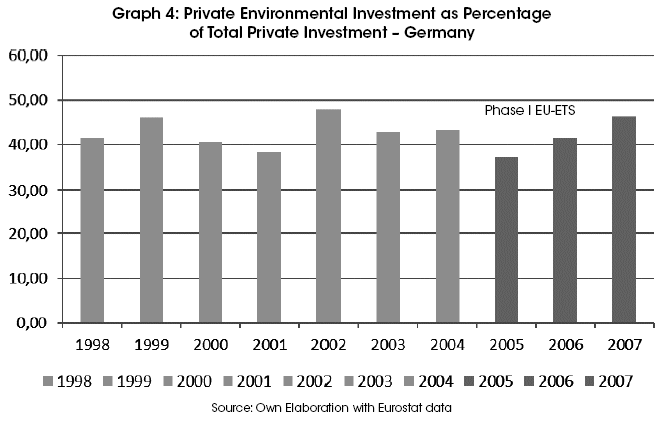
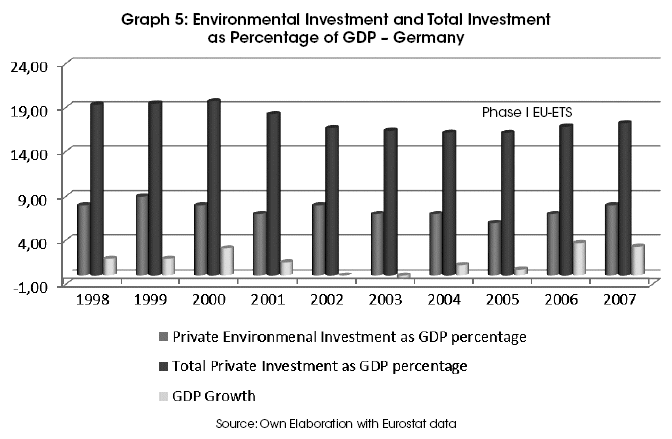
A similar pattern can be found if environmental investment data is analyzed as a percentage of GDP as it may be seen in Graph 5. It is interesting to notice that on average during this period, environmental investments represented a 42% of the total private investments as GDP percentage. Nevertheless, the most important information about both graphs analysis is to notice that since the implementation of EU-ETS in 2005, the environmental investment started an ascendant tendency as a percentage of GDP and as a percentage of total private investments that does not follow GDP growth tendency and could be as a consequence of new environmental legislation and/or institutional changes like EU-ETS implementation.
]]>
6.2. France
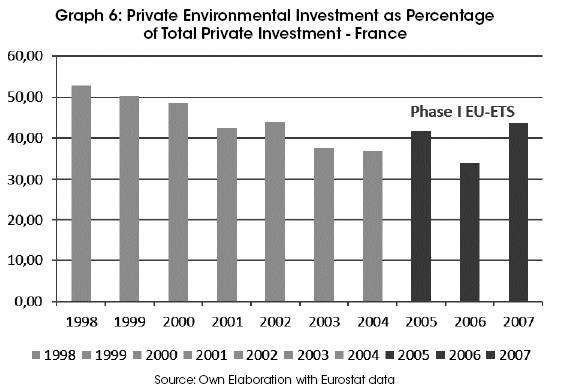
For the case of France, contrary to the case of Germany, during the period previous to the EU-ETS (1998-2004) the environmental investment as a percentage of private total environmental investment had a continuous and steady decreasing behavior as it may be seen in Graph 6. For example, the private environmental investment as percentage of total private investment decreased constantly from values of 52% in 1998 up to values of 36% in 2004, reaching a total decrease of 43% in seven years. Nevertheless, it is important to remark that since the implementation of EU-ETS in 2005, private environmental investments started to increase.
A similar pattern can be found if it is analyzed environmental investment data as percentage of GDP as it may be seen in Graph 7. It is interesting to notice that in average during this period, environmental investments represented a 43% (one percentage point more than in Germany) of the total private investments as GDP percentage.
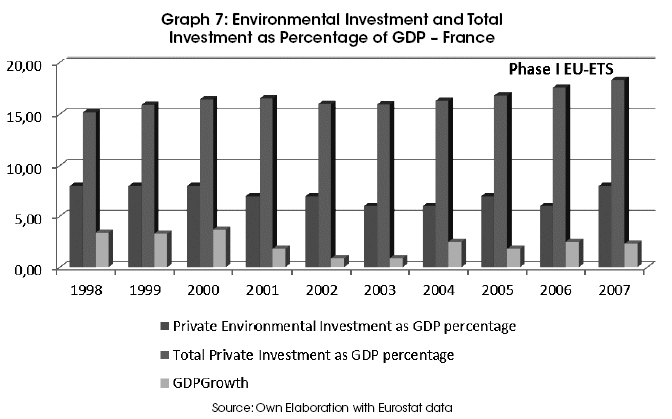
Nevertheless, the most important information about the behavior of environmental investment in France is that environmental investment is highly correlated (correlation coefficient equal to 0.74) with economic growth (especially since 2003) with one period lag. This strong relation could explain an important diminishment of environmental investment in 2006 that didn’t allow EU-ETS implementation promote environmental investments as was the case of Germany previously explained.
6.3. Spain
]]> Similarly to the case of Germany, the behavior of environmental investment in Spain has been very volatile and followed a cyclical pattern during the period under analysis as it may be seen in Graph 8. Environmental investment as percentage of total investment reached its highest peaks in 2000 and 2007 (61% and 52% respectively) and reached its lowest in 2003 (42%).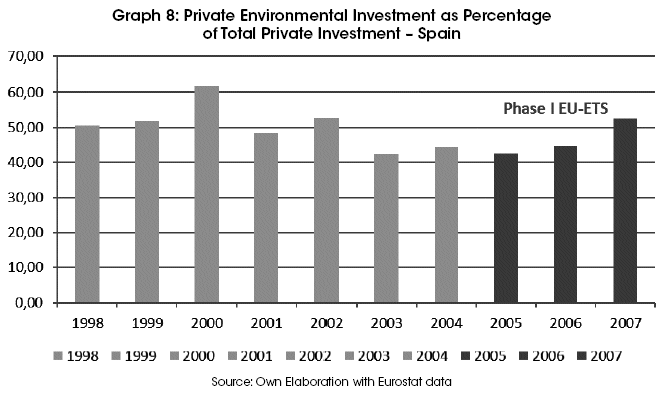
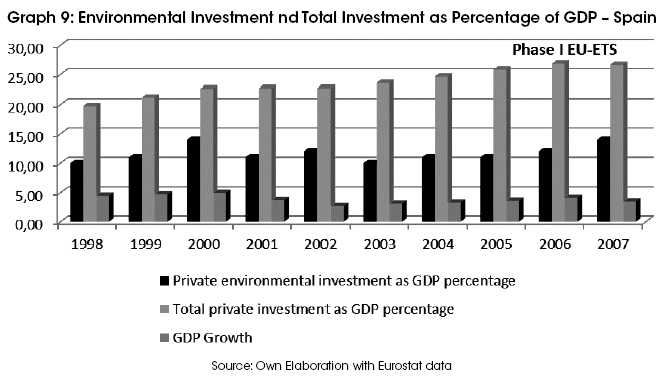
A similar cyclical pattern can be found if it is analyzed environmental investment data as percentage of GDP as it may be seen in Graph 9. It is interesting to notice that in average during this period, environmental investments represented a 49% (much higher in comparison to Germany and France) of the total private investments as GDP percentage. The most important information about the behavior of environmental investment in Spain is that since 2005 (the year of EU-ETS implementation) the environmental investment started a positive tendency in monetary terms as well as in GDP and private investment percentage. The relation between environmental investment and economic growth in this case is not as clear as in the previous cases but there is some evidence of slight correlation between them.
6.4. The Netherlands
The analysis of The Netherlands is very similar to the case of France since during the period previous to the EU-ETS (1998-2004) the environmental investment in The Netherlands had a continuous and steady decreasing behavior as it may be seen in Graph 10. For example, in 1998 the private environmental investment as percentage of total private investment was in 68% and went down up to 38% in 2003. This diminishment of environmental investment as total private investment represents a decrease of 44% in six years.
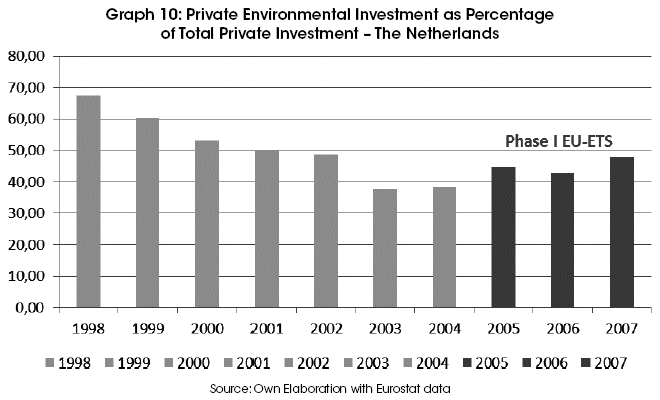
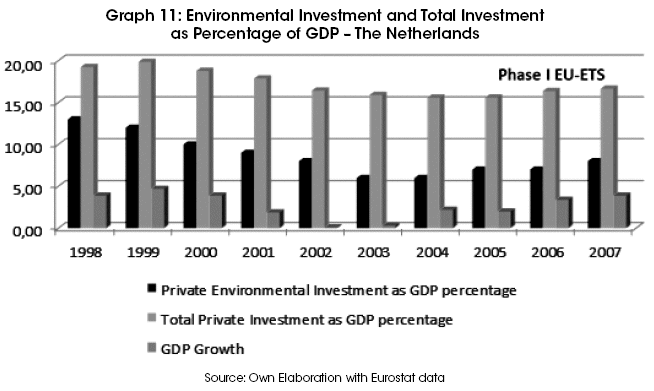
Finally, the most important information about the behavior of environmental investment in The Netherlands is that since 2005 (the year of EU-ETS implementation) the tendency of environmental investment changes and starts a positive recovery leaded by positive economic growth.
7. Econometric Estimation
This section will focus on the empirical testing, through an econometric analysis, of the impact of the EU-ETS on private environmental investments. As it was mentioned before, this section will be divided in two stages:
During the first stage, it will be developed a Multiple Linear Regression of each country under analysis through an Ordinary Least Square (OLS) econometric estimation technique that allows us to infer about the role of EU-ETS on environmental investments. One of the problems of this individual estimation is the number of observations available. Since the available data comes from 1998 until 2007 (only 10 observations) it is likely that the estimation’s results could have some problems in terms of efficiency. This means that, when there are only a few observations or the sample size is small, like in this case, it is possible to obtain estimations with high standard error.
During the second stage, it will be developed a different econometric estimation approach.
The advantages of this new estimation, called Panel-Data Estimation, are that provides better statistical consistency in terms of un biasedness and guarantees efficiency in the estimation’s results since it improves the number of observations (4 countries times 10 years equals to 40 observations). This approach gathers together all the individual country information (in a panel of data) and provides a single estimation.
◆ Multiple Linear Regression:
In statistics, linear regression is an approach to modeling the relationship between a scalar dependent variable Y and one or more explanatory variables denoted X. Most commonly, linear regression refers to a model in which the conditional mean of Y, given the value of X, is an affine function of X. Linear regression has many practical uses, the most important one in this case is that: Given a variable Y and a number of variables X1, ..., Xp that may be related to Y, linear regression analysis can be applied to quantify the strength of the relationship between Y and the Xj, to assess which Xj may have no relationship with Y at all, and to identify which subsets of the Xj contain redundant information about Y.
Given a data set {yi, xi1…, xip}ni=1 of n statistical units, a linear regression model assumes that the relationship between the dependent variable yi and the p-vector of regressors xi is linear. This relationship is modeled through a disturbance term or error variable εi — an unobserved random variable that adds noise to the linear relationship between the dependent variable and regressors. Thus the model takes the following form:

Often these n equations are stacked together and written in a vector form as:
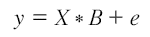
Where:
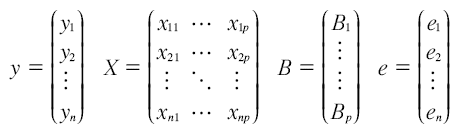
The estimation technique used here is the Ordinary Least Square (OLS). The OLS method minimizes the sum of squared residuals, and leads to a closed-form expression for the estimated value of the unknown parameter Bi:

◆ Panel Data Estimation:
In statistics and econometrics, the term panel data refers to multi-dimensional data frequently involving measurements over time. Panel data contain observations on multiple phenomena observed over multiple time periods for the same firms or individuals. A panel has the form:

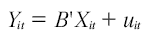
Where: i is the individual dimension and t is the time dimension. A general panel data regression model is written as:
]]>
The technique estimation will also be OLS as the multiple linear regression case.
7.1. Variables Specification
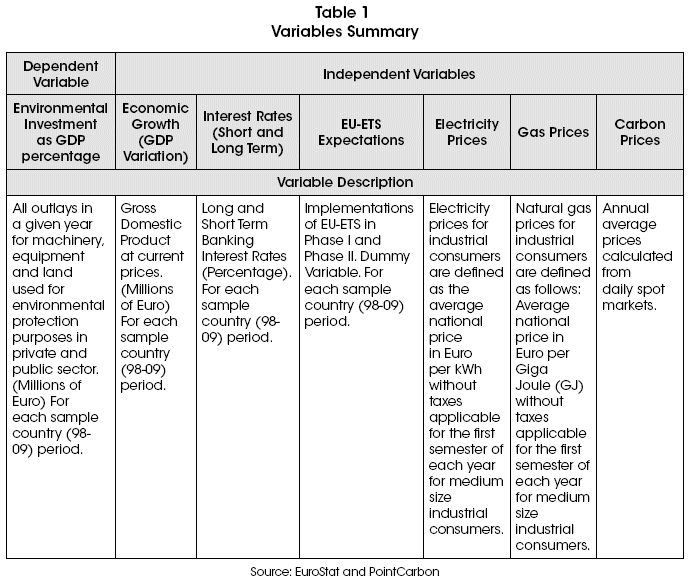
In order to obtain consistent and coherent estimations, the variables used in this OLS estimation have all been obtained from a common source (Eurostat). In this way, it is possible to guarantee information homogeneity. The following table is a summary of the variables used:
7.2. Model Specification: Investment Equation
The objective of this research is to provide an insight about the role of the European Union Emission Trading Scheme (EU-ETS) as a cleaner investment promoter. The environmental (or cleaner) investment (dependent variable) equation used for the econometric OLS estimation is determined by these independent variables: economic growth (GDP variation), interest rates, a proxy of the implementation of the EU-ETS, carbon prices and energy prices (gas and electricity). The time period under analysis is from 1998 until 2007 (3 years – complete phase I).The results of this equation estimation will determine the degree of importance and significance of the EU-ETS in environmental (cleaner) investment decisions.

For purposes of the estimation, private environmental investment will be accounted as GDP percentage. Also, for the estimation it will be used two kinds of interest rate, long and short term investment. Since all the countries under analysis are part of the Economic and Monetary Union, the short term interest rates are common between all of them. The variable related to the EU-ETS will represent the implementation of the policy in time. This will be represented by a dummy16 variable into the model. Carbon prices are the result of annual average prices since the original data was obtained from the daily spot market. Electricity and gas prices are obtained as the price in Euros per unit of kWh. Finally, the term ε represents the model error and the constant term c includes the omitted variables in the model.
7.3. Stage 1 - Results of the Individual Estimation
]]> 7.3.1. GermanyThe results are obtained from the application of econometric estimation made by the software Eviews. EViews (Econometric Views) is a statistical package for Windows, used mainly for time-series oriented econometric analysis. EViews can be used for general statistical analysis and econometric analyses, such as cross-section and panel data analysis and time series estimation and forecasting.
The econometric estimations demonstrated that, for the case of Germany, the private environmental investments depend positively on: economic growth (with one year lag), short term interests, EU-ETS implementation and electricity prices. Environmental investments also depend negatively on: long term interests and gas prices. As it may be noticed, the variable carbon price is not in the estimations results. This is because the observations of this variable were not sufficient (only four observations: from 1995 until 1998) for the software with the aim of provide a consistent estimation. This situation does not affect the results since the dummy variable that represents the introduction of EU-ETS will be the tool that will allow this research to answer the research questions.
It is very important to note that the adjustment of the estimation is very good since the Adjusted R-Squared indicator is equal to 0.99, being 1 a perfect adjustment. This means that the model has an important explanatory power at the moment of identify the variables that determine the behavior and tendency of private environmental investments.
The estimation results demonstrate that economic growth is very important at the moment of explaining environmental investment decisions since the coefficient calculated rises up to 0.87 with a statistical consistency of 99.37% (0.0063 prob). Following the same line, the estimation results also shows that short term interest rates and electricity prices contribute positively to environmental investments decisions since the calculated coefficients rises up to 10.67 and 196.21 respectively, with a statistical consistency of 99.62% (prob 0.0038) and 99.79% (prob 0.0021).
Nevertheless, the most important result for the purposes of this research is the significance of the implementation of EU-ETS on environmental investments. As it may be seen in Table 2, the implementation of the emission trading system had a positive impact on environmental investments since the coefficient rises up to 3.99 with a statistical consistency of 99.26% (prob 0.0021).
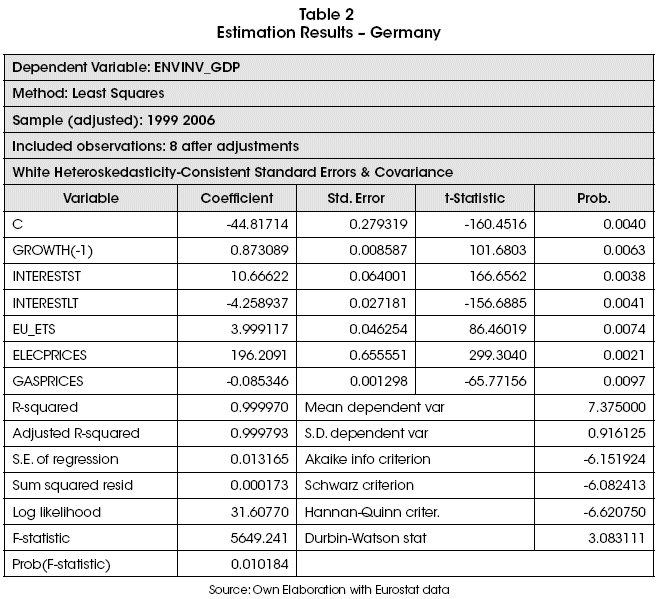
In this particular case, the results show that long term interest rates and gas prices discourage environmental investment decisions since the coefficients (4.25 and 0.085 respectively) of both variables are (sign) negative. Nevertheless, both variables are statistically significant in 99.59% (prob 0.0041) for the case of long term interest rates and 99.03% (prob 0.0097) for the case of gas prices.
7.3.2. France
]]> The results obtained by the econometric estimation realized by the software “Eviews” demonstrates that, for the case of France, the private environmental investments depend positively on: long term interests and EU-ETS implementation. And depends negatively on: economic growth (with one year lag), short term interests and gas prices. As it may be noticed, the variables carbon price and electricity prices are not included in the estimation results because they were not statistically consistent in explaining environmental investment. This means that for the case of France, electricity and carbon prices have no statistical influence on environmental investment decisions. The explanation of not including carbon prices was given previously (see German results).Also, it is very important to note that the adjustment of the estimation is very good since the Adjusted R-Squared indicator is equal to 0.96, being 1 a perfect adjustment. This means that the model has an important explanatory power in order to identify the variables that determine the behavior and tendency of private environmental investments.
The estimation results demonstrate that long term interest rates are very important at the moment of explaining environmental investment decisions since the coefficient calculated rises up to 39.78 with a statistical consistency of 97.94% (0.0206 prob). Nevertheless, the most important result for the purposes of this research is the significance of the implementation of EU-ETS on environmental investments. As it may be seen in Table 3, the implementation of the emission trading system had a positive impact on environmental investments since the coefficient rises up to 4.17 with a statistical consistency of 99.67% (prob 0.0033). This means that the implementation of EU-ETS in 2005 encouraged and promoted the investments in environmental investments.
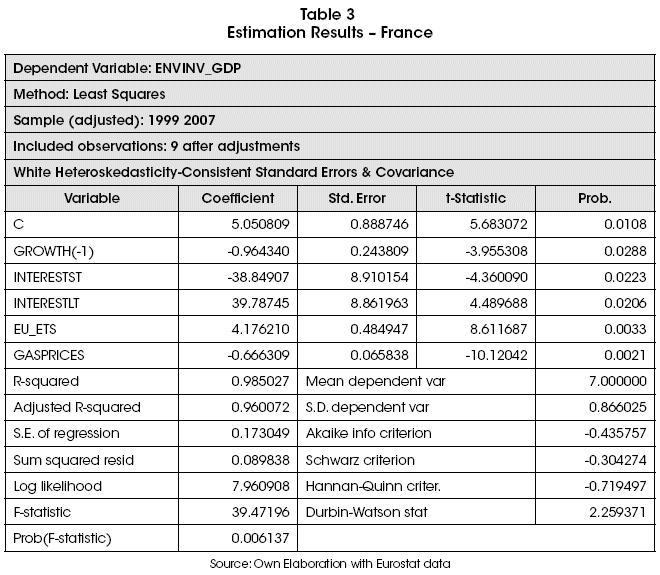
Finally, these results show (surprisingly) that economic growth, short term interest rates and gas prices discouraged environmental investment decisions during 1998 until 2007 since the coefficients (0.96, 38.84 and 0.67 respectively) of these variables have negative sign.
Nevertheless, all these variables are statistically significant in 97.12% (prob 0.0288) for the case of economic growth, 97.77% (prob 0.0223) for the case of short term interest rates and 99.79% (prob 0.0021) for the case of gas prices.
7.3.3. Spain
The results obtained by the econometric estimation demonstrate that private environmental investments in Spain depend positively on: long term interests, EU-ETS implementation and electricity prices. And depends negatively on: economic growth (with one year lag). Also, as it may be noticed, the variables carbon price, short term interest rates and gas prices are not included in the estimations results. This is because all these variables were not statistically consistent, or in other words, these variables didn’t affect the behavior of environmental investments.
Following the results analysis, it is very important to notice that the adjustment of the estimation is very good since the Adjusted R-Squared indicator is equal to 0.97, being 1 a perfect adjustment. This means that the model has an important explanatory power at the moment of identify the variables that determine the behavior and tendency of private environmental investments.
]]> Similarly to the case of France, the estimation results for Spain demonstrates that long term interest rates and electricity prices are very important at the moment of explaining environmental investment decisions since the coefficients calculated rises up to 4.04 and 70.00 respectively with a statistical consistency of 99.91% (0.0009 prob) and 94.49 (0.0551).Similarly to the case of France, the estimation results for Spain demonstrates that long term interest rates and electricity prices are very important at the moment of explaining environmental investment decisions since the coefficients calculated rises up to 4.04 and 70.00 respectively with a statistical consistency of 99.91% (0.0009 prob) and 94.49 (0.0551). Nevertheless, the most important result for the purposes of this research is the significance of the implementation of EU-ETS on environmental investments. As it may be seen in Table 4, the implementation of the emission trading system had a positive impact on environmental investments since the coefficient rises up to 3.14 with a statistical consistency of 99.26% (prob 0.0074).
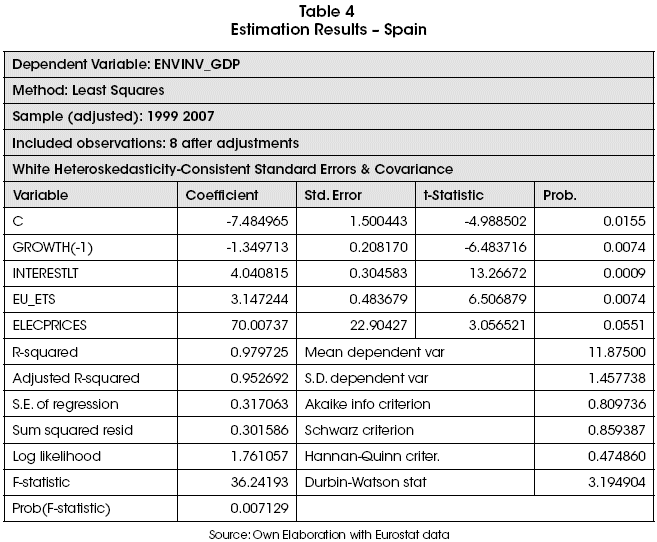
Finally, these results show (surprisingly) that economic growth discouraged environmental investment decisions during 1998 until 2007 since the resultant coefficient of the estimation rises up to 1.35 (negative) with a statistical consistency of 99.26 (prob 0.0074).
7.3.4. The Netherlands
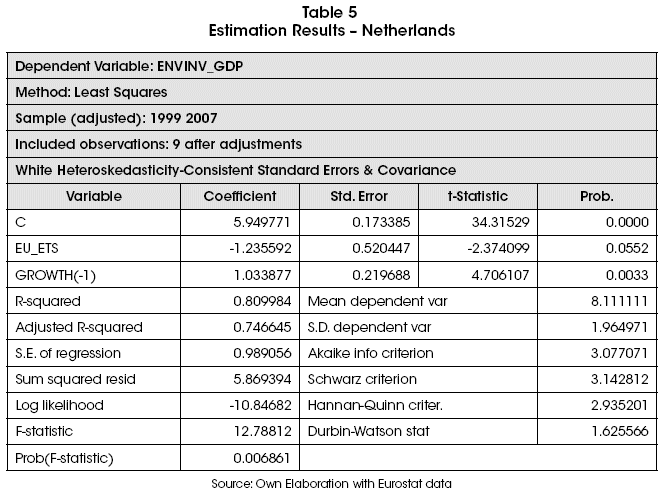
For the case of The Netherlands, the results obtained by the econometric estimation demonstrate that private environmental investments depend positively on: economic growth (with one year lag). And depends negatively on: EU-ETS implementation. Also, as it may be noticed, the variables carbon price, gas prices, short term interest rates, long term interest rates and electricity prices are not included in the estimations results. This is because all these variables were not statistically consistent at the moment of explaining environmental investment behavior.
The Adjusted R-Squared indicator is equal to 0.81, which gives to the estimation a significant power of adjustment to the reality. This means that the model has an important explanatory power at the moment of identify the variables that determine the actual behavior and tendency of private environmental investments even though, in comparison to previous country analysis, there are only two significant variables into the model.
The case of The Netherlands is very peculiar since there are only two variables that explain environmental investment consistently. In this sense, the estimation results demonstrates that only economic growth promoted environmental investment decisions since the coefficient calculated rises up to 1.03 with a statistical consistency of 94.48% (0.0552 prob).
The most important and surprising result of this analysis is the negative impact that EUETS implementation had on environmental investments. As it may be seen in Table 5, the implementation of the emission trading system discouraged environmental investments since the coefficient rises up to 1.23 (negative) with a statistical consistency of 99.67% (prob 0.0033).
7.4. Stage 2 - Panel Data Estimation Results
The panel data estimation results demonstrate an overall adjustment (R-squared indicator) of the model rises up to 0.75. This estimation result means that the model has an acceptable explanation power in order to identify the variables that determine environmental investment behavior. As it may be seen in the estimation results of Table 6, the environmental private investment has a positive and statistically consistent relation with economic growth in a current year and one year lagged. This means that current and previous economic performance (growth) determine private environmental investment decisions in a current year. The coefficients of these variables (growth and lagged growth) are 0.57 and 1.07 respectively with a statistical consistency of 95.13% (prob 0.0487) and 99.96 (prob 0.0004).
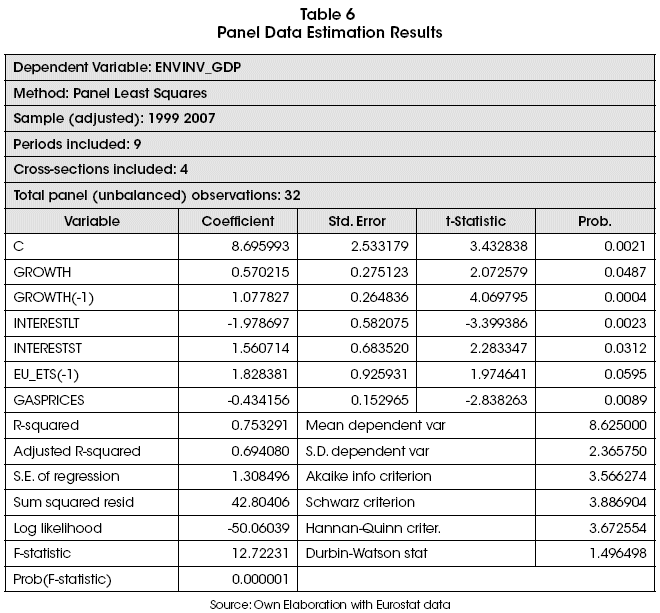
Following the same direction, the estimation results for the block of countries show that short term interest rates affected positively environmental investments since the estimated coefficient rises up to 1.56 with a statistical consistency of 98.88% (prob 0.0312). Nevertheless, as was in the case of single country estimations, the most important result of the panel data estimation is the effect that EU-ETS implementation had on private environmental investment decisions. In this sense, it is possible to see in Table 6 that EU-ETS promoted positively environmental investments with one year lag since the estimated coefficient rises up to 1.82 with a statistical consistency of 94.05% (prob 0.0595).
Finally, panel data estimation results shows that there are two variables that discouraged or had a negative impact on private environmental investments. These are: long term interest rates and gas prices. Long term interest rates have an estimated coefficient equal to 1.97 (negative) with a statistical consistency of 99.77% (prob 0.0023). Gas prices, by its side, have an estimated coefficient equal to 0.43 (negative) with a statistical consistency of 99.11% (prob 0.0089).
7.5. Summary of Results
]]> As it may be seen in Table 7, even if the implementation of EU-ETS affected positively private environmental investments in Germany, its degree of impact was moderate in comparison to the impact of other variables under analysis. In this sense, short and long term interest rates had a stronger impact (with contrary signs: positive and negative respectively) on private environmental investments than EU-ETS implementation. From this situation it is possible to understand that interest rates in Germany are promoting short term financing for private investments.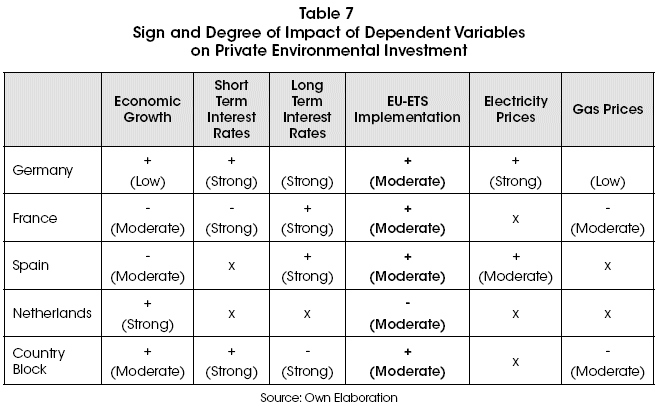
Following the same line, electricity prices encouraged strongly private environmental investments in Germany since electricity prices increased a lot in the last years. Gas prices affected negatively but in small proportion environmental initiatives. This situation is explained basically by a price effect since gas is a cheaper source of energy than coal or electricity. Finally, economic growth had a small participation in promoting (positively) private environmental investments.
EU-ETS implementation had a positive and moderate impact on environmental investment initiatives in France as similarly happened in Germany. Nevertheless, the variables that affected strongly the behavior of private environmental investments were short and long term interest rates as was also the case of Germany but with a slight difference. The difference is that for the case of France, short term interest rates affected negatively environmental investments and long term interest rates affected positively (opposite to the case of Germany).
In this sense, interest rates in France are promoting long-term financing for private investments. One surprisingly result is that economic growth discouraged (affected negatively) environmental investments in a moderate proportion. This situation is explained by a poor economic performance that didn’t allow the French economy to promote the use of resources in environmental investments. Finally, the behavior of gas prices discouraged private environmental investments in a moderate proportion.
Like in the previous cases, the EU-ETS implementation in Spain had a positive but moderate impact on private environmental investments behavior. Nevertheless, the results show that long term interest rates provide the strongest impulse in order to encourage positive private environmental investment. This situation signifies that interest rates in Spain are promoting financing in long term investment initiatives. Also, similarly to the case of France, economic growth discouraged in a moderate proportion private environmental initiatives since its economic performance didn’t allow to the Spanish economy to promote the allocation of resources to environmental investments. Finally, electricity prices impacted positively on private environmental investment behavior in a moderate proportion, similarly to the case of Germany.
For the case of The Netherlands, the results demonstrate (surprisingly) that EU-ETS implementation discouraged private environmental investments in a moderate proportion.
As it may be seen in Section 8 (Environmental Investments), the Netherlands was the country that suffered the most the diminishment of environmental investments since the signature of Kyoto Protocol in 1997. In this sense, the EU-ETS implementation didn’t allow to The Netherlands to recover to its previous environmental investment levels. Nevertheless, the economic growth influenced positively and very strongly the recovery of private environmental investment initiatives since the Dutch economy had the best economic performance among all the economies analyzed measured on the basis of GDP growth.
Finally, the country block (panel data) estimation’s results demonstrate that, if the four countries are analyzed as a whole, the EU-ETS implementation provide a moderate but positive impact to the behavior of private environmental initiatives confirming the single country results. Also, as was the case in each of the single country estimations, short and longterm interest rates are the variables that affect strongly the behavior of private environmental investment. In this sense, panel data results confirm a positive and strong impact of short term interest rates on environmental investments and a negative but strong impact of longterm interest rates on environmental investments. Economic growth and gas prices provide a moderate (positive and negative respectively) impact to private environmental investment initiatives.
]]>8. Clean Development Mechanism (CDM) and Investment Promotion in Developing Countries
The Clean Development Mechanism was conceived with the idea of facilitate and efficient global response to climate change. The core idea behind the CDM is that GHG emissions could be reduced at lower costs in non-Annex I countries in comparison with Annex I countries. In this sense, non-Annex I countries in which are undertaken emission reduction projects could improve its living standards through sustainable development and could acquire some profit from the sale of emissions reduction credits. In exchange, Annex I countries could lower the costs of meeting their emission reduction commitments by buying credits from CDM projects.
CDM projects could involve Annex I investors which provide capital in return of the credits but the most common source of financing is implemented by host country investors.
The most common arrangement between Non-Annex I and Annex I parties is the Emission Reduction Purchase Agreement (ERPA). Under an ERPA a project developer commits to implement an emission reduction project and the Annex I entities commit to buy credits generated by the project at specified prices.
8.1. Investment by Project Type
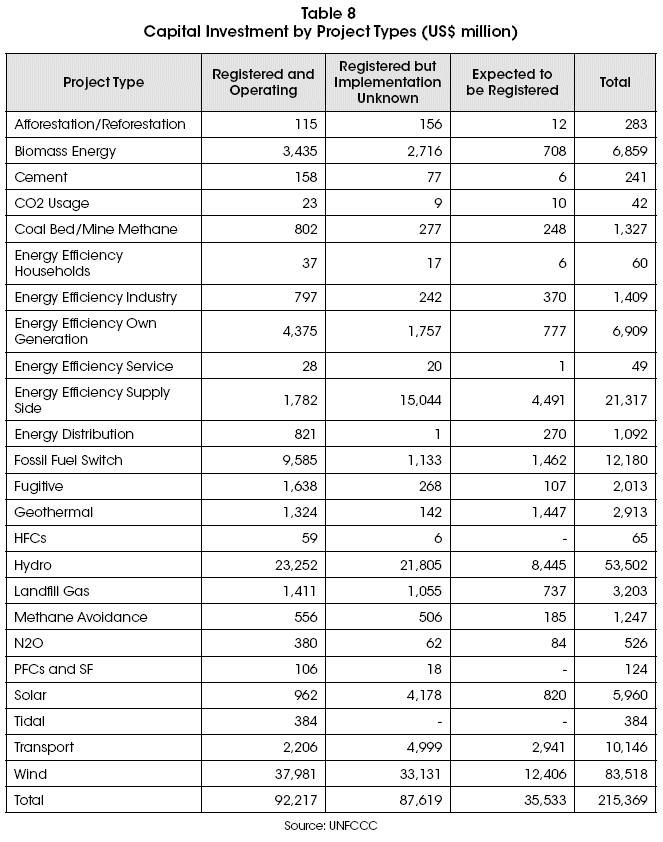
According to the UNFCCC (2012), the total investment driven by CDM projects registered and on registration reaches US$ 215.4 billion until June of 2012. From this total, the investment related to operational projects reaches US$ 92.2 billion, US$ 87.6 billion is financed by registered projects where it is not certain if they have started operating yet and US$ 35.5 billion comes from projects undergoing registration. The total investment by project type is shown in Table 8 below and it is possible to identify that the total investment in CDM projects is dominated by wind and hydro projects due to the large number of projects and the capital intensive nature of these technologies.
8.2. Investment by Year
]]> The annual investment in CDM projects by year is showed below in Graph 12. Annual investment registered a highest peak in 2008 with US$ 13.9 billion in operating projects and US$ 40.4 billion in all projects (registered and in ongoing registration). As it is possible to see, there is a decline of investment in operating and registered projects since 2009 apparently due to the lag between the start date (stated in the PPDs) and the date of submission of the monitoring report which constitutes reliable evidence that the project is operating. On average, GHG monitoring starts 3.8 years after the project actually starts. For instance, it is likely that more projects and investment have been implemented than is shown in Graph 12.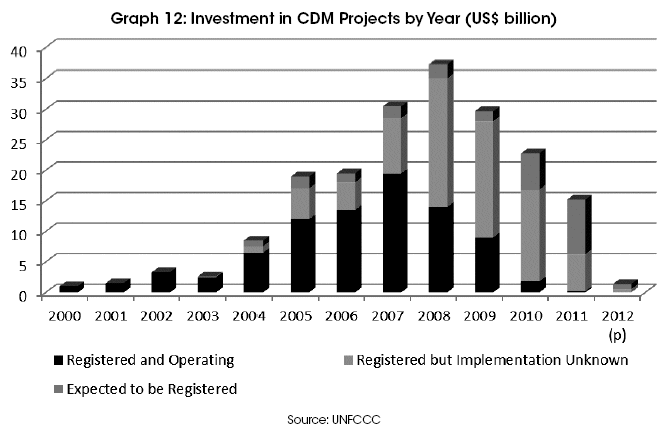
8.3. Geographic Distribution of Investment
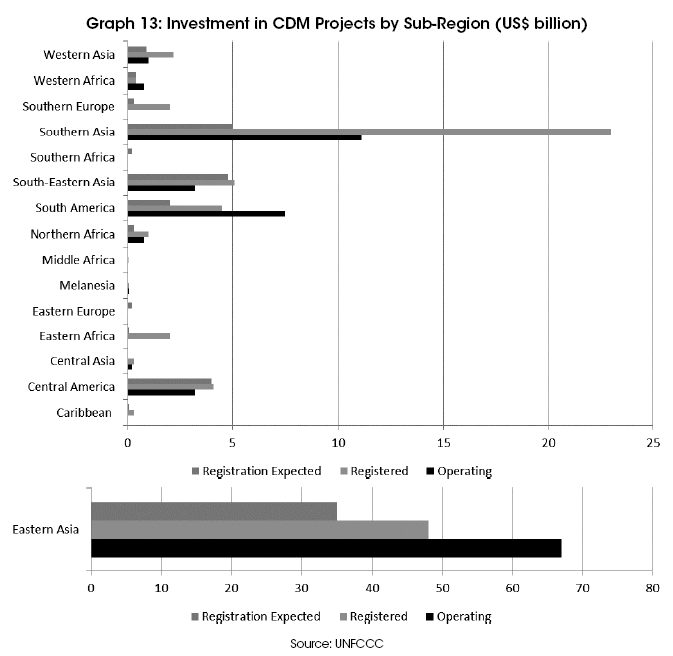
The estimated total investment in projects registered and undergoing registration by host country region is shown in Graph 13. China and India which make up the majority of projects in Eastern Asia and Southern Asia respectively account for 65% of the total investment with 45% of the projects. Projects in Eastern Asia have relatively large capital investment due to the capital intensive nature of the projects undertaken (renewables) and their large average size. In contrast, the capital intensity of almost every other region is equal to or below the overall average.
9. Conclusions
After analyzing the econometric estimation’s results (single country and block country) and the behavior in time of private environmental investment data, it was gathered enough evidence that allows the current research to affirm that the implementation of the European Union Emission Trading System (EU-ETS) has in fact promoted environmental investments initiatives during the period 2005-2007 in Germany, France, Spain and The Netherlands (except for the latter according to the single country results).
Nevertheless, even though environmental investments started a positive tendency since EU-ETS implementation in 2005, and thus changed the negative tendency observed since the signature of Kyoto protocol in 1997 until 2004, the EU-ETS implementation didn’t succeed in recovering private environmental investment to levels observed in the late 1990’s. In fact, environmental investment data shows that after the signature of Kyoto protocol in 1997, the industries started to slow down and reduce their environmental investments and adopted a strategy similar to “wait and see” as a response to the uncertain climate about possible future environmental policies that could affect their production and finance.
]]> The implementation of EU-ETS together with its institutional uncertainty and prices volatility improved partially this climate for private industries but not in a proportion that allows them to reach previous levels of environmental investment. In consequence, the signature of Kyoto Protocol reduced environmental investments before EU-ETS implementation (from 1998 until 2004) and it wasn’t capable to overcome this situation during phase I (2004 until 2007) of the mechanism. Therefore, it is possible to say that the signature of Kyoto protocol brought “perverse” incentives for the promotion of private environmental investments.In addition to the implementation of EU-ETS and according to the results obtained, shortand long-term interest rates play a key role at the moment of determine the behavior of private environmental investments. The positive impact of short-term interest rates and the negative impact of long-term interest rates on the behavior of private environmental investments imply a strong promotion of short-term financing instead of long-term financing. Low long-term interest rates that promote long-term financing are essential for meaningful environmental investments that allow the reduction of carbon intensive economies in the long-run.
Reading the summary of the literature review it is possible to conclude, based on previous studies, that EU-ETS constitutes a main driver for small-scale investments with short amortization times. Nevertheless, according to the results observed in this research, smallscale investments with short amortization times a real so the result of interest rates that do not promote long term investments. In this sense, it is not accurate to attribute short term investments to carbon price volatility and/or institutional uncertainty (both inherent to EUETS institutionality). There are also external deficiencies to the EU-ETS (like interest rates) that work together in the economies and should be attended in order to accomplish 2050 targets.
Energy prices (electricity and gas) are also important at the moment of explain the behavior of private environmental investments. In this sense, while electricity prices continue to increase, private industrial investors will be eager to invest in energy efficiency and renewable energy projects that allow them to consume less electricity per unit of production and therefore reduce expenses. Gas prices have become an interesting alternative for industries since it is cheaper than electricity and cleaner than coal.
The results and methodology used to evaluate the role of the EU-ETS as environmental investment promoter under this research constitute an innovative and different approach in comparison to the studies mentioned in the literature review. The economically broad country results, typical of a macroeconomic analysis, matches with the microeconomic analysis seen under the literature review and helps to provide a more comprehensive understanding about the variable relations the determine the promotion of environmental investments along to EU-ETS. For this reason, the academic analysis made on this research becomes in a starting point from which it is possible to show new variable relations with the only aim to contribute to the debate and improvement of the EU-ETS mechanism.
Finally, it is important to mention that there was a huge amount of resources destined for sustainable development through CDM projects in developing countries. As it was possible to see, China and India were the countries that exploited this mechanism the most mainly because they acquire rapidly the know-how for drafting PDDs. Nowadays CDM projects and the subsequent selling of CER’s are oriented to take place only in the Least Developing Countries (LDC). The LDCs could acquire the experience from China and India in order to improve its participation in this mechanism and attract foreign capital for sustainable development
10. Recommendations
It is important to say that it will be imperative to expand this research to the analysis of the whole system (phase I, phase II and phase III) in order to provide a better understanding about the role of EU-ETS in promoting private environmental investments. Also, it will be interesting for future research to analyze if the relations demonstrated here remain in time or change during the years. For this purpose it is essential to improve the availability of public data, especially the one related to environmental investments beyond the year 2007 and carbon prices.
Finally, it will be interesting to provide a sensitivity analysis for the econometric estimations in order to back up them properly and evaluate how sensitive are the results to changes in parameters. For this purpose, it may be consulted Sensitivity Analysis in Linear Regression (Chatterjee, 1988). It is worth to say that this analysis is extensively time consuming and it was not considered under this research due to the marginal benefits of its realization for the objectives of the current research.
]]>References
1. Barret, J., (2009). Arguments for Auctioning Carbon Permits. Clean Economy Development Center for Economics for Equity and the Environment Network. [ Links ]
2. Blanco, M. & G. Rodrigues (2008). “Can the future EU-ETS support wind energy investments?” Energy Policy, 36(4), 1509-1520.
3. Chatterjee, S. (1988). Sensitivity Analysis in Linear Regression. Wiley, First Edition.
4. Chester, L. & S. Rosewarne (2011). What is the relationship between derivative markets and carbon prices? Australian Political Economy. Department of Political Economy, University of Sydney.
]]>5. Chevallier, J. (2012). Econometric Analysis of Carbon Markets: The European Union Emissions Trading Scheme and the Clean Development Mechanism. Springer Netherlands. [ Links ]
6. Dornbusch, R. & S. Fischer (2004). Macroeconomía. España: McGraw-Hill. 9º ed.
7. Ellerman, D. & P. Joskow (2008). The European Emission’s Trading System in Perspective. MIT Center for Energy and Environmental Policy Research.
8. European Commission (2005). EU action against climate change: EU emission trading – an open scheme promoting global innovation. European Communities.
9. Feilhauer, S. (2009). “Impact of European Emissions Trading System (EU-ETS) on Carbon Emissions and Investment Decisions in the Power Sector.” Massachusetts Institute of Technology (Master Thesis).
10. Graus, W., U. Sreenivasamurthy & B. Wesselink, (2009). EU climate policy impact in 2020 - With a focus on the effectiveness of emissions trading policy in an economic recession scenario. Ecofys.
11. Gudbrandsdottir, H. (2011). “Predicting the Price of EU ETS Carbon Credits: A Correlation, Principal Component and Latent Root Approach.” Reykjavík University, Iceland (Master Thesis).
12. Hoffman, V. (2007). EU ETS and Investment Decisions: The Case of the German Electricity Industry. European Management Journal, 25(6), 464-474. [ Links ]
13. Koenig, P. (2011). “Modelling Correlation in Carbon and Energy Markets.” Electricity Policy Research Group, Working Paper 1107 and Cambridge Working Paper in Economics 1123.
]]>
14. Kossoy, A. & F. Ambrosi (2012). “State and Trends of the Carbon Markets.” Carbon Finance at World Bank.
15. Kumar, K. (2011). “Carbon Trading. Dissemination Paper Series. Centre of Excellence in Environmental Economics”. Madras School of Economics.
16. Lacombe, R. (2008). “Economic Impact of the EU-ETS: Evidence from the refining sector”. Massachusetts Institute of Technology (Master Thesis).
17. Larrain, F. & J. Sachs (2002). Macroeconomía en la economía global. Pearson Education, 2º edition.
18. Leguet, B. (2012). “Understanding the Link between Macroeconomic Environment and the EU Carbon Price”. Newsletter Nº 66, CDC Climat Research.
19. Milunovich, G. & R. Joyeux (2007). “The Temporal Links Between Spot and Futures Carbon Allowance Markets”. Division of Economic and Financial Studies Macquarie University.
20. North, D. (1990). “Institutions, Institutional Change and Economic Performance”. Cambridge University Press.
21. Obermayer, J., (2010). “An analysis of the fundamental price drivers of EU ETS carbon credits”. Royal Institute of Technology (Master Thesis).
22. Rogge, K. & M. Schneider (2010). “The innovation impact of the EU Emission Trading System. Findings of company case studies in the German power sector.” Ecological Economics, 70(3), 513-523.
23. Rogge, K. & V. Hoffman (2010). “The impact of the EU ETS on the sectoral innovation system for power generation technologies. Findings for Germany”. Energy Policy, 38(12), 7639-7652.
]]> 24. Schuttelaar, F. (2012). “Correlation between Carbon and Energy Markets”. Presentation at Workshop HEC Energy and Finance Chair. GDF SUEZ Trading.25. Stern, N. (2007). The Economics of Climate Change: The Stern Review. Cambridge University Press. [ Links ]
26. Venmans, F. (2012). “A literature-based multi-criteria evaluation of the EU ETS.” Renewable and Sustainable Energy Reviews, 16(8), 5493-5510.
27. Zhang, Y. & Y. Wei (2010). “An overview of current research on EU ETS: Evidence from its operating mechanism and economic effect.” Applied Energy, 87(6), 1804-1814.
Kyoto Protocol - Annex I and Non-Annex I Parties
The Kyoto Protocol was adopted in Kyoto, Japan, on 11 December 1997. Due to a complex ratification process, it entered into force on 16 February 2005.In short, the Kyoto Protocol is what “operationalizes” the United Nation Framework Convention on Climate Change. It commits industrialized countries to stabilize greenhouse gas emissions based on the principles of the Convention. The Convention itself only encourages countries to do so (UNFCCC webpage17).
KP, as it is referred to in short, sets binding emission reduction targets for 37 industrialized countries and the European community in its first commitment period. Overall, these targets add up to an average five per cent emissions reduction compared to 1990 levels over the five year period 2008 to 2012 (the first commitment period).KP was structured on the principles of the Convention. It only binds developed countries (Annex I parties of the Convention) because it recognizes that they are largely responsible for the current high levels of GHG emissions in the atmosphere, which are the result of more than 150 years of industrial activity. KP places a heavier burden on developed nations under its central principle: that of “common but differentiated responsibility”.
]]> In Doha, Qatar, on 8 December 2012, the Doha Amendment to the Kyoto Protocol was adopted. This launched a second commitment period, starting on 1 January 2013 until 2020. The Annex I parties of the convention are: Australia, Austria, Belarus, Belgium, Bulgaria, Canada, Croatia, Cyprus, Czech Republic, Denmark, Estonia, European Union, Finland, France, Germany, Greece, Hungary, Iceland, Ireland, Italy, Japan, Latvia, Liechtenstein, Lithuania, Luxemburg, Malta, Monaco, Netherlands, New Zealand, Norway, Poland, Portugal, Romania, Russian Federation, Slovakia, Slovenia, Spain, Sweden, Switzerland, Turkey, Ukraine, United Kingdom and United States of America (UNFCCC webpage18).Clean Development Mechanism (CDM)
The Clean Development Mechanism (CDM), defined in Article 12 of the Protocol, allows a country with an emission-reduction or emission-limitation commitment under the Kyoto Protocol (Annex I Party) to implement an emission-reduction project in developing countries. Such projects can earn saleable certified emission reduction (CER) credits, each equivalent to one tonne of CO2, which can be counted towards meeting Kyoto targets. It is the first global, environmental investment and credit scheme of its kind, providing a standardized emission offset instrument, CERs.
A CDM project activity might involve, for example, a rural electrification project using solar panels or the installation of more energy-efficient boilers. The mechanism stimulates sustainable development and emission reductions, while giving industrialized countries some flexibility in how they meet their emission reduction or limitation targets. Operational since
the beginning of 2006, the mechanism has already registered more than 1,650 projects and is anticipated to produce CERs amounting to more than 2.9 billion tonnes of CO2 equivalent in the first commitment period of the Kyoto Protocol, 2008–2012 (UNFCCC webpage19).
Notas
* Associated Researcher IISEC. Contact: carandiazv@hotmail.com
]]> 1 Access Date: December 30, 2012.2 Access Date: May 9, 2013.
3 Check Annex 3 of this document for further information about Annex I and non-Annex I parties of Kyoto Protocol.
4 Date of Access: December 30, 2012.
5 Date of Access: May 13, 2013.
6 Graph obtained from PPT presentation of Mr. Jai Jiang, Carbon Trading Manager at Eneco during a presentation at Twente University for MEEM students.
7 It is refers to the diverse kind of projects in terms of scope, size, costs, impacts (environmental and societal), lifetime, institutional security, etc. For example: the installation of a massive eolic park in the coast of Denmark versus the installation of one hundred 50Wp PV panels in a rural community of Bolivia.
8 It is one of the main principles of the Kyoto Protocol. The concept is that internal abatement of emissions should take precedent before external participation in flexible mechanisms. These mechanisms include emissions trading, Clean Development Mechanism (CDM), and Joint Implementation (JI).
9 Date of Access: May 14, 2013.
10 Graph obtained from PPT presentation of Mr. Jai Jiang, Carbon Trading Manager at Eneco during a presentation at Twente University for MEEM students.
]]> 11 Economic dispatch is the short-term determination of the optimal output of a number of electricity generation facilities, to meet the system load, at the lowest possible cost, while serving power to the public in a robust and reliable manner.12 The term bonus-malus (Latin for good-bad) is used for a number of business arrangements which alternately reward (bonus) or penalize (malus).
13 Refers to the profit realized by a power generator after paying for the cost of coal fuel and carbon allowances.
14 leakage occurs when there is an increase in carbon dioxide emissions in one country as a result of an emissions reduction by a second country with a strict climate policy.
15 Total of CO2 emissions in tonnes from industry, energy and transport
16 Dummy variables are “proxy” variables or numeric stand-ins for qualitative facts in a regression model. In regression analysis, the dependent variables may be influenced not only by quantitative variables (income, output, prices, etc.), but also by qualitative variables (gender, religion, geographic region, etc.). A dummy independent variable (also called a dummy explanatory variable) which for some observation has a value of 0 will cause that variable’s coefficient to have no role in influencing the dependent variable, while when the dummy takes on a value 1 its coefficient acts to alter the intercept.
17 Access Date: May 13, 2013.
18 Access Date: May 13, 2013.
19 Access Date: May 13, 2013.
]]>