The Impact of Structural Reforms on Wages and Employment: The Case of Formal versus Informal Workers in Bolivia*
Julius Spatz**
Summary
This paper seeks to contribute to the ongoing controversy on the distributional effects of structural reforms in developing countries. To this end, we set up a small-scale macroeconomic model of a dual economy to capture the transmission mechanisms through which the deregulation of product and factor markets, the liberalization of the trade and FDI regime, and the privatization of public companies impact on the distribution of employment and wages between the formal and the informal sector. We empirically test the implications of our theoretical model in a detailed case study on the structural reform process in Bolivia since 1985.
1. Introduction
Rigidities in product and labor markets are considered to be at the root of poor economic performance in many developing countries. To achieve sustainable economic growth, international organizations, such as IMF and World Bank, and bilateral donors have advocated strict stabilization programs followed by comprehensive and far-reaching structural reforms. There is widespread consensus that these policy measures contribute to creating a favorable economic environment by restoring macroeconomic and fiscal stability. Critics, however, argue that rising inequality is also part of the package.
In this paper, we assess the validity of this claim focusing on the impact of structural reforms on the distribution of wages and employment between the formal and informal sector. In Section 2, we set up a small-scale macroeconomic model of a dual economy. The formal sector is modeled with (a) monopolistically competitive firms, (b) union-firm bargaining, (c) efficiency wage setting, and (d) employment protection. The impact of market imperfections on the labor-market equilibrium has long been discussed in the literature. More recently, the focus has shifted towards their interactions. Nickell et al. (1994) show that monopoly power of firms and bargaining power of unions jointly contribute to sectoral wage differentials. The link between union-firm bargaining and efficiency wages as complementary theories to explain sectoral wage differentials was explored by Garino and Martin (2000). By integrating all four types of market imperfections into a single model, we intend to proceed further on this path. We then apply the model to capture the different transmission mechanisms through which structural reforms impact on wages and employment in the formal and informal sector. Following Blanchard and Giavazzi (2001), we introduce structural reforms in a highly abstract fashion by discussing their impact on the model parameters which reflect the above mentioned market imperfections.
Due to the complexity of this issue, we argue that the most promising approach to gain further insights into the distributional effects of structural reforms is to carry out detailed country case studies. In this paper, Bolivia is chosen as object of analysis because it has implemented comprehensive and far-reaching structural reforms in a stable economic environment without of major exogenous shocks. We start this exercise in Section 3 by giving an overview of the structural reforms undertaken in Bolivia since 1985. Feeding the Bolivian structural reform process into our small-scale macroeconomic model, we then derive hypotheses on the post-reform trends in the distribution of wages and employment between the formal and informal sector.
Building upon Moensted (2000) and Carneiro and Henley (2002), we empirically test these hypotheses in Section 4 by estimating the formal employment share and by applying the decomposition methodology proposed by Oaxaca and Ransom (1994) to isolate the rent component of the formal wage. The data for the empirical analysis comes from seven biennial multi-purpose household surveys of the years 1989 to 2001. We finally summarize our theoretical and empirical findings and derive some policy conclusions in Section 5.
2. The Theoretical Model
2.1 The Basic Framework
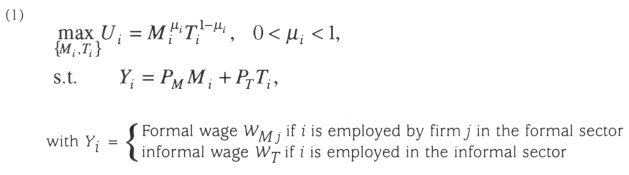
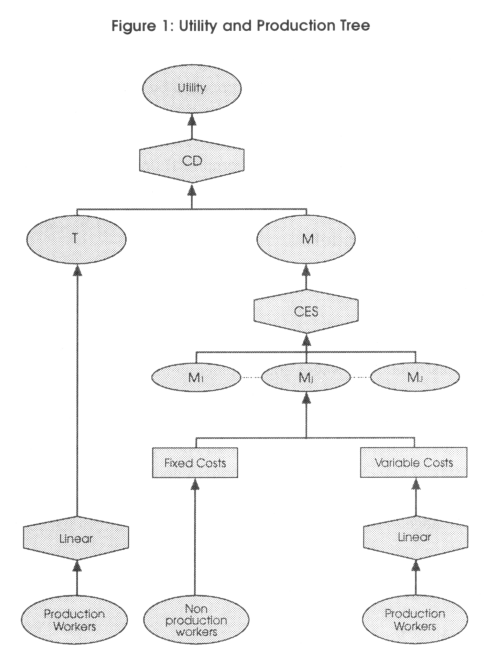
]]> In order to capture the transmission mechanisms through which structural reforms impact on the distribution of wages and employment between the formal and informal sector, we set up a small-scale macroeconomic model of a dual economy (see Figure 1). The market structure of the informal sector, which produces the traditional good T, is perfectly competitive. In the formal sector, J monopolistically competitive firms produce J imperfectly substitutable varieties of the modern good M.
On the first stage of the utility maximization problem, individual solves
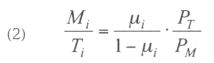
allocating income to the consumption of M and T according to
The household loves variety in the modern sector and derives utility from J varieties of the modern good according to the CES utility function
]]>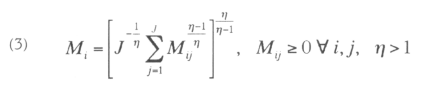
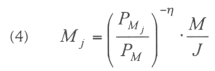
where η is the absolute value of the elasticity of substitution between the different varieties of the modern good and reflects the degree of competition in the formal sector. Maximizing utility subject to the budget constraint and aggregating over all households yields the demand for variety j
as a function of its own price PMj and the price index of the modern good
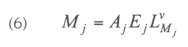
The output of variety j depends on the number of production workers LvMj, effort Ej and the level of technology Aj and is given by
]]>
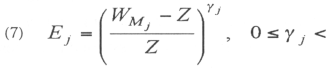
Effort is a function of the wage paid by firm j WMj relative to the expected outside wage Z. Following Summers (1988), we assume
where the efficiency wage parameter γj measures the strength of the relationship between effort and wages of production workers. Additionally, firm j's workforce consists of LfMj non-production workers, who are assumed to receive the same wage as production workers.
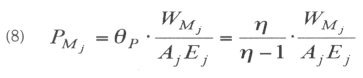
Maximizing firm j's profits subject to its demand function (4) implies that firms can set prices as a markup on marginal costs
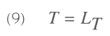
In the informal sector, labor productivity of workforce LT is constant and normalized to one, i.e.,
]]>
In perfectly competitive product markets, prices are set equal to marginal costs, which implies
where WT is the wage paid in the informal sector.
The economy is populated with L homogeneous and risk-neutral workers who supply labor inelastically. In the informal sector, the labor market is atomistic, whereas in the formal sector, wages result from negotiations between unions1 and firms. This assumption can be justified on the grounds that rents only accrue in the monopolistically competitive formal sector. The wage bargaining takes place in a right-to-manage set-up,2 where each firm negotiates with a single in-house union at the end of each period.
The negotiation partners' stake in the wage bargaining is the difference in payoffs between a situation with and without an agreement. Both negotiation partners gain a positive rent'- the firm because of its market power in the product market, and the union because of its market power in the labor market. Union j is assumed to represent only firm j's production workers. Upon successful completion of the negotiations, union j gains a rent of
Firm j's stake in the wage bargaining is equal to its variable profits
]]>
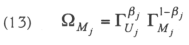
Assuming an asymmetric Nash bargaining solution, the wage is set to maximize the geometric average of the negotiation partners' rents from reaching an agreement
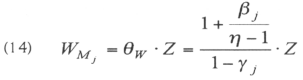
where βj reflects the bargaining power of union j. Since firms can choose employment ex post, the negotiation partners maximize the Nash Maximand ΩMj by choosing the wage equal to
The formal wage is set as a mark-up θW over the expected outside wage.
We assume that after the wage bargaining is completed at the end of period t-1, all jobs in the formal sector are newly allocated. Union members (hereafter referred to as insiders) who are not re-employed by their former employer expect either to find employment in one the other J-1 formal firms at the average formal wage WM or to have to work in the informal sector at WT. The expected outside wage is, thus, given by where prob(LMt|LMt-1) is insiders' transition rate into formal employment.3
]]>
Due to sector-specific human capital and employment protection, it is reasonable to argue that the risk of having to work in the informal sector in period t is not equal for all workers, but dependent on their sectoral affiliation in period t-1. More specifically, we assume that insiders enjoy a higher transition rate into formal employment than workers who were informally employed in period t-1, i.e.,
where measures insiders' transition advantage. In this model specification, the expected outside wage of insiders is given by
We consider a symmetric equilibrium of a closed economy, in which all individuals have identical preferences, and in which union bargaining power, the efficiency wage parameter, the level of technology and the number of non-production workers are equal for all formal firms.
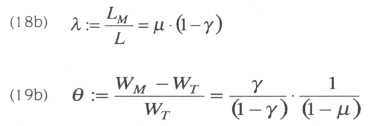
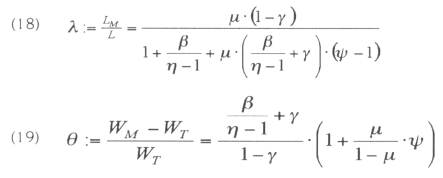
Using these closure rules and collecting terms, we arrive at the employment share of the formal sector λ and the rent component of the formal wage θ
]]>
2.2 Comparative-Static Effects of Parameter Changes
The labor-market equilibrium depends on five model parameters: the degree of competition in the formal sector η, the union bargaining power β, the efficiency wage parameter γ, the transition advantage Ψ, and the income share spent on the modern good m, (see Figure 2). Absent any market imperfections,4 formal workers do not receive a rent component (θ = 0), and the employment share of the formal sector is equal to the budget share spent on the modem good (λ = μ.)
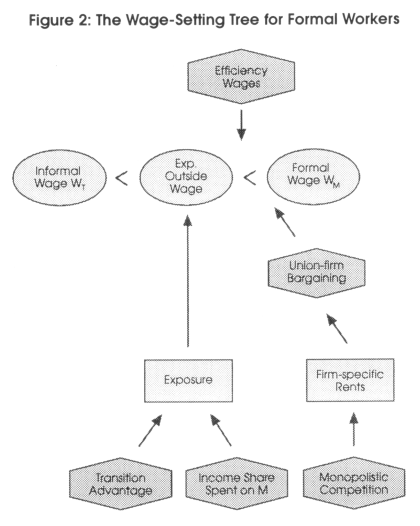
If we only consider monopolistic competition (1< η < ∞) and union-firm bargaining (β > 0), we have a standard wage bargaining model with
]]> The size of the rents earned in the formal sector is determined by the price markup θp, and, thus, by the degree of competition η, (see (8)). The distribution of the rents between workers and firms depends on the union bargaining power β. Both model parameters drive a wedge θW between the expected outside wage of insiders and the formal wage (see (14)). As a result, the rent component of the formal wage is decreasing in η and increasing in β. Higher wages in the formal sector feed into higher prices of, and lower demand for the modern good. Therefore, the employment share of the formal sector is increasing in η and decreasing in β.
The efficiency wage parameter g enters the model in two ways. If firms determine the wage unilaterally (β=0), the model converges to the standard efficiency model, in which wages are set according to the Solow condition,5 and we arrive at
If efficiency wage setting and union-firm bargaining coexist, i.e., γ > 0, 0 < β < 1 and 1< η < ∞, the interactions between the two market imperfections have to be considered, too.6 Efficiency wage effects partly offset the costs of a pay rise through higher effort, thereby, reducing the elasticity of labor demand. As a result, firms are more willing to make concessions in wage negotiations and unions can push harder for a pay rise. The stronger the relationship between wages and effort, the higher is the wage mark-up θW, (see (14)). Hence, the rent component of the formal wage is increasing in γ. For the reasons discussed above, the reverse holds true for the employment share of the formal sector.
Insiders' transition advantage y and the income share spent on the modern good μ do not represent labor-market distortions by themselves, but affect the labor-market equilibrium by interacting with union-firm bargaining and efficiency wage setting. Both parameters work through their effect on the expected outside wage. The higher Ψ and μ, the higher is the disagreement point in the wage negotiations and, thus, the rent component of the formal wage. As a result, the formal employment share falls in Ψ and rises only less than proportionally in μ.
2.3 Introducing Structural Reforms into the Model
Having characterized the comparative statics of the model, we can now turn to the distributional effects of structural reforms. The policy reforms can be grouped into five categories: (a) product-market deregulation, (b) labor-market deregulation,7 (c) the liberalization of the trade regime, (d) the liberalization of the FDI regime, and (e) the privatization of public companies. Following Blanchard and Giavazzi (2001), these reforms are introduced in a highly abstract fashion. In the first step of the analysis, we discuss their impact on the model parameters h, b, g, y, and m (see Matrix A of Figure 3). Linking the outcome of this exercise to the comparative statics of Section 2.2, we then derive the impact of structural reforms on wages and employment in the formal and informal sector.
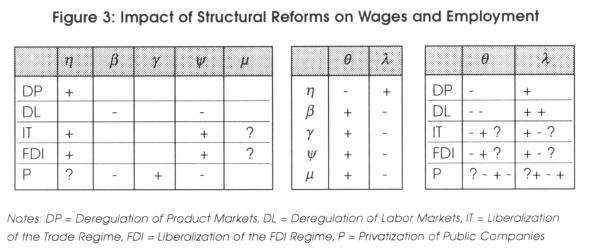
Labor-market deregulation has an impact on two model parameters. First, weakening extension agreements and closed-shop arrangements, restricting the right to strike, and other measures to curb union bargaining power are modeled by a decrease in β. Second, measures to reduce employment protection, such as cutting the legal period of notice, and lowering redundancy payments and other administrative dismissal costs are reflected in a decrease in insiders' transition advantage Ψ.
Formally speaking, the model depicts a closed economy. Yet, it is still suitable to analyze the distributional effects of the liberalization of the trade and FDI regime. Assuming that the production of tradable goods and the inflow of foreign capital is concentrated in the formal sector, opening up the economy - be it via international trade or via foreign direct investment - should affect three model parameters. First, the degree of competition in the formal sector and, thus, the substitution elasticity η, is likely to increase. Second, the import of intermediate goods, the inflow of foreign capital, and the technology embodied therein, should increase insiders' sector-specific human capital, thereby, enhancing their transition advantage ψ Third, the impact on the income share spent on the modern good μ is undetermined. Depending on the degree to which imports replace local production and to which foreign direct investors crowd out local competitors, demand for goods produced in the formal sector either rises or falls.
Introducing privatization of public companies into the model is even more complex. First, the impact of privatization on the degree of competition in product markets h is undetermined. On the one hand, Haskel and Szymanski (1993) argue that a shift from public to private ownership changes the objective function of the privatized entity. Public companies are thought to pursue the interests of all stakeholders, i.e., capital owners, workers, and consumers, while private firms confine themselves to profit maximization. Consequently, private firms are more likely to abuse market power than public companies. On the other hand, privatization is often accompanied by product-market deregulation. This is done by substituting competitive market structures for state monopolies and by phasing out other types of administrative interference in the market. Furthermore, when balancing the interests of consumers and producers, regulators tend to favor producers in the case of public companies, but consumers in the case of private firms. Hence, antitrust rules tend to be more strictly enforced after privatization. Second, privatization often goes hand in hand with de-unionization and the weakening of job security. Both union density and co-determination are usually higher in public companies than in private firms. Consequently, privatization can be modeled as a reduction in β.8 Third, public employees frequently enjoy preferential treatment with respect to dismissal protection since (a) soft budget constraints in the public sector prevent mass layoffs in the first place, (b) legal rules governing the dismissal of public employees are more stringent, and/or (c) their application is more strictly enforced. Hence, privatization should reduce ψ Fourth, privatization also influences workers' decision to provide effort. While public companies tend to base remuneration and dismissal protection mainly on the principle of seniority, private companies are more likely to use a carrot-and-stick approach. On the one hand, they offer performance-related pay and fast-track careers for high achievers. On the other hand, they monitor closely to prevent shirking.9 Privatization should, thus, strengthen the relationship between effort and wages. In other words, the efficiency wage parameter y should increase.
In Section 2.2, we already discussed the impact of changes of the parameters η, β, γ, ψ, and μ on the formal employment share and the rent component of the formal wage (see Matrix B of Figure 3). Referring to these results, we can now derive the distributional effects of structural reforms (see Matrix C of Figure 3). Only in the case of the deregulation - be it in the product markets or in the labor markets - is the outcome clear-cut in that it causes an expansion of the formal employment share and a reduction in the rent component of the formal wage, either via an increase in the degree of competition, or via a decrease in union bargaining power and insiders' transition advantage. The distributional effects of the liberalization of the trade and FDI regime and of the privatization of public companies, however, are a priori undetermined and depend on the strength of the different transmission mechanisms.
In our view, the complexity of the distributional effects suggests this issue be explored further in detailed country case studies. We choose Bolivia as object of analysis for two reasons: Compared to other Latin American countries, Bolivia has (a) often been regarded as a "star reformer", and (b) enjoyed a period of economic stability without major exogenous shocks during and after the implementation of the structural reforms. Therefore, we expect that the structural reforms are the major driving force behind the trends in the distribution of wages and employment between the formal and informal sector in Bolivia. We start this exercise by giving an overview of the structural reforms undertaken in Bolivia since 1985.
3. Structural Reforms in Bolivia: An Overview
After a period of four years of political instability during which seven military and two civil government changed hands, followed by three years of political deadlock between president Hernán Siles Suazo and opposition-dominated Congress, the Bolivian economy was at the verge of collapse. In order to overcome the economic crisis, the new president Victor Paz Estensoro performed a radical policy change in 1985. He first implemented a strict stabilization program, which enabled Bolivia to quickly regain its internal and external macroeconomic equilibrium.10
The Nueva Política Económica (New Economic Policy) also marked the start of a comprehensive and far-reaching structural reform process. Its objective was to restore sustainable economic growth as well as to enhance the allocative efficiency and international competitiveness of product and factor markets by replacing the out-dated development model based on market protection and state interventions by a free-market approach." As in Section 2, we group the policy reforms into five categories: (a) the deregulation of product markets, (b) the deregulation of labor markets (c) the liberalization of the trade regime, (d) the liberalization of the FDI regime, and (e) the privatization of public companies.
]]> 3.1 Deregulation of Product MarketsBy deregulation of product markets we mean domestic policy reforms which aim at promoting efficiency and competition in the economy and at creating a "level playing field" for all market participants. In 1985, the prices of privately produced goods and services were liberalized and the prices of publicly produced goods and services were adjusted, thereby, correcting distortions in the relative prices. In the 1990s, the Bolivian government enacted a series of laws to regulate sectors with public monopolies: hydrocarbons (1 990 and modified in 1 996), utilities (1 994), telecommunications (1 995) and air transport (1998). Additionally an anti-trust regulatory system was created in 1 994 with the objective to protect the rights of the consumers and to sanction anticompetitive behavior in these sectors.
Policy reforms in this category also include the modernization of the tax system. The main objectives of the tax reform were to increase tax collection and to enhance tax neutrality. In 1986, the majority of the 450 taxes were abolished and administrative procedures were simplified. Bolivia overhauled its income tax system introducing a flat tax rate of 10% on total income in 1987.12 A corporate tax of 25% on ordinary profits and a tax on property, donations and heritage were introduced in 1994. The tax reform partially met its objectives. Tax collection (as % of GDP) increased from 5% in 1987 to 13% in 1998 (UDAPE van iss.), and tax productivity13 of the value-added tax increased from 4% in 1986 to 49% in 1998 (Lora 2001).
3.2 Deregulation of Factor Markets
The reform of the capital markets aimed at increasing the stability of the financial system and at creating incentives for the repatriation of capital which had fled the country during the first half of the 1980s. From 1985 to 1993, interest rates were gradually liberalized and the government significantly reduced its interference in lending decisions. Between 1987 and 1999, banking, insurance and stock market legislation were overhauled and modern institutions for the regulation and supervision of banks were put in place. Additionally, the reserve requirements were gradually reduced from 100% for foreign currency and 50% for national currency in 1985 to a uniform rate of 12% in 1998. In 2000, Bolivia established a deposit guarantee system and procedures to deal with failing financial institutions.14 As a result of these reforms, the confidence in the Bolivian financial system was re-established. From 1990 to 1998, deposits increased from 16% to 41 % of GDP and the transaction volume of the capital markets grew from 11 % to 47% of GDP. Furthermore, several foreign banks established operations in Bolivia.
By contrast, a comprehensive and far-reaching labor market reform is still pending in Bolivia. So far, changes have been few and small in scope. In 1985, the government withdrew from interfering in the wage setting of the private sector. Freedom of contract and free collective bargaining between employers and employees were re-established Wages, fringe benefits and dismissal protection of public-sector workers were reduced. However, Bolivia still boasts the highest expected dismissal costs (nearly 5 months of pay in 1999) in Latin America, and due to inadequate labor dispute settlement mechanisms, lots of working days are lost to strikes each year (Lora 2001 ).15
3.3 Liberalization of the Trade Regime
Bolivia began to liberalize its trade regime by lifting the ban on foreign-exchange transactions in 1985, thereby unifying its foreign-exchange market. In 1986, the economy was opened up to international trade. A complex tariff structure in which tariff rates varied from 0% to 150% was replaced by a uniform tariff of 20% on all imports,16 and most non-tariff barriers were eliminated. 1 987 marked the start of Bolivia's efforts to actively promote and diversify its exports. It created the Instituto Nacional de Exportaciones (National Export Agency)17 and producers of non-traditional products were given the right to deduct indirect taxes on raw materials, intermediate goods and services used in the production of exported goods. The import of those inputs was exempted from all other taxes and tariffs in 1990, and Zonas Francas (Special Economic Areas) were created in 1992, which offered tax incentives for the manufacturing of exported goods. At the end of the 1980s, Bolivia also began to reorganize its international trade relations. It negotiated bilateral preferential trade agreements with its mayor trading partners. The country became a member of GATT and joined the MERCOSUR as an associate member in 1997.
Table 1 shows the impact of the liberalization of the trade regime. In contrast to other Latin American countries, the post-reform export performance of Bolivia is rather disappointing. Rising exports in non-traditional exports were counteracted by falling exports in hydrocarbons. Taken together, Bolivia experienced only a modest rise in its export-to-GDP ratio rise after opening up to international trade. Even worse, the regional economic downturn (especially in Argentina and Brazil) in the wake of the Russian Crisis in 1998, pushed the export-to-GDP ratio even below its pre-reform level. Only with respect to the diversification of its exports did Bolivia make considerable progress.
]]>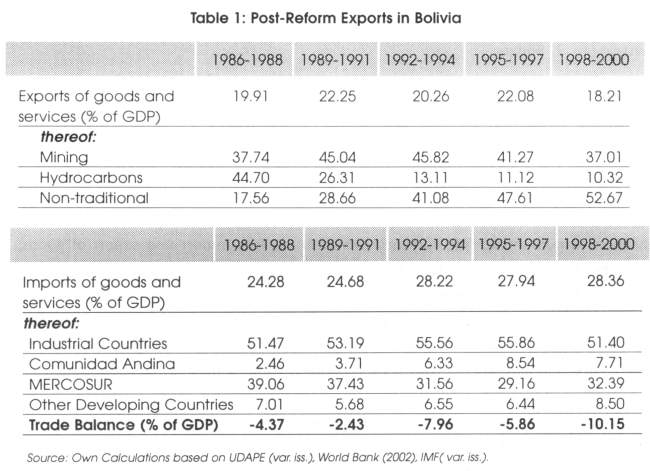
The imports seem to have responded with a considerable time lag to the liberalization of the trade regime. In the early 1990s, however, the 3-year average import-to-GDP ratio jumped by almost four percentage points and has remained there since.18 As concerns, the origin of imports, the Comunidad Andina and industrialized countries gained market shares at the expense of the Mercosur and other developing countries till 1997. In subsequent years, the trend was reversed.
3.4 Liberalization of the FDI Regime
Bolivia dismantled most restrictions on foreign direct investment. The Ley de Inversiones (Investment Act) of 1990 strengthened the rights of foreign investors by providing guarantees against non-commercial risk as well as equal treatment for domestic and foreign investors. This law also created the regulatory framework for international joint-ventures and settlement mechanisms for cross-border commercial disputes. It guaranteed free currency convertibility, free import and export of goods, services and capital, and free remittance of profits. Furthermore, Bolivia joined multilateral investment agreements such as the Multilateral Investment Guarantee Agency (MIGA), the International Center for Settlement of Investment Disputes (ICSID) and the Overseas Private Investment Corporation (OPIC), and it negotiated bilateral double-taxation agreements with several European and Latin-American countries.
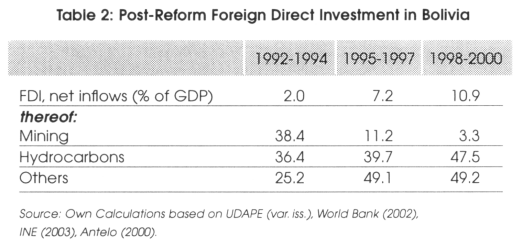
Foreign direct investment boomed in Bolivia in the 1990s, as evidenced by the quintupling of the FDI-to-GDP ratio (Table 2). The removal of the obstacles to FDI was necessary but not sufficient for this success story. The main driving force for both the volume and the sectoral composition of FDI was that Bolivia offered new investment opportunities through the privatization of public companies, thereby, channeling large FDI flows into telecommunications, hydrocarbons, transport, and utilities.
3.5 Privatization of Public Companies
In 1985, there were more than 170 public companies in virtually all sectors of the Bolivian economy, ranging from utilities, telecommunication providers and airlines to cotton spinning plants, sugar refineries and hotels (Antelo 2000). At the beginning of the structural reform process, Bolivia undertook efforts to rationalize and restructure these companies. For instance, Cooperacion Minera de Bolivia closed several mines laying off more than 21,000 workers, and Corporacion Boliviana de Fomento, a money-losing public holding for industrial and agro-industrial assets, was altogether dissolved to improve its management and supervision system. Under the strong pressure of the international financial institutions, Bolivia started an ambitious privatization process in the 1990s. The Ley de Privatization (Privatization Act) of 1992 provided the regulatory framework for the disposal of public companies and other state-owned assets resulting in the privatization of 81 small and medium-sized companies for a total of 279 million US$ (Antelo 2000). In order to deepen and accelerate the privatization process, the Ley de Capitalization (Capitalization Act) expanded the scope of privatization to the six state monopolies in 1994, i.e., ENDE (electricity), ENFE (railway), ENTEL (telecommunications), Fundidora de Vinto (mining), LAB (airlines), and YPFB (hydrocarbons). Between 1997 and 1999, these public companies were privatized by (a) giving their employees the right to buy shares at preferential conditions, (b) offering 51 % of the shares to international strategic investors under the condition to invest additional capital in the business, and (c) entrusting the remaining shares to newly created pension funds to finance the Bonosol, an annual basic rent to all Bolivians over 65 years. All in all, Bolivia carried out privatizations the cumulative revenues of which represented 19.7% of GDP in 1999 (Lora 2001).
3.6 Reform Indices
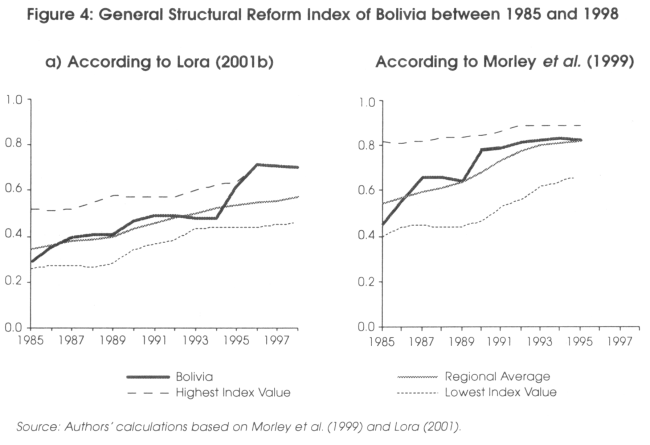
]]> Morley et al. (1999) and Lora (2001) developed a set of reform indices, which can be used to compare the structural reform progress in Bolivia with other Latin American countries.19 In line with the assumption that the primary objective of structural reforms is the pursuit of greater efficiency in the allocation of productive resources by eliminating or reducing distortions caused by government intervention, the indices attempt to measure the neutrality of government policies.Figure 4 shows the overall structural reform progress of Bolivia between 1985 and 1995 in the case of Morley et al. (1999), and between 1985 and 1998 in the case of Lora (2001). By Latin American standards, Bolivia has been a "star reformer". Starting from a below-average general structural reform index in 1985, it had caught up to the regional average by 1986 and overtaken all other Latin American countries by 1996.20
The six partial structural reform indices shown in Figure 5 break down this result for different policy areas. As concerns the degree of openness (Figures 5a and 5b), both the trade index and the capital account liberalization index demonstrate that already at the start of its structural reform process or shortly afterwards, Bolivia's trade regime was relatively liberal. However, over time the other Latin American countries nearly offset Bolivia's lead in this policy area. The privatization index (Figure 5c) shows that Bolivia started to privatize its public companies relatively late, but then carried out the most ambitious privatization program in Latin America. The Bolivian tax index (Figure 5d), which partially reflects progress in product-market deregulation, displays a more irregular behavior. Starting from slightly above average in 1985, the implementation of the tax reform put Bolivia ahead of most Latin American countries. Later the Bolivian tax index declined again and the country almost lost its favorable position. In the area of factor-market deregulation (Figures 5e and 5f), the financial and the labor index of Bolivia follow different time paths. As concerns the reform of the capital markets, the country switched from one of the least liberal to one of the most liberal regimes in Latin America. On the other hand, the Bolivian labor index fell far short of the average index value of the region throughout the entire observation period. This signifies that with respect to labor-market reforms, no progress has been made so far.
3.7 Hypothesis on the Distributional Effects of the Bolivian Structural Reform Process
Feeding this structural reform process into our theoretical model, we can derive the following empirically testable hypotheses on the post-reform trends in the distribution of wages and employment between the formal and informal sector in Bolivia. We expect to find an expansion of formal employment in the early years of the structural reform process. This is because the comprehensive product market deregulation in the second half of the 1980s facilitated the market entry into the formal sector, and the liberalization of the trade regime initially improved the trade balance, thereby, increasing demand for goods produced in the formal sector. During the 1990s, however, the favorable employment trend is likely to have been reversed. There are three driving forces which should have contributed to a contraction of formal employment: (a) the deregulatory impulse in the product market seems to have weakened over time, as evidenced by a stagnant or even falling tax index after 1991, (b) the deterioration of the trade balance in the 1990s indicates that imports have increasingly replaced local production in the formal sector, and (c) since the inflow of FDI after 1995 mostly stems from the privatization of public companies rather than greenfield investment, it is unlikely to have increased the degree of competition and the demand for goods produced in the formal sector.
As concerns the rent component of the formal wage, there are two opposing driving forces in the early years of the structural reform process. Higher competition in the formal sector, jointly caused by the deregulation of the product markets and the liberalization of the trade regime, should have reduced the rent component of the formal wage. On the other hand, the initially positive response of the trade balance to the liberalization of the trade regime should have had the opposite effect. Later on in the structural reform process, we expect the rent component of the formal wage to have fallen due to increasing replacement of local production by imports.
4. The Empirical Model
]]> 4.1 Data and MethodologyThe data to empirically test our hypotheses comes from seven multi-purpose household surveys collected by the Instituto Nacional de Estadísticas de Bolivia (National Statistical Office of Bolivia): the Encuestas Integradas de Hogares (EIH) 1989, 1991, 1993 and 1995, the Encuesta Nacional de Empleo (ENE) 1997, and the Encuestas Continuas de Hogares (ECH) 1999 and 2001. From all respondents, we select those aged between 20 and 65 with strictly positive labor income21 and a full information set on the employment and earnings characteristics. Due to the limited geographical coverage of some household surveys, the sample is further restricted to the departmental capitals of Bolivia and El Alto.22
The sample is divided into two groups: those employed in the formal sector and those employed in the informal sector. Our data set does not contain an explicit variable on the sectoral affiliation, but it is possible to construct such a variable as a combination of other personal characteristics. When asked about their occupational status, respondents can choose between seven categories: blue-collar worker, white-collar worker, employer, independent professional, self-employed, family worker, and domestic servant. We define employers and independent professionals as formal, and self-employed, family workers, and domestic servants as informal. As concerns blue-collar and white-collar workers, we consider them formal if they fulfill at least one of the following criteria: public-sector employment, fixed employment contract, social-security affiliation, union membership, or establishment size > 5 employees.23
Based on this sector classification, we estimate the employment shares of, and the mean log wage difference between the formal and informal sector. In our theoretical model of Section 2, we assume that labor is homogeneous and, thus, neglect differences in the endowment in schooling, job experience, and other wage-determining characteristics among workers.24 In order to obtain an unbiased estimate of the rent component of the formal wage (19), we have to correct the sectoral wage gap for the component which can be explained by the empirically observed differences in the mean endowment with these characteristics between formal and informal workers (endowment component). The standard way to do so is to apply the decomposition of Oaxaca (1973) (see Moensted (2000) for the case of Bolivia) or the decomposition of Oaxaca and Ransom (1994) (see Carneiro and Henley (2002) for the case of Brazil). The two methodologies differ only with respect to their hypotheses on how workers would be remunerated in the absence of rents. The competitive wage-setting mechanism is assumed to be like in the informal sector in Oaxaca (1973), and like in a unified labor market without sectoral segmentation in Oaxaca and Ransom (1994). Although the former methodology more closely mimics the assumptions of our theoretical model, we find the latter methodology more convincing from an empirical point of view.25
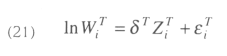
The Oaxaca-Ransom decomposition proceeds as follows. First, we run two sector-specific standard semi-log earnings regressions
and
where the indices M and T stand for the formal and informal sector, respectively, Z are vectors of wage-determining characteristics, d are coefficient vectors, and e are normally distributed error terms. Additionally, we construct a vector of implied weighted average coefficients
]]>
to represent the returns to the wage-determining characteristics that would hold in a unified labor market without sectoral segmentation. Based on the estimation results of (20) to (22), we then decompose the empirically observed difference in mean log wages between formal and informal workers according to:
The first term on the right-hand side of (23) is the endowment component, which indicates how large the wage gap between formal and informal workers would be in the absence of labor-market segmentation. It takes a positive value if the average formal worker is endowed with more positively rewarded and less negatively rewarded characteristics than the average informal worker. The second term is the rent component. It is positive if formal workers enjoy a premium over, and informal workers sustain a discount on the unified rates of return  .
.
The selection of workers into the formal and informal sector may not be random in that they may have a comparative earnings advantage in their respective sector. For this reason, both Moensted (2000) and Carneiro and Henley (2002) apply the two-step procedure proposed by Heckman (1976, 1979) to account for sample-selection bias. We argue, however, that this empirical model is not applicable for our purposes for two reasons. First, the identification of the Heckman two-step procedure is problematic since our data set does not contain variables which enter only the selection equation but not the earnings equations, i.e., variables which determine only the probability of being selected into formal employment but not wages. In this case, identification crucially depends on the assumption that the Mills ratio is sufficiently non-linear, which in our view is too weak a base for statistical inference.26 Second, our theoretical model implies that not only the rent component of the formal wage but also the probability of being selected into formal employment is affected by rigidities in the product and labor markets. If we corrected for the time-varying sample-selection bias, we would be unlikely to capture the direct and indirect impact of structural reforms on the rent component of the formal wage.
4.3 Results
The sector-specific earnings functions (20) and (21) are standard in that they include spline functions for age (4 dummies with "20-24 years" being reference state), for education (8 dummies with "no or basic education incomplete" being reference state), and for job experience (3 dummies with "< 1 year" being reference state), as well as dummies for being female, being indigenous, and being in independent employment. Additionally, we control for log working hours and the log of the local poverty line, which we use as a proxy for the local price level.
Table 3 reports the regression results on the determinants of formal and informal wages for the years 1989 to 2001 27 The returns to schooling are positive over the entire range of the educational spline function, as evidenced by that the coefficients are (with few exceptions) higher for higher educational categories. We also find that formal workers with 12 or more years of schooling (i.e., from "higher secondary complete" onwards) receive a higher skill premium than informal workers in the respective educational categories. The returns to age are hump-shaped. Additionally, they are consistently higher in the formal sector than in the informal sector. This could be due to that seniority considerations are more important if wages are negotiated between unions and firms rather than being determined in an atomistic labor market. By contrast, the relationship between job experience and wages is strictly positive and the coefficients are more or less of equal size in both sectors. Even controlling for other wage-determining characteristics, women and indigenous earn significantly less than men and non-indigenous, respectively. The gender wage gap and the racial wage gap seem to be particularly pronounced in the informal sector. There is a robust relationship between working time and wages. An increase in monthly working hours by 1 % increases the monthly labor income on average by 0.37% in the formal sector, and 0.41 % in the informal sector.
]]>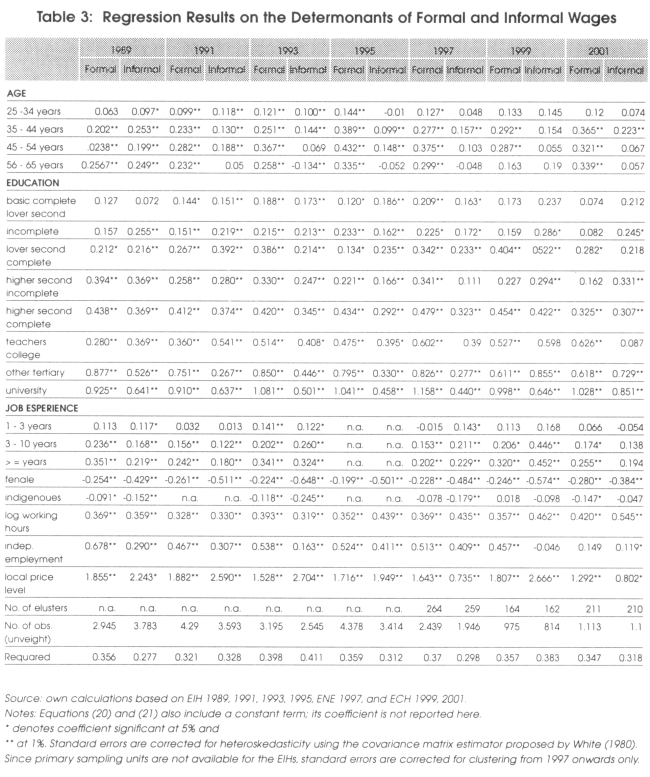
The return to being in independent employment is consistently positive and statistically significant (except for 2001) in the formal sector, but much smaller (or even negative in 1 999) and much more volatile in the informal sector. However, we caution not to read too much into this dummy. The main reason for including it into the sector-specific earnings functions is to correct for a potential over-reporting bias since earnings of self-employed, independent professionals and employers may not always be measured net of costs. Finally, we find that wages adjust to differences in the local price levels.
Table 4 reports the estimates on the formal employment shares and the results of the Oaxaca-Ransom decomposition of the wage gap between the formal and the informal sector. The formal employment share follows a hump-shaped time path, rising from 42.6% in 1989 to 57.0% in 1993 and falling thereafter to 50.1 % in 2001,28 The empirically observed mean log wage difference rises sharply from 1989 to 1993, and after a transitional phase of decline, it rises further to its highest value in 2001. However, correcting for differences in the mean endowment with wage-determining characteristics between formal and informal workers, the empirical picture changes. The log rent component of the formal wage follows a hump-shaped time path between 1989 and 1999 with the peak being in 1995. From 1999 to 2001, it increases again.

Referring to Section 3.7, we can finally link our theoretical and empirical results, and check whether our small-scale macroeconomic model helps explain the impact of structural reforms on the distribution of wages and employment between the formal and informal sector. As predicted, we find an expansion of formal employment in the early years of the structural reform process, and a reversal of this trend later on. The expansion was particularly strong between 1989 and 1991, which we attribute to that the effects of product-market deregulation and of the liberalization of the trade regime reinforced each other at this point of time. Our estimates on the rent component of the formal wage are more difficult to reconcile with the implications of the theoretical model. However, it is probably safe to conclude that the impact of opening up to international trade on the demand for goods in the formal sector was the dominant driving force. With a short time lag, the improvement of the trade balance more or less coincided with the rise, and its deterioration with a fall in the rent component of the formal wage. Product-market deregulation seems to have only been able to temporarily offset or delay the rise in the rent component of the formal wage in the late 1980s and early 1990s.
5. Summary and Conclusions
This paper seeks to contribute to the ongoing controversy on the distributional effects of structural reforms in developing countries. To this end, we set up a small-scale macroeconomic model of a dual economy to capture the transmission mechanisms through which the deregulation of product and factor markets, the liberalization of the trade and FDI regime, and the privatization of public companies impact on the distribution of employment and wages between the formal and the informal sector. We find that the distributional effects of structural reforms are almost always context dependent, belying any oversimplified statements for or against structural reforms made in the opposing camps. Only in the case of deregulation - be it of product markets or labor markets - is the outcome clear-cut in that it causes an expansion of the formal employment share and a reduction in the rent component of the formal wage. However, the distributional effects of the liberalization of the trade and FDI regime and of the privatization of public companies are a priori undetermined and depend on the strength of the different transmission mechanisms.
To shed further light into this issue and to test our theoretical model empirically, we carry out a detailed case study on Bolivia. By giving an overview of the structural reforms undertaken in Bolivia since 1985, we show that Bolivia has been a "star reformer" by Latin American standards. However, the structural reform progress did not occur uniformly in all policy areas. Bolivia implemented the deregulation of product markets and the liberalization of the trade and FDI regime earlier than most Latin American countries, while it lagged substantially behind with respect to the privatization of public companies. A comprehensive and far-reaching labor market reform is still pending.
]]> Feeding the Bolivian structural reform process into our small-scale macroeconomic model, we offer a consistent explanation for the empirically observed trends in the distribution of employment and wages between the formal and the informal sector. Estimating the employment share and isolating the rent component of the formal wage using the methodology proposed by Oaxaca and Ransom (1994), we find that both variables more or less follow a hump-shaped time path. This result suggests that the trade-balance effect of liberalizing the trade regime was the dominant driving force behind the post-reform wage and employment trends. However, while the rise in formal employment is particularly strong between 1989 and 1991, the rise in the rent component of the formal wage seems to have been temporarily offset or delayed at this point of time. We attribute this to the distributional effects of product-market deregulation. To promote formal employment without increasing the wage gap between the formal and the informal sector in the future, Bolivia would be well advised to comprehensively deregulate its labor markets.
Notes
* This paper is part of the research project "Distributional Effects of Structural Reforms: The Case of Bolivia".
Financial support by VolkswagenStiftung is gratefully acknowledged. I would also like to thank Lykke E. Andersen, Peter Nunnenkamp and two anonymous referees for many valuable comments and suggestions on an earlier draft of the paper.
** Julius Spatz. Kiel Institute for World Economics. Duesternbrooker Weg 120. 24105 Kiel. Germany. Phone++49 431 8814 212. Fax++49 431 8814 500. e-mail: jspatz@ifw.uni-kiel.de
1 In order to be compatible to the standard terminology, we use the term "union" to refer to all labor-market institutions that strengthen the position of workers in wage negotiations.
2 In other words, the two negotiation partners jointly determine the wage rate, while the firm unilaterally sets the employment level ex post.
3 We choose to model re-employment probabilities rather than dismissal probabilities because they are easier to handle algebraically.
4 That is, η -> ∞ . β = 0, γ = 0 and Ψ = 1
]]> 5 That is, the wage elasticity of effort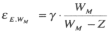 is unity in equilibrium.
 6 For a more detailed discussion refer to Garino and Martin (2000).
7 Since the model depicts a real economy, we do not address the distributional effects of capital market reforms.
8 See, for example, Haskel and Sanchis (1995).
9 See Goerke (1998).
10 The Bolivian stabilization program is not covered in this study. For a comprehensive treatment of this issue see Sachs and Larraín (1998), and Antelo (2000).
11 For a more detailed description of these policy measures see Fundacion Milenio (1998) and Antelo (2000).
12 The income tax rate as well as the value-added tax were increased from 10% to 13% in 1992.
13 The productivity of the value-added tax is calculated as the ratio between collection (as % of GDP plus imports minus exports) and the current rate.
14 Since 1987, there have been 8 liquidations of private banks (Antelo 2000).
]]> 15 For instance, there were strikes in 189 out of 260 working days in the city of La Paz in 2000 (Escobar/Vasquez 2002)16 In 1990, the uniform tariff rate was further reduced to 10%, and later the tariff rate for capital goods (but not for consumer goods) was set at 5%.
17 In 1998, this agency was replaced by the Centra de Promocion Bolivia and its tasks were expanded to foreign direct investment and tourism.
18 As a result, the trade balance of Bolivia first improved but later deteriorated relative to the pre-reform level.
19 See the above cited sources for a detailed description of the methodology used to construct these indices.
20 Since Morley et al. (1999) analyze the structural reform progress in Latin America only until 1995, the latter result cannot be checked with their index.
21 We use a narrow concept of labor income. It is defined as reported log monthly base salaries of dependent employees and log average monthly net earnings of self-employed, independent professionals and employers earned in their principal labor-market activity. Fringe benefits are not considered because, if at all, some household surveys collect only their incidence and type but not their monetary equivalent.
22 The EIHs 1991, 1993 and 1995 were only conducted in the departmental capitals and El Alto. The EIH 1989 additionally spans other urban areas, while the ENE 1997 and the ECHs 1999 and 2001 cover the entire country.
23 Due to changes in the questionnaires, not all of these sector-selection determinants are available for all years. The contract type is missing for 1989, the social-security affiliation for 1993,1995 and 1997, and the union membership for 1989,1991, 1995 and 1997.
24 For a theoretical model on the impact of structural reforms on the wage gap between skilled and unskilled workers see Andersen and Spatz (2003).
]]> 25 This is not to say that we do not put faith in our theoretical model. However, in order to keep it analytically solvable, we imposed some simplifying assumptions which do not qualitatively affect the distributional effects of structural reforms.26 See Johnston and DiNardo (1997:450) on this issue. Moensted (2000) and Carneiro and Henley (2002) claim to have found such identifying variables. However, a closer inspection of their selection equations, casts considerable doubt on the validity of this claim.
27 Our results differ from Moensted (2000) in that (a) her analysis extends only to 1995 and (b) her returns to schooling are highly volatile and negative for up to higher secondary education (12 years of schooling). We attribute her surprising results on the returns to schooling to a misspecification of her sector-specific earnings functions.
28 Again, our results differ significantly from Moensted (2000), which can be attributed to her using a simpler sector classification. Her estimates on the formal employment share rise from 45.5% in 1989 to 77.8% in 1995. However, we put more faith in our sector classification since it allows us to closely track the official figures on the formal employment share. Compare UDAPE (var. iss.).
REFERENCES
Andersen, Lykke. E., and Julius Spatz (2003) "Distributional Effects of Structural Reforms in Textbook Models: The Case of Skilled versus Unskilled Workers in Bolivia." Mimeo.
Antelo, Eduardo (2000). "Politicas de estabilizacion y de reformas estructurales en Bolivia a partir de 1985." In: Luis Carlos Jemio and Eduardo Antelo (eds.). Quince años de reformas estructurales en Bolivia. CEPAL and Universidad Catolica Boliviana, La Paz. [ Links ]
Blanchard, Oliver, and Francesco Giavazzi (2001) "Macroeconomic Effects of Regulation and Deregulation in Goods and Labor Markets." NBER Working Paper No. 8120. National Bureau of Economic Research, Cambridge, MA. [ Links ]
Carneiro, Francisco Galrao, and Andrew Henley (2002) "Modelling Formal vs. Informal Employment and Earnings: Micro-econometric Evidence for Brazil." Mimeo.
Escobar, Flavio, and Claudia Vasquez (2002) "Institucionalidad y desarrollo en Bolivia." Instituto de Investigaciones Socio-Económicas, Universidad Catolica Boliviana, Working Paper No. 3/2002. [ Links ]
Fundacion Milenio (1998) Las reformas estructurales en Bolivia. La Paz. [ Links ]
Garino, Gaia, and Christopher Martin (2000) "Efficiency Wages and Union-Firm Bargaining." Economics Letters 69: 181-185.
Goerke, Laszlo (1998). "Privatisation and Efficiency Wages." Journal of Economics 76(3): 245-264.
Haskel, Jonathan, and Amparo Sanchis (1995) "Privatisation and X-Inefficiency: a Bargaining Approach." Journal of Industrial Economics 43: 301-321.
Haskel, Jonathan, and Stefan Szymanski (1993) "Privatization, Liberalization, Wages and Employment: Theory and Evidence for the UK." Economica 60: 1 61-182.
Heckman, James J. (1976) "The Common Structure of Statistical Models of Truncation, Sample Selection and Limited Dependent Variables and a Simple Estimator for such Models." Annals of Economic and Social Measurement 5: 475-492.
Heckman, James J. (1979) "Sample Selection Bias as a Specification Error." Econometrica 47: 153-161.
IMF (various issues). Direction of Trade Statistics. International Monetary Fund, Washington. [ Links ]
INE (2003). Información Estadística. Online Data Base. Instituto Nacional de Estadística. http://www.ine.gov.bo. [ Links ]
Johnston, Jack, and John DiNardo (1997) Econometric Methods. New York.
Lora, Eduardo (2001) "Structural Reforms in Latin America: What Has Been Reformed and How to Measure it". Inter-American Development Bank, Research Department, Working Paper No. 466. [ Links ]
Moensted, Trine (2000) "Wage Differentials Between the Formal and the Informal Sector in Bolivia." IISEC. Working Paper. Instituto de Investigaciones Socio-Económicas. La Paz, Bolivia. [ Links ]
Morley, Samuel A., Roberto Machado, and Stefano Pettinato (1999) Indexes of Structural Reform in Latin America. Serie Reformas Economicas, ECLAC, Santiago de Chile. [ Links ]
Nickell, Stephen, Jari Vainiomaki, and Sushil B. Wadhwani (1994) "Wages and Product Market Power." Economica 61: 457-473.
Oaxaca, Ronald L. (1973) "Male-Female Wage Differentials in Urban Labor Markets." International Economic Review 14(3): 693-709.
Oaxaca, Ronald L, and Michael R. Ransom (1994) "On Discrimination and the Decomposition of Wage Differentials. "Journal of Econometrics 61: 5-21.
Sachs, Jeffrey D., and Felipe Larrain B. (1998) "Bolivia 1985-1992: Reforms, Results, and Challenges." In: Harry Costin (ed.) Economic Reform in Latin America, Fort Worth. [ Links ]
Summers, Larry H. (1988) "Relative Wages, Efficiency Wages and Keynesian Unemployment." American Economic Review 78: 383-388.
]]>UDAPE (various issues). Dossier de Estadísticas Sociales y Económicas de Bolivia, Unidad de Analísis de Políticas Sociales y Económicas, La Paz. [ Links ]
White, Halbert (1980) "A Heteroscedasticity-Consistent Covariance Matrix Estimator and a Direct Test for Heteroscedasticity." Econometrica 48: 81 7-838.
World Bank (2002). World Development Indicators. CD-ROM, World Bank, Washington. [ Links ]
]]>