<?xml version="1.0" encoding="ISO-8859-1"?><article xmlns:mml="http://www.w3.org/1998/Math/MathML" xmlns:xlink="http://www.w3.org/1999/xlink" xmlns:xsi="http://www.w3.org/2001/XMLSchema-instance">
<front>
<journal-meta>
<journal-id>0250-5460</journal-id>
<journal-title><![CDATA[Revista Boliviana de Química]]></journal-title>
<abbrev-journal-title><![CDATA[Rev. Bol. Quim]]></abbrev-journal-title>
<issn>0250-5460</issn>
<publisher>
<publisher-name><![CDATA[Universidad Mayor de San Andrés]]></publisher-name>
</publisher>
</journal-meta>
<article-meta>
<article-id>S0250-54602013000200002</article-id>
<title-group>
<article-title xml:lang="en"><![CDATA[EFFECT IN ACUTE INFLAMMATION OF SAPOGENIN EXTRACT AND ISOLATED SAPOGENINS FROM QUINOA WASTE (CHENOPODIUM QUINOA WILLD)]]></article-title>
</title-group>
<contrib-group>
<contrib contrib-type="author">
<name>
<surname><![CDATA[Lozano]]></surname>
<given-names><![CDATA[Maribel]]></given-names>
</name>
</contrib>
<contrib contrib-type="author">
<name>
<surname><![CDATA[Gonzales]]></surname>
<given-names><![CDATA[Eduardo]]></given-names>
</name>
<xref ref-type="aff" rid="A01"/>
</contrib>
<contrib contrib-type="author">
<name>
<surname><![CDATA[Flores]]></surname>
<given-names><![CDATA[Yonny]]></given-names>
</name>
</contrib>
<contrib contrib-type="author">
<name>
<surname><![CDATA[Almanza]]></surname>
<given-names><![CDATA[Giovanna R]]></given-names>
</name>
<xref ref-type="aff" rid="A02"/>
</contrib>
</contrib-group>
<aff id="A01">
<institution><![CDATA[,Universidad Mayor de San Andrés Laboratorio de Bioorgánica, Instituto de Investigaciones Químicas ]]></institution>
<addr-line><![CDATA[La Paz ]]></addr-line>
<country>Bolivia</country>
</aff>
<aff id="A02">
<institution><![CDATA[,Universidad Mayor de San Andrés Laboratorio de Farmacología, Instituto de Investigaciones Fármaco Bioquímicas ]]></institution>
<addr-line><![CDATA[La Paz ]]></addr-line>
<country>Bolivia</country>
</aff>
<pub-date pub-type="pub">
<day>00</day>
<month>00</month>
<year>2013</year>
</pub-date>
<pub-date pub-type="epub">
<day>00</day>
<month>00</month>
<year>2013</year>
</pub-date>
<volume>30</volume>
<numero>2</numero>
<fpage>115</fpage>
<lpage>121</lpage>
<copyright-statement/>
<copyright-year/>
<self-uri xlink:href="http://www.scielo.org.bo/scielo.php?script=sci_arttext&amp;pid=S0250-54602013000200002&amp;lng=en&amp;nrm=iso"></self-uri><self-uri xlink:href="http://www.scielo.org.bo/scielo.php?script=sci_abstract&amp;pid=S0250-54602013000200002&amp;lng=en&amp;nrm=iso"></self-uri><self-uri xlink:href="http://www.scielo.org.bo/scielo.php?script=sci_pdf&amp;pid=S0250-54602013000200002&amp;lng=en&amp;nrm=iso"></self-uri><abstract abstract-type="short" xml:lang="en"><p><![CDATA[ABSTRACT A sapogenin extract was obtained from quinoa waste (Chenopodium quinoa Willd) and analyzed by HPLC, as well as other chromatographic and spectroscopic methods, determining four major constituents: Oleanolic acid 1, methyl oleanate 2, hederagenin 3 and phytolaccagenic acid 4. The acute anti-inflammatory activity of both, isolated sapogenins and sapogenin extract, were evaluated in two animal models, carrageenan-induced paw edema and croton-induced ear edema, determining that the extract shows anti-inflammatory activity significant in ear edema model, greater than the compounds, suggesting a synergistic effect between the compounds, while in the paw edema model the isolated compounds show a significant anti-inflammatory activity while the extract shows only a moderate anti-inflammatory activity]]></p></abstract>
<abstract abstract-type="short" xml:lang="es"><p><![CDATA[RESUMEN A partir de residuos de quinua real (Chenopodium quinoa Willd) se obtuvo un extracto de sapogeninas el cual fue analizado por cromatografía HPLC, además de otros métodos cromatográficos y espectroscópicos, determinándose 4 constituyentes mayoritarios: ácido oleanólico 1, oleanato de metilo 2, hederagenina 3 y ácido fitolaccagenico 4. La actividad antiinflamatoria aguda fue evaluada mediante dos modelos animales, modelo de edema de oreja de ratón inducido por aceite de croton y edema de pata inducido por carragenina, determinándose que el extracto muestra una actividad antiinflamatoria significativa en el modelo de edema de oreja, mayor que los compuestos, sugiriendo un efecto sinérgico entre ellos; mientras que en el modelo de edema de pata se observa una actividad antiinflamatoria significativa en los compuestos aislados y solo una actividad antiinflamatoria moderada en el extracto]]></p></abstract>
<kwd-group>
<kwd lng="en"><![CDATA[Sapogenins]]></kwd>
<kwd lng="en"><![CDATA[Chenopodium quinoa]]></kwd>
<kwd lng="en"><![CDATA[acute anti-inflammatory activity]]></kwd>
<kwd lng="en"><![CDATA[ear edema model]]></kwd>
<kwd lng="en"><![CDATA[paw edema model]]></kwd>
</kwd-group>
</article-meta>
</front><body><![CDATA[ <p align="right"><font size="2" face="Verdana"><strong>ARTICULO</strong></font> <strong><font size="2" face="Verdana">ORIGINAL</font></strong></p>     <p align="right">&nbsp;</p>     <p align="center"><font face="Verdana" size="4"><strong>EFFECT IN ACUTE INFLAMMATION OF SAPOGENIN EXTRACT AND ISOLATED SAPOGENINS FROM QUINOA WASTE <i>(CHENOPODIUM QUINOA </i>WILLD)</strong></font></p>     <p align="center">&nbsp;</p>     <p align="center">&nbsp;</p>     <p align="center"><font face="Verdana" size="2"><i>Maribel Lozano<sup>a,b</sup>, Eduardo Gonzales<sup>b</sup>, Yonny Flores<sup>a</sup>, Giovanna R. Almanza<sup>a,*</sup></i></font><font face="Verdana" size="2">aLaboratorio de Bioorgánica, Instituto de Investigaciones Químicas, Universidad Mayor de San Andrés, Calle 27 Cota Cota, </font><font face="Verdana" size="2">P.O.Box. 303 La Paz-Bolivia;<i><sup>b</sup> </i>Laboratorio de Farmacología, Instituto de Investigaciones Fármaco Bioquímicas, </font><font face="Verdana" size="2">Universidad Mayor de San Andrés Av. Saavedra 1995, La Paz Bolivia</font><font face="Verdana" size="2"><b>* </b></font><font face="Verdana" size="2" color="#0000E4"><b><u>giovyalmanza@yahoo.com.ar</u></b></font>    <br>   <font size="2" face="Verdana"><strong>Received</strong> 22 10 2013</font></p>     <p align="center">&nbsp;</p>     <p align="center">&nbsp;</p> <hr> <font face="Verdana" size="2"><b>Keywords: </b>Sapogenins, <i>Chenopodium quinoa, </i>acute anti-inflammatory activity, ear edema model, paw edema model.</font>     <p align="justify"><font face="Verdana" size="2"><b>ABSTRACT</b></font></p>     ]]></body>
<body><![CDATA[<p align="justify"><font face="Verdana" size="2">A sapogenin extract was obtained from quinoa waste <i>(Chenopodium quinoa </i>Willd) and analyzed by HPLC, as well as other chromatographic and spectroscopic methods, determining four major constituents: Oleanolic acid 1, methyl oleanate 2, hederagenin 3 and phytolaccagenic acid 4. The acute anti-inflammatory activity of both, isolated sapogenins and sapogenin extract, were evaluated in two animal models, carrageenan-induced paw edema and croton-induced ear edema, determining that the extract shows anti-inflammatory activity significant in ear edema model, greater than the compounds, suggesting a synergistic effect between the compounds, while in the paw edema model the isolated compounds show a significant anti-inflammatory activity while the extract shows only a moderate anti-inflammatory activity.</font></p> <hr>     <p align="justify"><font face="Verdana" size="2">RESUMEN</font></p>     <p align="justify"><font face="Verdana" size="2">A partir de residuos de quinua real <i>(Chenopodium quinoa </i>Willd) se obtuvo un extracto de sapogeninas el cual fue analizado por cromatografía HPLC, además de otros métodos cromatográficos y espectroscópicos, determinándose 4 constituyentes mayoritarios: ácido oleanólico 1, oleanato de metilo 2, hederagenina 3 y ácido fitolaccagenico 4. La actividad antiinflamatoria aguda fue evaluada mediante dos modelos animales, modelo de edema de oreja de ratón inducido por aceite de croton y edema de pata inducido por carragenina, determinándose que el extracto muestra una actividad antiinflamatoria significativa en el modelo de edema de oreja, mayor que los compuestos, sugiriendo un efecto sinérgico entre ellos; mientras que en el modelo de edema de pata se observa una actividad antiinflamatoria significativa en los compuestos aislados y solo una actividad antiinflamatoria moderada en el extracto.</font></p> <hr>     <p align="justify">&nbsp;</p>     <p align="justify">&nbsp;</p>     <p align="justify"><font face="Verdana" size="3"><b>INTRODUCTION</b></font><font face="Verdana" size="2"><b></b></font></p>     <p align="justify"><font face="Verdana" size="2">Inflammatory diseases are currently treated with steroidal and non-steroidal anti-inflammatory drugs (NSAIDs). NSAIDs exert their effects by inhibiting the metabolism of arachidonic acid, by both cyclo-oxigenase and lipoxygenase enzyme pathways.[1] Despite their widespread use, NSAIDs are often associated with severe adverse effects; the most common being gastrointestinal bleeding.[2] For this reason, safer compounds with less side effects are needed.</font></p>     <p align="justify"><font face="Verdana" size="2">Bolivia is the first exporter of quinoa generating tons of quinoa waste each year. This quinoa waste does not have application and contents around 20% of saponins [12]. The hydrolysis of those saponins can produce sapogenins as oleanolic acid which have several studies about its anti-inflammatory effects [5]. The anti- inflammatory effect of Oleanolic acid was first reported in 1960s [3] where the inhibition of carrageenan-induced rat paw edema was showed and later was confirmed by other studies [4]. The other sapogenins have similar structures and can have similar anti-inflammatory effects than Oleanolic acid. In view of those antecedents, in the present work we have studied the activity of sapogenin extract and pure sapogenins in different inflammatory tests to observe the best administration vie and possible synergy among the compounds.</font></p>     <p align="justify">&nbsp;</p>     <p align="justify"><font face="Verdana" size="3"><b>RESULTS AND DISCUSSION</b></font></p>     ]]></body>
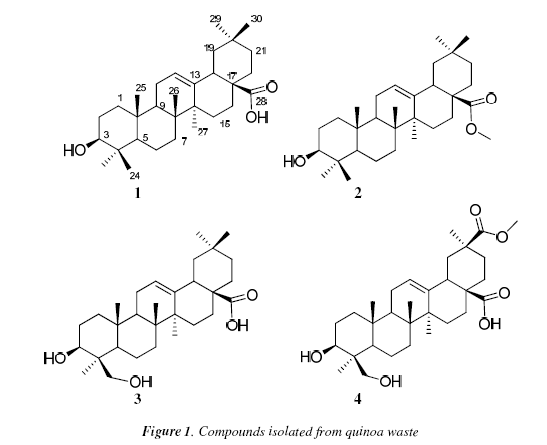
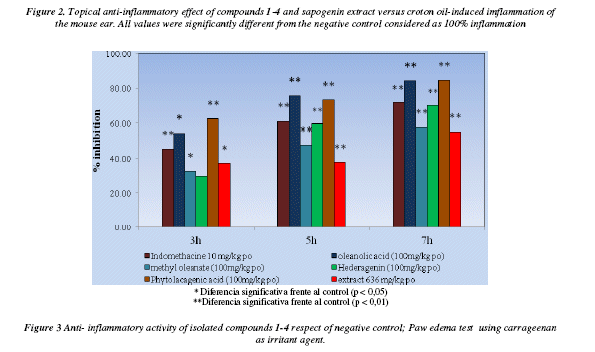
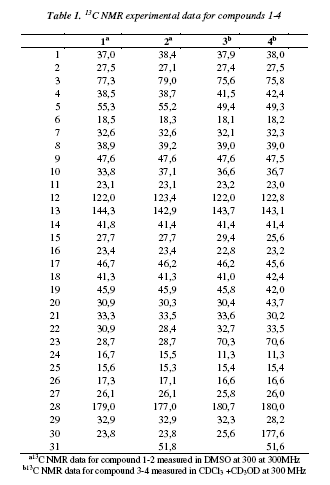
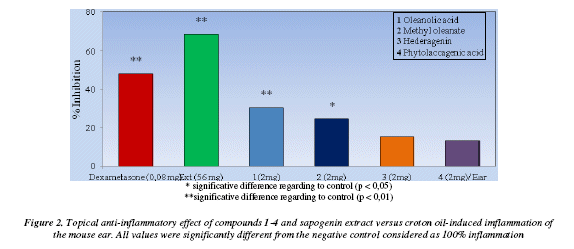
<body><![CDATA[<p align="justify"><font face="Verdana" size="2"><i>Isolated Compounds from quinoa waste</i></font></p>     <p align="center"><img src="/img/revistas/rbq/v30n2/a02_figura01.gif" width="744" height="335"></p>     <p align="center"><img src="/img/revistas/rbq/v30n2/a02_figura02.gif" width="547" height="445"></p>     <p align="justify"><font face="Verdana" size="2">Compound 4 was identified as phytolaccagenic acid; by comparison of experimental <sup>13</sup>C chemical shifts with literature data, it was also isolated as an amorphous white power, m.p 281 -284 &deg;C, with a molecular formula, C<sub>3</sub>1H<sub>48</sub>O<sub>6</sub>, 516.36 g/mol. The <sup>13</sup>C NMR spectrum showed 31 carbon signals (<a href="#t1">table1</a>) similar to oleanolic acid except by the presence of an ester group located in C-30 confirmed by analysis of the HMBC spectrum.[5]</font></p>     <p align="center"><a name="t1"></a><img src="/img/revistas/rbq/v30n2/a02_figura03.gif" width="330" height="485"></p>     <p align="justify"><font face="Verdana" size="2"><i><strong>Anti- inflammatory activity Ear edema test</strong></i></font></p>     <p align="justify"><font face="Verdana" size="2">Compounds 1-4 and sapogenin extract were submitted to the croton oil ear test, at the dose of 2 and 56 mg/ear, to evaluate the topical anti-inflammatory effect. As showed in <a href="#f2">figure 2</a>, all pure compounds 1-4 exerted some anti-inflammatory activity, while sapogenin extract showed strong active, inducing 68,2% edema inhibition at the highest administered dose (56 mg/ear). Consequently, the contribution to the activity of the extract could be very interesting for mew pharmaceutical formulations by topical application.</font></p>     <p align="center"><a name="f2"></a><img src="/img/revistas/rbq/v30n2/a02_figura04.gif" width="574" height="249"></p>     <p align="justify"><font face="Verdana" size="2"><i><strong>Paw edema test</strong></i></font></p>     <p align="justify"><font face="Verdana" size="2">The development of edema induced by carrageenan corresponded to the events in the acute phase of inflammation mediated by histamine, bradykinin and prostaglandins produced under an effect of cyclooxygenase.[7] Sapogenin extract and compounds 1-4 had an anti-inflammatory effect at 636mg/kg po and 100mg/po, respectively, observable to 3 (p&lt; 0,05), 5(p&lt; 0,01) and 7(p&lt;0,01) hours, respectively (<a href="#f3">figure 3</a>). In this test, the compounds 1-4 had higher anti-inflammatory between 5-7 hours after treatment, while the activity of the sapogenins extract was less respect to compounds. The strong activity of oleanolic acid and phytolaccagenic acid could be employed for anti-inflammatory drugs of oral administration</font></p>     ]]></body>
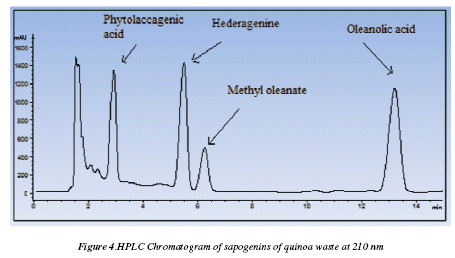
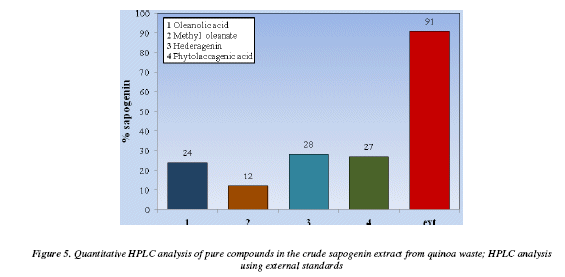
<body><![CDATA[<p align="center"><a name="f3"></a><img src="/img/revistas/rbq/v30n2/a02_figura05.gif" width="595" height="352"></p>     <p align="justify"><font face="Verdana" size="2"><i><strong>HPLC analysis of sapogenins</strong></i></font></p>     <p align="justify"><font face="Verdana" size="2">The HPLC analysis revealed the presence of four triterpenic compounds in quinoa waste identified by external standard and the purity peaks (purified compounds 1-4) verified by UV (DAD, 210 nm) spectra (<a href="#f4">figure 4</a>). Oleanolic acid (13,3 min), methyl oleanate (6,2 min), hederagenin (5,4 min) and Phytolaccagenic acid (2,8 min). A subsequent HPLC quantification of sapogenin extract, give the follow yields for the pure compounds: 24% Oleanolic acid, 12% methyl oleanate, 28% hederagenin and 27% Phytolaccagenic acid. The extract contents 91% of sapogenins (<a href="#f5">Figure 5</a>). This composition could be used for the analysis of the strong topical anti- inflammatory activity of the extract.</font></p>     <p align="center"><a name="f4"></a><img src="/img/revistas/rbq/v30n2/a02_figura06.gif" width="455" height="258"></p>     <p align="center"><a name="f5"></a><img src="/img/revistas/rbq/v30n2/a02_figura07.gif" width="565" height="277"></p>     <p align="left"><font face="Verdana" size="3"><b>CONCLUSION</b></font></p>     <p align="justify"><font face="Verdana" size="2">The quinoa waste is generally considered for its higher content in saponins while triterpenoid sapogenins are not equal considered. An interesting pharmacological activity was observed for the sapogenin extract and isolated sapogenins, which can be considered of therapeutical relevance for quinoa waste in pharmaceutical formulations against inflammatory disorders. The HPLC analytical method set up here was fit for the determination of sapogenins in the extract, as a mean to control the quality of bioactive extract which could be obtained in big quantities from quinoa waste. Furthermore, the quinoa waste could also be a cheap primary material to obtain sapogenins extract or individual sapogenins with anti-inflammatory propierties.</font></p>     <p align="justify">&nbsp;</p>     <p align="justify"><font face="Verdana" size="3"><b>EXPERIMENTAL</b></font></p>     <p align="justify"><font face="Verdana" size="2"><i><strong>Extraction and isolation</strong></i></font></p>     ]]></body>
<body><![CDATA[<p align="justify"><font face="Verdana" size="2">The modified method of San Martin and Briones [8] was used for saponins extractions; first 500 g of ground sample was extracted with an aqueous solution of ethanol 50% v/v (ratio 1:9) for 3 h under constant stirring at 200 rpm. The extract was then filtered and ethanol was removed using a rota-evaporator and the water residue was dried by frizzed. 20g of saponin extract was hydrolyzed with 200ml of 2N HCl in 50% aqueous ethanol under reflux for 3h at 85&deg;C, and therefore sugars and aglicones were separated. The solid phase sapogenins were washed with H<sub>2</sub>O and NaHCO<sub>3 </sub>at 5% m/v, this residue was dried using high vacuum pump by 7h.[9], [10]</font></p>     <p align="justify"><font face="Verdana" size="2">6,2g was subjected to Vacuum Liquid Chromatography (VLC) silica gel chromatography using mixtures of petroleum ether/EtOAc (EtOAc: 10, 20, 30, 40, 50, 70, 80, 100 %, v/v) and EtOAc/ MeOH (MeOH: 5% v/v) as a gradient solvent system to give ten fractions. The fraction 2 consist of pure compound oleanolic acid 1 and fraction 9 pure phytolaccagenic acid 4. The pure compounds 2 and 3 were obtained by further silica gel flash chromatography using ether/EtOAc 90% and40 % v/v.</font></p>     <p align="justify"><font face="Verdana" size="2"><i><strong>HPLC chromatographic analysis of sapogenins</strong></i></font></p>     <p align="justify"><font face="Verdana" size="2">Quantification of oleanolic acid 1, methyl oleanate 2, hederagenin 3 and phytolaccgenic acid 4 were performed on an HPLC system (Agilent, 1100 series) equipped with quaternary pump, DAD detector and Eclipse Plus C1<sub>8</sub> column (125x4,6, 5¡am). All these four compounds were detected at 210 nm at room temperature with an eluent flow rate of 1.0 mL/min. The mobile phase consisted of formic acid (0,1%) (A) and methanol (B) with a ratio of 15:85 (A:B, v/v) and isocratic elution.[1 1]</font></p>     <p align="justify"><font face="Verdana" size="2"><i><strong>Animals</strong></i></font></p>     <p align="justify"><font face="Verdana" size="2">Experiments were performed on females <i>Swiss </i>mice (24 -26g), housed in controlled room temperature (20 &plusmn;2 &deg;C) under a 12: 12h light-dark cycle (lights on 7 a.m.). Animals were kept in groups of 6 in light cages and had a free access to standard laboratory diet (pellets) and tap water in their cages.</font></p>     <p align="justify"><font face="Verdana" size="2"><i><strong>Administration of extracts, fractions, isolated compound and drugs Croton-induced ear edema</strong></i></font></p>     <p align="justify"><font face="Verdana" size="2">The topical anti-inflammatory activity was evaluated as inhibition of the croton oil-induced ear edema in mice (CYTED, 1995ref) at doses of 2 mg/ear for the pure compounds and 56 mg/ear for the sapogenin extract, to the right ear of each mouse was administered mean dose and after mean hour was administered the other mean dose. Inflammation was induced on the inner surface of the right ear of mice, by application of 20¡aL of Croton oil, suspended in the appropriated vehicle, In the left ear was only applied the vehicle. Control animals received only the irritant solution, whereas the other mice received both the irritant and the test substances: At the maximum of the edematous response, 4 h later, mice were sacrificed and a plug (6mm Ø) was removed from both the treated (right) and the untreated (left) ears. The edematous response was measured as the weight difference between the two plugs. The anti-inflammatory activity was expressed as percentage of the edema reduction in treated mice in comparison to control mice. As a reference, the non-steroidal anti-inflammatory drug (NSAID) Dexamethasone (0.04 mg/ear) was used.</font></p>     <p align="justify"><font face="Verdana" size="2"><i><strong>Carrageenan-induced paw edema</strong></i></font></p>     <p align="justify"><font face="Verdana" size="2">Pure compounds and sapogenin extract in 100 mg/kg p.o. and 636 mg/kg p.o., indomethacin in 10 mg/kg p.o. doses were given to rats orally by feeding tube. One hour after of administration, 0,05 ml (1% w/v) carrageenan solution was subcutaneously injected into the plantar surface of the left hind paw. The paw volume was measured with bernier, at 1, 2, 3, 5 y 7 hours after carrageenan administration . The anti-inflammatory activity in animals of pure compounds and sapogenins extract were compared with that of indomethacin and control groups.</font></p>     ]]></body>
<body><![CDATA[<p align="justify"><font face="Verdana" size="2"><i><strong>Statistical analysis</strong></i></font></p>     <p align="justify"><font face="Verdana" size="2">Values are presented as mean &plusmn; S.E.M. Independent samples t-test and analysis of variance (ANOVA, Dunnett method) were used for the evaluation of data and P005 was accepted as statistically significant</font></p>     <p align="justify">&nbsp;</p>     <p align="justify"><font face="Verdana" size="2"><b>ACKNOWLEDGEMENTS</b></font></p>     <p align="justify"><font face="Verdana" size="2">This work was supported by the &quot;Development of natural phytotherapeutic products&quot; project financed by FEMCIDI/OEA and &quot;Research on plant biodiversity&quot; project financed by the Swedish agency SIDA/UMSA.</font></p>     <p align="justify">&nbsp;</p>     <p align="justify"><strong><font face="Verdana" size="3">REFERENCES</font></strong></p>     <p align="justify"><font face="Verdana" size="2">[I]&nbsp;INSEL, P.A., </font><font face="Verdana" size="2"><i>Analgesic, Antipyretic and Antiinflammatory Agents and Drugs Employed in the Treatment of Gout. </i>McGraw-Hill, New York1996, pp. 617— 657. In: J.G. Hardman, Limbird, L.E. (Eds.),</font></p>     <!-- ref --><p align="justify"><font face="Verdana" size="2"> [2] FUNG, H.B., KIRSCHENBAUM, H.L., Clinical Therapeutics, 1999, 21, 1131-1157.</font>&nbsp;&nbsp;&nbsp;&nbsp;&nbsp;&nbsp;&nbsp;&nbsp;[&#160;<a href="javascript:void(0);" onclick="javascript: window.open('/scielo.php?script=sci_nlinks&ref=682898&pid=S0250-5460201300020000200002&lng=','','width=640,height=500,resizable=yes,scrollbars=1,menubar=yes,');">Links</a>&#160;]<!-- end-ref --><!-- ref --><p align="justify"><font face="Verdana" size="2">[3] GUPTA, M.B., BHALLA, T.N., GUPTA, G.P., MITRA, C.R., BHARGAVA K.P. European Journal of Pharmacology, 1969, 6, 67-70 </font>&nbsp;&nbsp;&nbsp;&nbsp;&nbsp;&nbsp;&nbsp;&nbsp;[&#160;<a href="javascript:void(0);" onclick="javascript: window.open('/scielo.php?script=sci_nlinks&ref=682899&pid=S0250-5460201300020000200003&lng=','','width=640,height=500,resizable=yes,scrollbars=1,menubar=yes,');">Links</a>&#160;]<!-- end-ref --><!-- ref --><p align="justify"><font face="Verdana" size="2">[4] JIE L. Journal of Ethnopharmacology, 1995, 49; 57-68</font>&nbsp;&nbsp;&nbsp;&nbsp;&nbsp;&nbsp;&nbsp;&nbsp;[&#160;<a href="javascript:void(0);" onclick="javascript: window.open('/scielo.php?script=sci_nlinks&ref=682900&pid=S0250-5460201300020000200004&lng=','','width=640,height=500,resizable=yes,scrollbars=1,menubar=yes,');">Links</a>&#160;]<!-- end-ref --><!-- ref --><p align="justify"><font face="Verdana" size="2"> [5] FLORES, Y., DÍAZ, C., GARAY, F., COLQUE, O., STERNER, O., ALMANZA. G.R., </font><font face="Verdana" size="2">Revista Boliviana de química, 2005,1, 22 </font>&nbsp;&nbsp;&nbsp;&nbsp;&nbsp;&nbsp;&nbsp;&nbsp;[&#160;<a href="javascript:void(0);" onclick="javascript: window.open('/scielo.php?script=sci_nlinks&ref=682901&pid=S0250-5460201300020000200005&lng=','','width=640,height=500,resizable=yes,scrollbars=1,menubar=yes,');">Links</a>&#160;]<!-- end-ref --><!-- ref --><p align="justify"><font face="Verdana" size="2">[6] MEHTA, B. K, MEHTA, D., AMRITA, I., </font><font face="Verdana" size="2">Carbohydrate Research, 2004, 339; 2871-2874</font>&nbsp;&nbsp;&nbsp;&nbsp;&nbsp;&nbsp;&nbsp;&nbsp;[&#160;<a href="javascript:void(0);" onclick="javascript: window.open('/scielo.php?script=sci_nlinks&ref=682902&pid=S0250-5460201300020000200006&lng=','','width=640,height=500,resizable=yes,scrollbars=1,menubar=yes,');">Links</a>&#160;]<!-- end-ref --><!-- ref --><p align="justify"><font face="Verdana" size="2">[7] NSONDENTANDOU, G.F, BANZOUZI, J.T., MBATCHIA, B., ELION-ITOU, R.D.G., ETOU-OSSIBI, A.W., RAMOS, S., BENOIT-VICAL F., ABENA, A.A., OUAMBA, J.M., Journal of Ethnopharmacology 2010, 127; 108-111 </font>&nbsp;&nbsp;&nbsp;&nbsp;&nbsp;&nbsp;&nbsp;&nbsp;[&#160;<a href="javascript:void(0);" onclick="javascript: window.open('/scielo.php?script=sci_nlinks&ref=682903&pid=S0250-5460201300020000200007&lng=','','width=640,height=500,resizable=yes,scrollbars=1,menubar=yes,');">Links</a>&#160;]<!-- end-ref --><!-- ref --><p align="justify"><font face="Verdana" size="2">[8] SAN MARTÍN, R., BRIONES, R. Journal of the Science of Food and Agriculture, 2000, 80: 2063- 2068. </font>&nbsp;&nbsp;&nbsp;&nbsp;&nbsp;&nbsp;&nbsp;&nbsp;[&#160;<a href="javascript:void(0);" onclick="javascript: window.open('/scielo.php?script=sci_nlinks&ref=682904&pid=S0250-5460201300020000200008&lng=','','width=640,height=500,resizable=yes,scrollbars=1,menubar=yes,');">Links</a>&#160;]<!-- end-ref --><!-- ref --><p align="justify"><font face="Verdana" size="2">[9] TIWATT, K., THONGPHASUK, P., CHAMULITRAT, W., WINK, M.. Phytochemistry 2008, 69; 1919-1926 </font>&nbsp;&nbsp;&nbsp;&nbsp;&nbsp;&nbsp;&nbsp;&nbsp;[&#160;<a href="javascript:void(0);" onclick="javascript: window.open('/scielo.php?script=sci_nlinks&ref=682905&pid=S0250-5460201300020000200009&lng=','','width=640,height=500,resizable=yes,scrollbars=1,menubar=yes,');">Links</a>&#160;]<!-- end-ref --><!-- ref --><p align="justify"><font face="Verdana" size="2">[10] DICK M.H., LIMBURG, H., GILLES, T., MARVIN H.J.P. </font><font face="Verdana" size="2">J Sci Food Agric, 2000, 80:152-156</font>&nbsp;&nbsp;&nbsp;&nbsp;&nbsp;&nbsp;&nbsp;&nbsp;[&#160;<a href="javascript:void(0);" onclick="javascript: window.open('/scielo.php?script=sci_nlinks&ref=682906&pid=S0250-5460201300020000200010&lng=','','width=640,height=500,resizable=yes,scrollbars=1,menubar=yes,');">Links</a>&#160;]<!-- end-ref --><!-- ref --><p align="justify"><font face="Verdana" size="2">[11]&nbsp;CHUNHUA, Z., CHEN, K., SUN, C., CHEN, Q., ZHANG, W., LI, X. Biomed.Chromatogr, 2007, 21, 755-761.</font>&nbsp;&nbsp;&nbsp;&nbsp;&nbsp;&nbsp;&nbsp;&nbsp;[&#160;<a href="javascript:void(0);" onclick="javascript: window.open('/scielo.php?script=sci_nlinks&ref=682907&pid=S0250-5460201300020000200011&lng=','','width=640,height=500,resizable=yes,scrollbars=1,menubar=yes,');">Links</a>&#160;]<!-- end-ref --><p align="justify">&nbsp;</p>      ]]></body><back>
<ref-list>
<ref id="B1">
<label>1</label><nlm-citation citation-type="">
<person-group person-group-type="author">
<name>
<surname><![CDATA[INSEL]]></surname>
<given-names><![CDATA[P.A]]></given-names>
</name>
</person-group>
<source><![CDATA[Analgesic, Antipyretic and Antiinflammatory Agents and Drugs Employed in the Treatment of Gout]]></source>
<year>1996</year>
<page-range>617- 657</page-range><publisher-loc><![CDATA[New York ]]></publisher-loc>
</nlm-citation>
</ref>
<ref id="B2">
<label>2</label><nlm-citation citation-type="">
<person-group person-group-type="author">
<name>
<surname><![CDATA[FUNG]]></surname>
<given-names><![CDATA[H.B]]></given-names>
</name>
<name>
<surname><![CDATA[KIRSCHENBAUM]]></surname>
<given-names><![CDATA[H.L]]></given-names>
</name>
</person-group>
<source><![CDATA[Clinical Therapeutics]]></source>
<year>1999</year>
<page-range>1131-1157</page-range></nlm-citation>
</ref>
<ref id="B3">
<label>3</label><nlm-citation citation-type="">
<person-group person-group-type="author">
<name>
<surname><![CDATA[GUPTA]]></surname>
<given-names><![CDATA[M.B]]></given-names>
</name>
<name>
<surname><![CDATA[BHALLA]]></surname>
<given-names><![CDATA[T.N]]></given-names>
</name>
<name>
<surname><![CDATA[GUPTA]]></surname>
<given-names><![CDATA[G.P]]></given-names>
</name>
<name>
<surname><![CDATA[MITRA]]></surname>
<given-names><![CDATA[C.R]]></given-names>
</name>
<name>
<surname><![CDATA[BHARGAVA]]></surname>
<given-names><![CDATA[K.P]]></given-names>
</name>
</person-group>
<collab>European Journal of Pharmacology</collab>
<source><![CDATA[]]></source>
<year>1969</year>
<page-range>67-70</page-range></nlm-citation>
</ref>
<ref id="B4">
<label>4</label><nlm-citation citation-type="">
<person-group person-group-type="author">
<name>
<surname><![CDATA[JIE]]></surname>
<given-names><![CDATA[L]]></given-names>
</name>
</person-group>
<source><![CDATA[Journal of Ethnopharmacology]]></source>
<year>1995</year>
<page-range>57-68</page-range></nlm-citation>
</ref>
<ref id="B5">
<label>5</label><nlm-citation citation-type="">
<person-group person-group-type="author">
<name>
<surname><![CDATA[FLORES]]></surname>
<given-names><![CDATA[Y]]></given-names>
</name>
<name>
<surname><![CDATA[DÍAZ]]></surname>
<given-names><![CDATA[C]]></given-names>
</name>
<name>
<surname><![CDATA[GARAY]]></surname>
<given-names><![CDATA[F]]></given-names>
</name>
<name>
<surname><![CDATA[COLQUE]]></surname>
<given-names><![CDATA[O]]></given-names>
</name>
<name>
<surname><![CDATA[STERNER]]></surname>
<given-names><![CDATA[O]]></given-names>
</name>
<name>
<surname><![CDATA[ALMANZA]]></surname>
<given-names><![CDATA[G.R]]></given-names>
</name>
</person-group>
<collab>Revista Boliviana de química</collab>
<source><![CDATA[]]></source>
<year>2005</year>
<page-range>1, 22</page-range></nlm-citation>
</ref>
<ref id="B6">
<label>6</label><nlm-citation citation-type="">
<person-group person-group-type="author">
<name>
<surname><![CDATA[MEHTA]]></surname>
<given-names><![CDATA[B. K]]></given-names>
</name>
<name>
<surname><![CDATA[MEHTA]]></surname>
<given-names><![CDATA[D]]></given-names>
</name>
<name>
<surname><![CDATA[AMRITA]]></surname>
<given-names><![CDATA[I]]></given-names>
</name>
</person-group>
<source><![CDATA[Carbohydrate Research]]></source>
<year>2004</year>
<page-range>2871-2874</page-range></nlm-citation>
</ref>
<ref id="B7">
<label>7</label><nlm-citation citation-type="">
<person-group person-group-type="author">
<name>
<surname><![CDATA[NSONDENTANDOU]]></surname>
<given-names><![CDATA[G.F]]></given-names>
</name>
<name>
<surname><![CDATA[BANZOUZI]]></surname>
<given-names><![CDATA[J.T]]></given-names>
</name>
<name>
<surname><![CDATA[MBATCHIA]]></surname>
<given-names><![CDATA[B]]></given-names>
</name>
<name>
<surname><![CDATA[ELION]]></surname>
<given-names><![CDATA[ITOU]]></given-names>
</name>
<name>
<surname><![CDATA[ETOU-OSSIBI]]></surname>
<given-names><![CDATA[A.W]]></given-names>
</name>
<name>
<surname><![CDATA[RAMOS]]></surname>
<given-names><![CDATA[S]]></given-names>
</name>
<name>
<surname><![CDATA[BENOIT-VICAL]]></surname>
<given-names><![CDATA[F]]></given-names>
</name>
<name>
<surname><![CDATA[ABENA]]></surname>
<given-names><![CDATA[A.A]]></given-names>
</name>
<name>
<surname><![CDATA[OUAMBA]]></surname>
<given-names><![CDATA[J.M]]></given-names>
</name>
</person-group>
<collab>Journal of Ethnopharmacology</collab>
<source><![CDATA[]]></source>
<year>2010</year>
<page-range>108-111</page-range></nlm-citation>
</ref>
<ref id="B8">
<label>8</label><nlm-citation citation-type="">
<person-group person-group-type="author">
<name>
<surname><![CDATA[SAN MARTÍN]]></surname>
<given-names><![CDATA[R]]></given-names>
</name>
<name>
<surname><![CDATA[BRIONES]]></surname>
<given-names><![CDATA[R]]></given-names>
</name>
</person-group>
<source><![CDATA[Journal of the Science of Food and Agriculture]]></source>
<year>2000</year>
<page-range>2063- 2068</page-range></nlm-citation>
</ref>
<ref id="B9">
<label>9</label><nlm-citation citation-type="">
<person-group person-group-type="author">
<name>
<surname><![CDATA[TIWATT]]></surname>
<given-names><![CDATA[K]]></given-names>
</name>
<name>
<surname><![CDATA[THONGPHASUK]]></surname>
<given-names><![CDATA[P]]></given-names>
</name>
<name>
<surname><![CDATA[CHAMULITRAT]]></surname>
<given-names><![CDATA[W]]></given-names>
</name>
<name>
<surname><![CDATA[WINK]]></surname>
<given-names><![CDATA[M]]></given-names>
</name>
</person-group>
<source><![CDATA[Phytochemistry]]></source>
<year>2008</year>
<page-range>1919-1926</page-range></nlm-citation>
</ref>
<ref id="B10">
<label>10</label><nlm-citation citation-type="">
<person-group person-group-type="author">
<name>
<surname><![CDATA[DICK]]></surname>
<given-names><![CDATA[M.H]]></given-names>
</name>
<name>
<surname><![CDATA[LIMBURG]]></surname>
<given-names><![CDATA[H]]></given-names>
</name>
<name>
<surname><![CDATA[GILLES]]></surname>
<given-names><![CDATA[T]]></given-names>
</name>
<name>
<surname><![CDATA[MARVIN]]></surname>
<given-names><![CDATA[H.J.P]]></given-names>
</name>
</person-group>
<source><![CDATA[Sci Food Agric]]></source>
<year>2000</year>
<page-range>152-156</page-range></nlm-citation>
</ref>
<ref id="B11">
<label>11</label><nlm-citation citation-type="">
<person-group person-group-type="author">
<name>
<surname><![CDATA[CHUNHUA]]></surname>
<given-names><![CDATA[Z]]></given-names>
</name>
<name>
<surname><![CDATA[CHEN]]></surname>
<given-names><![CDATA[K]]></given-names>
</name>
<name>
<surname><![CDATA[SUN]]></surname>
<given-names><![CDATA[C]]></given-names>
</name>
<name>
<surname><![CDATA[CHEN]]></surname>
<given-names><![CDATA[Q]]></given-names>
</name>
<name>
<surname><![CDATA[ZHANG]]></surname>
<given-names><![CDATA[W]]></given-names>
</name>
<name>
<surname><![CDATA[LI]]></surname>
<given-names><![CDATA[X]]></given-names>
</name>
</person-group>
<source><![CDATA[Biomed.Chromatogr]]></source>
<year>2007</year>
<page-range>755-761</page-range></nlm-citation>
</ref>
</ref-list>
</back>
</article>