




 Inglés (pdf)
 Articulo en XML
 Referencias del artículo
 Traducción automática
 Enviar articulo por email
 Citado por SciELO
  Similares en
SciELO
Similares en
SciELO 
 Permalink

1. Introduction
In Ecuador, the constitutional recognition of natures rights has been lauded as a pioneering step toward environmental stewardship as mentioned by Espinosa (2015), and later by Gudynas (2015), granting ecosystems and rivers legal protections, Alves et al. (2023). Despite its transformative potential, however, the practical implementation of these rights faces significant challenges. Critics such as Boyd (2018) highlight that this legal innovation has yet to achieve its envisioned ecological transformation due to weak enforcement, limited stakeholder participation, and persistent power imbalances in resource governance. Constitutional gaps are particularly evident in water management, where sustainable governance practices are critical for addressing issues such as resource scarcity, pollution, and climate-related pressures like droughts.
This study focuses on stakeholder engagement as a cornerstone of sustainable water governance, specifically within the Ambi watershed, a sub-basin of the Mira River Basin in northern Ecuador. It emphasizes the importance of integrating human-centered approaches and non-climatic factors into resilience-based decision-making frameworks. Building on McGinnis and Ostroms (2014) adaptive governance framework, the hydrosocial concepts of Ross and Heejun (2020), andD'Odorico et al. (2010) water management resilience model, this research investigates how the interconnected relationships between communities and available water resources shape resilience and self-governing water management processes.
The Mira River Basin, recognized for its ecological and cultural diversity, is home to communities such as Otavalo and Cotacachi in the upstream regions and Ibarra and Salinas in the middle and downstream areas. These communities depend heavily on water resources for agriculture, tourism development, and livelihoods, yet the basin faces fragmented governance, resource competition, and environmental degradation. In the Ambi watershed, the Salinas irrigation system, a vital infrastructure supporting traditional agriculture, illustrates the challenges ofaging systems, water contamination, and weak collab oration among stakeholders. Water boards (Juntas Administradoras de Agua, JARs) manage over 100 irrigation systems in the watershed, with water concessions exceeding 14,000 liters per second. However, these boards rarely coordinate outside conflict situations, undermining the potential for cohesive, sustainable governance.
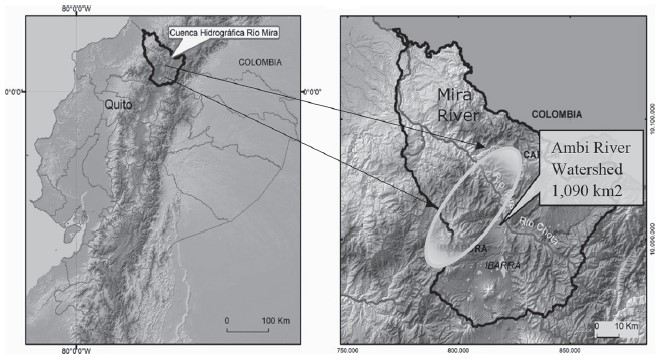
This critical issue seeks to explore how collaboration among stakeholders can enhance water governance, particularly in addressing the challenges posed by climate change and extreme weather events. Using qualitative methods, including interviews with key informants (Alsaawi, 2014;Baarda et al., 2013;Denzin, 2001), the research identifies key actors and examines their roles in policy and practice by analysing stakeholder engagement within the Ambi watershed, this study contributes to a broader understanding of how inclusive governance can enhance community resilience. Despite significant political and environmental changes in Ecuador, the Ambi watershed illustrates the persistence of governance challenges and the unrealized value of traditional knowledge from Indigenous communities. Without effective strategic alliances at the watershed level, the region remains vulnerable to increasing environmental pressures, hindering efforts to build sustainable and resilient water management systems. See the location of the area ofinterest in Figure 1.
2. Conceptual Framework
2.1. Conceptualizing Resilience in the Ambi Watershed
Resilience has emerged in recent years as an evolution of traditional preparedness approaches to environmental challenges, particularly concerning access to healthcare (well-being), human services (water access and sanitation), and water infrastructure. This shift is essential to effectively manage shocks from disasters and crises, as outlined by Madrigano et al. (2017). In the existing literature, resilience is often defined as a system's capacity to adapt to unexpected events. However, as Cork (2010) notes, the term has multiple meanings across disciplines and lacks clear, consistent definitions. There are gaps in research and practice, particularly in terms of resilience as it relates to safety, infrastructure, and water stress, such as the construction of reservoirs, canals, and other systems.
Resilience encompasses various components, such as traditional and local knowledge, leadership, community networks, participation, and strong social relationships. However, as Cork points out, it is difficult to establish a theoretical framework for the intangible aspects of resilience, particularly when operationalized to improve community resilience (Djalante & Thomalla, 2010;Garmestani, 2013). Furthermore, community resilience is understood differently by scholars. Some, like Faulkner et al. (2018),Berkes & Ross (2013), andZautra et al. (2008), view it as an emergent property ofdynamic social-ecological systems, while others, such as Mao et al. (2017) and Dewfult et al. (2019), argue that resilience transcends individual components like diversity and interconnectedness.
In addition to these theoretical perspectives, stakeholder engagement emerges as a critical factor in operationalizing resilience. As Wurl et al. (2018) demonstrate, stakeholder engagement, especially from local communities, plays a crucial role in improving the feedback between the water sector and society. For instance, riverine communities, with their traditional values and local knowledge of rivers, apply local management practices while forming partnerships across different governance levels, as highlighted by Boelens et al. (2023)andVos et al. (2020). Nevertheless, the dispersed nature ofthese communities in the Ambi watershed complicates the formation ofstrong local alliances, thus hindering coordinated efforts.
This study explores community resilience through an integrated approach that focuses on resilience within the river basin context. Using a hydrosocial approach centered on power dynamics and scale, the study examines how communities adapt to and recover from disturbances in their environment, such as climate change, extreme weather events, and drought. This approach emphasizes that collaborative community resilience is critical in responding to shocks and stresses, especially those caused by climatic changes, an area often undervalued in current research.
The literature highlights the relationship between community resilience and the hydro- social framework but tends to overlook other factors, such as social, political, and cultural influences, that shape the human-water relationship, as noted by Wurl et al (2018). Ross and Chang (2020) also reference socio-hydrology Murugesu et al. (2012) and hydro-social theory to identify key vulnerability and resilience characteristics that enhance community resilience to future shocks, such as ecological disturbances. These disturbances can be acute (e.g, floods or droughts) or chronic (e.g, urbanization, agricultural expansion, changes in rainfall patterns, and river flow disruptions). The Ambi watershed, for example, illustrates how climate change disrupts agricultural production systems.
While resilience theorylacks a universally accepted definition, it remains a valuable concept in river basin management, particularly during water scarcity and droughts. Considering this, this study means to bridge the theoretical gaps by proposing a new understanding of resilience one that integrates both climatic and non-climatic factors, emphasizing the capacity ofcommunities to manage unexpected events and adapt to various scenarios.
Moreover, operationalizing resilience in communities requires a broader approach than traditional engineering solutions. Although resilience has been framed in terms of ecosystem balance, as in Holling’s (1996) complex adaptive social-ecological systems, it must also consider the nonlinear dynamics and interactions that occur over temporal and spatial scales. This expanded approach helps to manage the fragility of these vulnerable systems and adapt to environmental changes.
The theoretical and practical contributions of these concepts are substantial. By acknowledging the secondary effects and responses to short- and long-term impacts, such as infrastructure rebuilding costs and increased unemployment, we can better understand the broader implications ofwater governance and community resilience.
2.2. Stakeholder Engagement Theory
In the context of stakeholder principles, as articulated by Freeman et al. (2010), “a work that set the agenda for what we now call stakeholder theory”, stakeholder engagement is defined by Greenwood (2007) as the process of maintaining active support and commitment from stakeholders through visioning, decision-making, and purpose-driven implementation. This definition underscores the importance of equipping citizens and local communities with the tools needed to address future water governance challenges. The OECD (2014) further emphasizes the significance ofunderstanding stakeholder engagement, while addressing good practices, appropriate scales, and potential obstacles, including issues of objectivity, capacity, information, and accountability.
Andriof et al. (2002) argue that stakeholder engagement can be best understood by integrating corporate social responsibility and performance into governance. Kujala et al. (2022) suggest that current definitions of stakeholder engagement lack a cohesive understanding of the essential components ofparticipation, making the concept ambiguous in both business and societal research. See next table with the study main components, including variables and indicators, for further details.
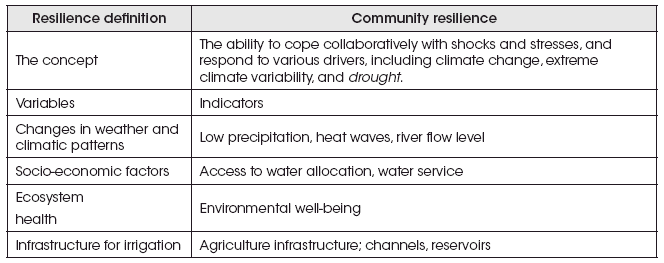
Stakeholder engagement, initially defined from a business perspective by Greenwood (2007), emphasizes the importance of maintaining public support and commitment to change through vision, decision-making, and action. This concept is farther elaborated by the OECD (2014), which outlines the key elements, why, what, who, and how, that guide effective engagement, while also addressing challenges related to objectivity, capacity, and accountability. Andriof et al. (2002) suggest integrating corporate social responsibility frameworks to better understand stakeholder dynamics. However, Kujala et al. (2022) highlight the ambiguity in stakeholder engagement definitions across sectors, often lacking clarity on essential components.
For this study, we adopt the definition by Akhmouch and Clavreul (2016) and Lim et al. (2022), which encompasses activities and decision-making processes that involve individuals or groups affected by water policy. This approach ensures the equitable distribution ofwater resources and promotes political acceptance in water governance within the Ambi River basin.
A systematic review of the literature relating to resilience theory and its relevance to community resilience was the first step in this study, as the work of Matarrita-Cascante et al. (2017), to facilitate the philosophical discussion ofrelated background assumptions.
3. Research Methodology
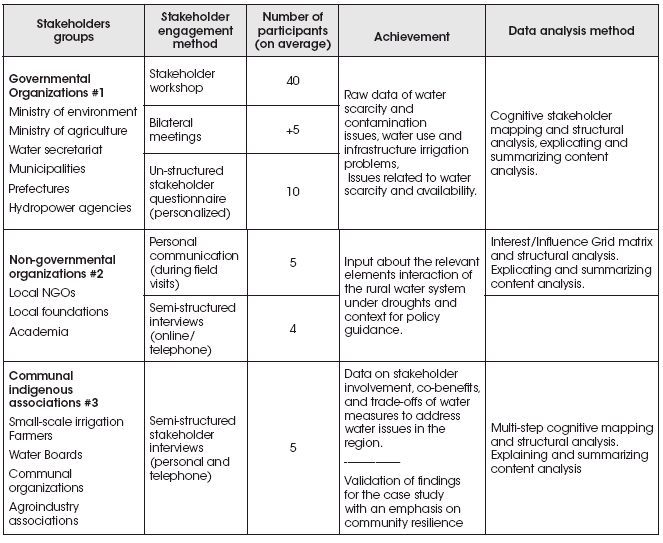
The first step in this study involved a systematic review of the literature on resilience theory and its application to community resilience, aiming to provide a theoretical foundation for understanding water scarcity challenges. This review included analysis ofrelevant studies and consultations with stakeholders in the water sector (see Table 2).
Additionally, to gain a deeper understanding of the current water scarcity issues in the Ambi watershed, qualitative social methodologies were employed, following the approaches outlined by Hutter et al. (2011)andBryman (2008). The first phase of document review focused on the environmental health research of the Ambi River, specifically the Salud de Cuenca (RSC) report, developed by the University of Maryland and WWF, which covers the Mira and Mataje watersheds. This report provided a comprehensive analysis based on data collected over a three-year program by a coalition of over 30 organizations. Field visits were also conducted to meet with representatives from the Imbabura Prefecture, local municipalities, the water secretariat, and environmental officers, aiming to gather insights and enhance the understanding ofthe regional water issues.
3.1. On-Site Research and Stakeholder Engagement
The fieldwork commenced in 2020 during the initial COVID-19 outbreak in Ecuador, where semi-structured interviews were conducted with local communities to explore water-related challenges. A subsequent visit to the Ambi region occurred in June 2022, focusing on areas struggling with wastewater contamination and insufficient clean water for irrigation. During these visits, key stakeholders were identified and categorized into three main groups for further analysis: governmental institutions, non-governmental organizations (NGOs), and Indigenous community associations. A stakeholder engagement strategy was developed to assess each groups interests and level of commitment to addressing water-related issues, considering both climate and non-climate impacts on water inequality in rural areas.
3.2. Regional context and water challenges
In 2023, the study extended to the upper Ambi River basin, concentrating on the Otavalo and Cotacachi regions. Observations revealed that outdated hydraulic infrastructure was causing severe damage to the main water conduits, disrupting irrigation systems, and exacerbating water shortages for agricultural users. These challenges were intensified by long dry seasons, which further hindered agricultural productivity.
The study also focused on the lower Ambi basin, particularly the parish of Salinas (Santa Catalina de Salinas). The rural population of Salinas was estimated at 2,125 inhabitants in 2020, with the wider Imbabura province having a population of 469,879 according to the 2022 INEC census. Salinas is an area facing numerous water-related issues, including water conflicts, a declining flow of water sources for both domestic and irrigation use, and environmental degradation from untreated sewage and industrial waste. These challenges have been exacerbated by pollution from urban centers like Otavalo, Cotacachi, and Atuntaqui, which discharge untreated wastewater directly into the Ambi River. This contamination severely degrades the water quality, impacts agricultural soil, reduces crop yields, and poses significant health risks to local communities.
3.3. Water Governance and Stakeholder Engagement
Water governance in the Salinas region is critical for both agriculture and livestock production. The region's irrigation system is managed by five legally established water boards (JARs): Salinas, San Florencio Tamayo, La Internacional, Santa Catalina de Salinas, and Cooperativa Agrícola de Salinas. These boards are responsible for overseeing designated catchment areas and coordinating water distribution. Despite this collaborative framework, challenges persist, particularly as the authorized flow of water has gradually decreased due to losses in infrastructure, including infiltration, evaporation, and unauthorized diversions. As a result, over 100 communities are now facing diminishing access to water resources.
To further understand these challenges, a comprehensive mapping of the region was conducted, incorporating data collected by master's students from the Technical University of the North (March-April 2020), as well as support from the water resources management department of the Imbabura prefecture. These efforts were complemented by meetings with water users to refine the data. A stakeholder mapping process (as shown in Table 2) helped identify key actors based on their influence and interest in water governance across the basin. This process also included an assessment of strategies and technologies aimed at optimizing water use in agriculture, with the goal of improving sustainability and resilience to climate- induced water stress in the region.
4. Results
To understand how community resilience to drought is perceived via engagement by stakeholders in the Ambi River basin, we systematically explained our findings by using the information from a series of digital maps provided by the water resources management department of the Imbabura prefecture. The actors were based on the fanctional differences between governmental and non-governmental groups.
4.1. Overview of the Ambi River basin
In the northern Ambi river basin, 100 irrigation systems, some with over 2,500 irrigation water boards (jARs), have water concessions exceeding 14,000 l/sec, indicating high water usage in the region. There are several points in this basin where the Ambi River passes through different populated centers and discharges wastewater without any prior treatment from the sewage systems, e.g., Otavalo, Cotacachi, and Atuntaqui, located in the upper and middle part of this basin.
These findings are corroborated by prior research under the “Integrated Management of Water Resources in the Mira, Mataje, and Carchi-Guáitara Binational Basins” initiative. This basin received a 3/10 rating for watershed health, as assessed through its water governance dynamics (WWF, 2019). The research involved collaborative participation in online thematic discussions concerning water governance and socio-ecological indicators. During this investigation, twenty-nine indicators across four components -water, biodiversity, climate risk, and governance- were selected to establish health indices for the Mira-Mataje basin. The meeting, held in December 2019, was coordinated by WWF and the Nariño Corporation from Colombia.
Preliminary Insights
In 2020, an initial visit was conducted to the Northern Technical University (UTN) to gather information. The primary focus of the discussions held with the academic staff regarding the environmental health of this basin involved a comprehensive analysis and interpretation of data generated over three years by a collaborative effort of more than 30 organizations. Additional data collection was carried out by participating in a workshop organized by a local NGO known as Randi-Randi Group Corporation (CGRR) and the UTN University on November 21-22, 2019 (face to face support) and November 26, 2020 (online support). The first workshop was in the city of Ibarra, and the second was in virtual gatherings, because of Covid restrictions.
By the first workshop, non-governmental representatives as Randi-Randi, highlighted main issue, as the absence of regular interactions among watershed boards (juntas de agua), except in cases of conflicts such as disputes over water sources or instances of illegal water usage. The second event; the online workshop was held with representatives from local water boards, ditches, local organizations, and prefecture officials (forty-five participants were acknowledged to have participated). This was possible with the extent of collaboration from the General Directorate ofWater Resources ofthe Prefecture of Imbabura1.
The aim of this meeting was to inform participants about the main objectives of this research and to evaluate remedies to these climatic threats (Panel “Water for All; Drought Mitigation in the Mira Basin”). Stakeholders responded positively to a small questionnaire with open questions related to water scarcity An open discussion involving exchanging viewpoints and working towards a shared visión was followed by email communication with some ofthe attendees. The application ofparticipatory design principles in this meeting shows that it is possible to move out of a non-cooperation situation and increase the likelihood that good water governance efforts have the desired actions. Several digital maps were produced using the source data from the [Ministerio de Ganaderia, Agricultura y Pesca, MAGAP].
Another response was from the President of the Union of Cotacachi water user boards, UNCISPAL (J. Arango, March 3, 2021). He expressed the difficulties of obtaining water in quantity and quality in their communities and of not having support for the training projects that their organization has presented. Nevertheless, the organization considers the various needs of water users and uses, aiming to promote social participation and positive environmental impact at all levels. An example of this is the School of Community Water Managers, which integrates participants from the 13 communities of Parroquia de San Pablo de Lago, Canton Otavalo, two water boards (JAPs), as well as from the main urban centers and rural areas. However, this school was not able to demonstrate how the results would improve resilience capacities at a regional and local level. The dispersion of these communities also prevents the replication ofthese results. This is also due to the constant changes in authorities and personnel, which weaken the institutional structures of communication between government agencies and water users.
The last field trip was in 2022, where data collected through people's interviews and response were consolidate through consultations between relevant stakeholders. These responses provided evidence of the contamination of the river by industrial activities (e.g., textile fabrics) from Otavalo and Cotacachi. By direct contact with local people from Otavalo’s area, 35 companies dedicated to the manufacturing of textile products and clothing were found. The basin included four major urban centers along the river (Ibarra, Cotacachi, Cayambe, and Otavalo), but only Ibarra has a proper water treatment plants. From the hydrological perspective, the city of Ibarra, the largest city in the canton, drains the residual waters into the Tahuando river (main tributary of the Ambi River). Despite the positive outcomes mentioned above, not all stakeholders involved in addressing river contamination share a unified perspective, leading to internal tensions within the basin.
4.2. Challenges and issues in irrigation management
In the irrigation system of Salinas, our study area, agricultural irrigation depends on factors such as river overflow, rainfall regime, soil type, and land and river topography Therefore, agricultural irrigation requires adequate planning and care, as it can cause alterations and deterioration of watersheds and hydrological ecosystems. Besides, these are areas of high susceptibility to erosion and drought and extremely high seismic intensity (information provided by the Imbabura prefecture and its Department of Water Resources) on the diagnosis of the Canton of Salinas (PDOT Salinas, 2016). The zones of influence of the Salinas irrigation canal are delineated into high (red), medium (light blue), and low (yellow) circles, as shown in the next figure. This dual-purpose construction highlights its significance in the regions water management and energy production.
The Salinas Canal, a criticad component ofwater management and energy production in the region, is currently undergoing rehabilitation due to its deteriorated state. Spanning 4.5 km, the canal was constructed in two phases: the first beginning in 1940 for electricity generation, including support for the Ambi Hydroelectric Power Plant in the Hoja Blanca sector, and the second between 1964 and 1970 to serve irrigation needs. Over time, the aging infrastructure has significantly deteriorated, as revealed in a recent assessment by the prefecture of Imbabura. This decay has led to frequent service interruptions along the main conductor and its secondary and tertiary branches, posing challenges for agricultural production. Rehabilitation efforts are now crucial to restoring the canal's fanctionality and securing its vital role in supporting both irrigation and energy resources for the region.
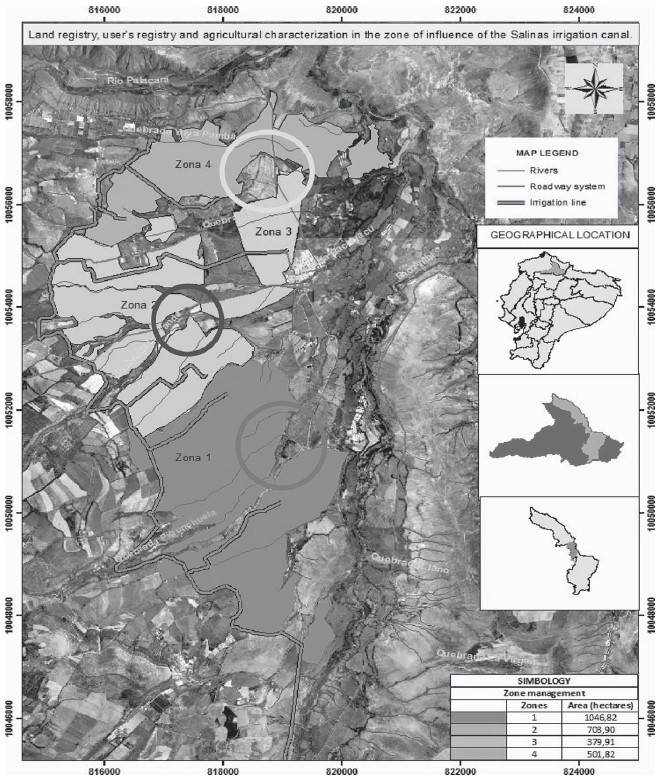
Source: UTN work-maps repository (Arteaga & Fierro, 2015); Imbabura Prefecture in collaboration with the Department of water resource management.
Figure 2: Zones of influence of the Salinas irrigation canal
The Salinas Irrigation Canal: Infrastructure for Sustainable Water Use
The governance of the Salinas Irrigation Water Administrative Board is authorized by the Ministry ofthe Environment (MAATE). Residents ofsmaller communities' report that when irrigation canal overflows affect them, they typically coordinate with the local municipality for assistance. However, only officially accredited irrigation boards receive direct structural support from the prefecture. In many cases, affected individuals turn to municipalities for immediate help and event planning, as direct assistance from the prefecture is often delayed (as noted during communication with the prefecture on March 26, 2024). From the interviews, users of the Salinas irrigation system manifest that “they are the least resilient since they are directly affected if the canal runs dry” They manifest that they do not have the necessary capacity and financing to cover the entire irrigation infrastructure operation in the whole area.
Rehabilitation of all this infrastructure in all the irrigation canals for the Salinas parish is estimated to cost about twenty million dollars. In addition, the prefecture ofImbabura's water management officer tries to fix the channel’s faults with less budget. This is indicative of a lack ofengagement from these associations to support any action for infrastructure improvement or strengthen community resilience through positive collective actions. The critical shortage of water for irrigation and human consumption underscores the need for effective drought management and water conservation strategies to support the community's resilience and sustainability.
The outdated hydraulic infrastructure, combined with a geological fault affecting sections of the basin, causes significant water losses from the Ambi River's authorized flow of 2500 l/sec. These losses, due to infiltration, overflow, evaporation, and unauthorized diversions, reduce water availability for the irrigation system but enhance energy production at the El Ambi Hydroelectric Plant, benefiting the Ibarra area.
Insights from Data Collection and Engagement Efforts
Despite numerous visits to the area, governmental institutions like the Prefecture of Imbabura show more interest in working with organized and formally authorized water boards, particularly in the lower part of the Ambi River basin, where large irrigation systems like Salinas are located. However, in the upper basin, industrial and manufacturing sectors, including the saddlery industries of Cotacachi and Otavalo and urban areas like Ibarra and Antonio Ante, receive limited attention. Additionally, small-scale industries, such as leather factories in Cotacachi and Otavalo, discharge untreated wastewater directly into rivers. This pollution contaminates water resources downstream, particularly at the Salinas main canal catchment site, affecting agricultural soils, crop quality, and human health.
These findings indicate that the surplus of water in the upper part of the basin does not offset the deficits in the middle and lower parts. The results confirm that the primary effect of drought in the community is the inability to produce crops effectively. Due to the lack of irrigation, planting can only be done once a year. The limited water supply is barely sufficient for human consumption, leaving little to none for irrigation purposes. This scarcity severely hampers agricultural output, impacting the community’s food security and economic stability
In Ecuador, indigenous peoples have the autonomy to choose and maintain their production and management models. However, they receive only 2% of the irrigation water and control just 6.4% ofthe total land. Similarly, in Imbabura Province, limited access to water and land significantly restricts agricultural productivity and sustainability.
Regardless of the ongoing discussions and issues among water authorities, various community organizations, particularly in Cotacachi and Otavalo, have opted to establish their own unique community business model for the management of Peguche’s waterfall. These organizations do not rely on government funding to sustain their initiatives, such as the Union of Peasants and Indigenous Organizations of Cotacachi (UNORCAS) which advocate for social, ecological, and economic justice. The scarcity of water resources becomes evident with varying degrees of severity across different seasons, impacting water availability for agricultural purposes in the dry season and for ecological purposes and other uses throughout the rest of the year.
4.3. The Social Narrative of Resilience: Key Findings
The interview data, gathered from transcribed narratives and reflections by interviewers during workshops and various forms of contact (online and face-to-face), reveal several significant points. Firstly, they highlight the ecological impact of drought in the lower river basin, particularly in the 2018.14 ha Salinas irrigation area. Despite awareness of long-term water quality issues, understanding of the hydrogeological system remains limited. This gap, covering both climate-related and non-climate-related challenges, affects relationships between communities and water decision-makers. In adaptive water governance, especially within cultural contexts, resilience efforts tend to prioritize technical solutions over local social dynamics and stakeholder interactions.
Secondly, the study highlights the typically weak relationship between local organizations, such as water user groups, and government agencies responsible for water services. Despite efforts to foster cooperation and implement policies through stakeholder engagement, effectiveness varies across different scales within the Ambi River basin. Key barriers include unclear roles and responsibilities among water users, compounded by contamination threats. Addressing these issues necessitates a more collaborative approach that considers the diverse interests and responsibilities ofall stakeholders involved.
Lastly, early interviews with governmental agencies responsible for water management in the Ambi River area, including SENAGUA, Imbabura Prefecture, and MAE (now MAATE), revealed a critical lack of clarity regarding upstream and downstream hydrological linkages. This hampers effective water resource planning and mitigation of contamination issues in the river basin. Additionally, there is uncertainty surrounding the division of roles and responsibilities among these agencies.
In light of these findings, it is evident that improved coordination and communication among governmental agencies to tackle water management challenges effectively in the Ambi River area. This is particularly pertinent for the Juntas (water user organizations), as not all have official registration as formal irrigation boards (JARs). Notably, the Salinas irrigation system stands out within the basin for its well-structured organization, which enhances decision-making support and irrigation efficiency. This structured approach also fosters resilience and independence in collaborations with local institutions, granting improved access to economic resources. Consequently, these well-organized entities effectively maintain irrigation infrastructure and channels, contributing significantly to the overall sustainability of the Salinas irrigation system.
5. Discussion
The findings highlight significant weaknesses in the national river basin management coordination in Ecuador, particularly the lack of regular interactions and collaboration among key government agencies and other stakeholders. This issue is evident in the Ambi River hydrographic sub-basin, where decisions are often made from a more technical, rather than socio-hydrological, perspective, particularly regarding water use and irrigation infrastructure, as seen in the Salinas irrigation system.
While identifying socio-hydrological indicators is crucial, this alone is insufficient to address the growing challenges ofwater scarcity, contamination, and the unequal distribution of water resources. A comprehensive diagnosis of current conditions and the identification of ecological transition pathways, as demonstrated in Ecuadors evolving environmental and water management framework, are critical steps toward mitigating the impacts of climate change. However, as Wauben (2020) notes, these efforts alone do not constitute comprehensive climate solutions.
Indigenous communities, recognized by Ecuadors constitution as custodians of specific natural resources such as water sources, play a critical role in resource stewardship. However, recurring droughts have devastating effects across watersheds, particularly when they are sustained or repetitive, intensifying water shortages. The main concern in this region is the increasing frequency of drought due to reduced precipitation, compounded by climate change and ineffective water management. While the traditional definition of drought, prolonged absence of precipitation (meteorological drought), is commonly used to identify and characterize drought events, it is not the sole threat to preserving the quality and quantity ofwater in the Ambi River. We should rethink the term drought when the findings reveal the importance of how we classify these events, as well as how we respond to them, improving resilience.
Evidence also highlights the detrimental role ofpolitical interference and power imbalances between rural and urban water users in exacerbating water management challenges. Wauben also highlights the role of authorities in addressing climate challenges, alongside strategies such as education and mitigation. I argue that these strategies, as mentioned by participants in the interviews, significantly influence resilience by shaping people's perceptions of climate change -particularly drought- and its impacts on their lives. This observation aligns with Waubens statement (2020, p. 55) that direct experiences with environmental shifts often increase public awareness, public participation in river basin management as said Carr (2015) and engagement with climate issues.
In this case, drought is expressed as social resilience in disaster management, strengthened through a more social constructivism approach, coupled with a more holistic framework (Saja et al., 2021). Especially when Ecuador did not have a law until 2024 that regulates the entire national system, which limited the proper management of water-related disasters such as floods and droughts by the authorities in making regulatory decisions. The main law closely related to disaster response in Ecuador was the “Ley de Seguridad Pública” (State and Public Security Law) emitted in 2009.
In discussing strategies to enhance resilience, a critical consideration lies in integrating engineering resilience within the debate on the inter-connections between socio-hydrology and resilience as Mao et al. (2017)andDewulf et al. (2019) suggested. Confirming the monopoly power of the water sector in this region must be reduced, or unsustainable management of natural resources must be reversed by introducing a communal business model, and where the inequality of irrigation infrastructure is being transformed to incorporate other perspectives regarding water management for climate policies by putting irrigation resilience into practice.
I argue that while resilience encompasses absorptive, adaptive, and transformative dimensions, capturing key socio-hydrological dynamics, as Asadzadeh et al. (2017) manifest, it falls short without incorporating broader social resources beyond ecological and infrastructural factors. Resilience must integrate social, technical, and hydrological elements to effectively address drought and other challenges. On the other hand, I differ with limiting resilience to ecological components alone, as highlighted by Mao et al. (2017)andTortajada (2016), who advocate for comprehensive approaches that bridge social and technical dimensions in managing complex human-water systems.
The exploratory site visits and stakeholder mapping support the need for integrating social and cultural dimensions into resilience frameworks. In Cotacachi, inclusive cooperation among social organizations strengthens resilience by enabling communities to collaboratively conserve natural resources. The Peguche Cascade highlights effective stakeholder engagement, where communities maintain autonomy over resources and develop tailored conservation models. However, the unplanned influx of settlers has led to increased pressure on sacred places and growing tourism risks. These challenges emphasize the need for holistic approaches to resilience that prioritize community participation and adaptive strategies. Additionally, as Manyena et al. (2019) point out, current resilience frameworks are often vague and require more robust, innovative approaches.
Although previous actions were framed as cooperative responses to river pollution and ecosystem protection, conflicts arise due to differing perspectives among stakeholders, especially influenced by industrial and urban water waste from areas like Cotacachi, Otavalo, Ibarra, Cayambe, and Antonio Antes. This discussion will, therefore, focus on integrating irrigation and drainage, particularly through the case of the Salinas irrigation infrastructure system, to address these conflicts. The problem with this is that infrastructure is not a central issue in finding and using resources to maintain, rehabilitate, or re-construction, financial resources are limited, and the Decentralized Autonomous Governments (GAD) (local governments), transfer resources and responsibilities to organizations whose experience and competence are questioned, losing control over an important part of public finances in matters ofprotection and use of water resources. It should not be forgotten that “The Irrigation Boards are non-profit community organizations whose purpose is to provide irrigation and drainage services, under criteria of economic efficiency, quality in the provision of the service and equity in the distribution of water...”
Stakeholder engagement in the Ambi River basin faces significant challenges due to varying interests across different areas. While local communities and water associations have developed effective water risk management strategies, such as the water school programs in Cotacachi and community-led conservation efforts at the Peguche waterfall, central government agencies are criticized for failing to recognize the role of Indigenous peoples in managing local land and water resources. These communities have demonstrated increased resilience through self-governance models, yet many water user organizations, like those in Cotacachi and Otavalo, remain unregistered and therefore excluded from official financial support. This lack of formal recognition limits their ability to scale their efforts and receive necessary resources from government agencies. Furthermore, some community organizations emphasize the need for a new model of engagement, incorporating drought science and public involvement to build more resilient and sustainable solutions.
In conclusion, while the central government holds primary responsibility for infrastructure maintenance, Ecuador's water governance model allows communities to manage the distribution ofwater. However, at the local level, service providers face significant challenges in covering the costs of administration, operation, and maintenance, leading to infrastructure deterioration and reduced efficiency in water allocation. This highlights the limited impact of current organizational strengthening efforts, which have overlooked the need for training new leaders to address local irrigation and drainage issues effectively To overcome these limitations in the Ambi River basin, it is essential to implement strategies that improve management and enhance community resilience. Strengthening social engagement and employing innovative methods for cooperation can bridge the gaps between stakeholders and create more effective water governance frameworks, setting the stage for the final conclusions ofthis chapter.
6. Conclusión
To address the research question of how stakeholder engagement in the Ambi River basin shapes community resilience policies and actions in response to drought. By involving a range of stakeholders, including local communities, governmental agencies, and non-governmental organizations, this study emphasizes the importance of integrating diverse perspectives and knowledge systems into policy development. This inclusive engagement approach not only helps identify and address social constraints but also enhances the effectiveness and specificity ofpolicies tailored to the region's unique needs.
The findings underscore the necessity of adaptive management and continuous stakeholder participation in dynamic hydro-social systems, which must evolve in response to both climatic and non-climatic factors. Through stakeholder engagement, resilience policies and actions in the Ambi River basin become more robust, adaptable, and localized, effectively improving the communities' anticipation, preparation, and response to drought. The self- organizing, adaptive co-management process, seen in communities like Cotacachi, illustrates how traditional governance structures, when combined with Indigenous knowledge systems and water education, can advance resilience and improve ecosystem services management.
However, government agencies must better recognize the crucial role of Indigenous peoples in managing local land and water resources, as their stewardship has been key to these community-driven arrangements. This research also considers mechanisms such as disaster risk reduction, climate change adaptation, and addressing social vulnerability (IPCC, 2012), which could enhance water management strategies and foster more effective drought and water scarcity adaptation at the basin level.
The Ambi river case study highlights ongoing challenges, such as degraded water bodies and governance failures, contributing to water scarcity Effective strategies to address these include strengthening community collaboration, investing in irrigation efficiency, and formalizing structures like irrigation boards (JARs). Despite this, disparities remain, particularly with small-scale farming dominating the Ambi watershed and inadequate water quality management in rural areas.
Research outcomes also demonstrate the value ofbridging gaps between research, policy, and practice, especially within informal sectors. To ensure sustainable development, future government initiatives, such as hydroelectric projects and agro-industrial investments, must engage a broader stakeholder base, including citizen groups and NGOs, to avoid escalating conflicts. Indigenous communities, with their deep-rooted resilience, emphasize the need for further research into the role oftraditional infrastructure in social-ecological systems.
In conclusion, interdisciplinary approaches are vital for understanding ecosystem variables, enhancing resilience, and reducing vulnerabilities across various domains. Water governance must foster cooperation and participation, moving away from centralized planning to more inclusive, participatory decision-making processes (Liguori, 2022). Recognizing Indigenous co-governance in water resource management decisions is essential for community resilience. The Ambi River basin, shaped by developmental activities, requires inclusive decision-making to build trust and mitigate socio-economic vulnerabilities, ensuring long-term, sustainable outcomes.

